Researchers developed an approach called in extracto cryo-EM, which images molecular complexes in cellular lysates rather than after extensive purification or inside intact cells. They used it to examine ribosomes, the cell structures that build proteins, at near-atomic resolution.
Biology2 weeks ago
One protein attaches to more than 95% of hibernating ribosomes
High-resolution imaging found that eEF2 binds both complete ribosomes and their large subunits when protein production slows.
How ribosomes hibernate
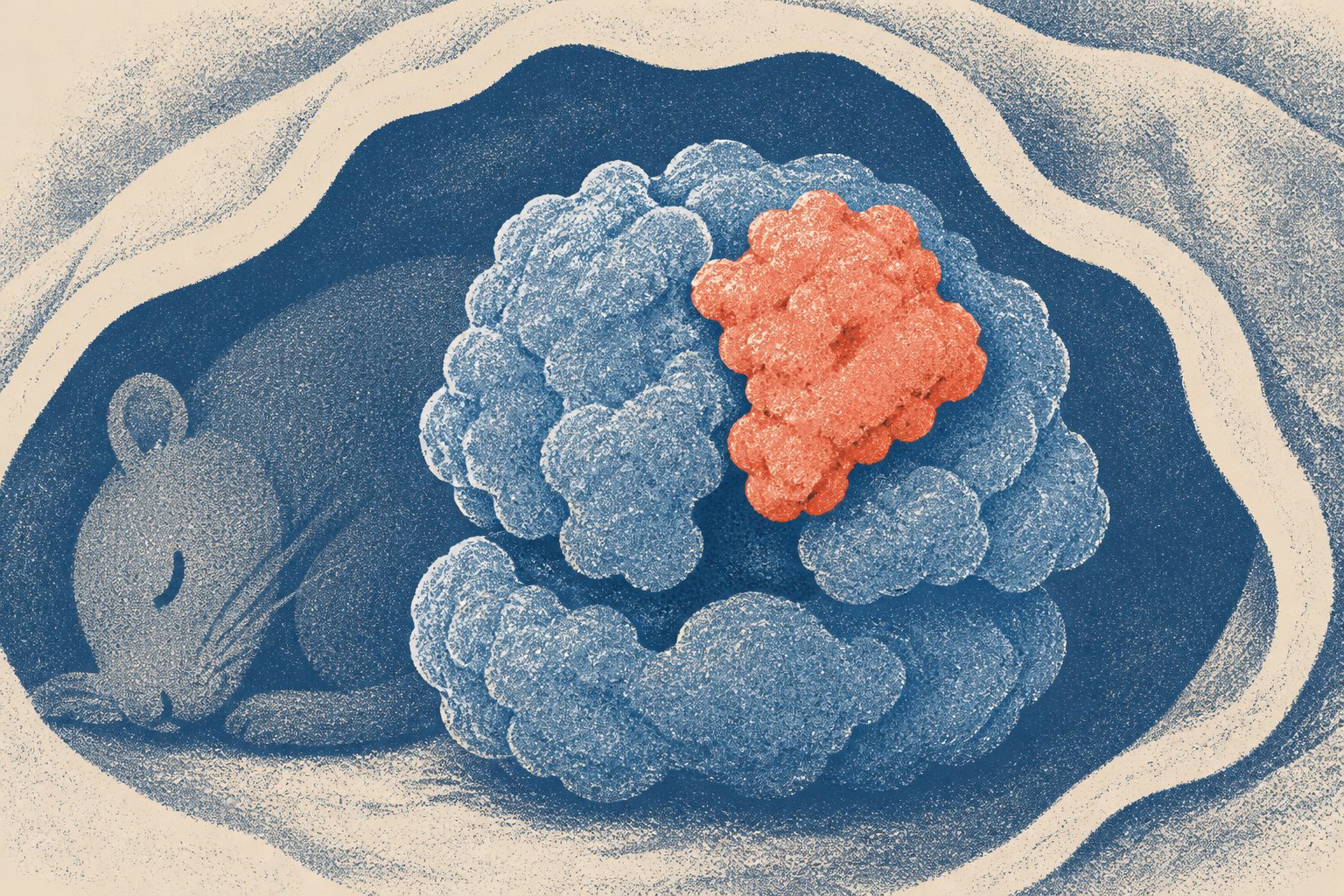
The researchers obtained maps of the mammalian protein-making machinery at about 2.2 angstroms, a scale that can show detailed molecular interactions. In primate cell lines and rabbit reticulocyte lysates, the share of ribosomes actively elongating proteins ranged from about 70% to about 10%, consistent with different levels of translational stress. Non-translating ribosomes carried proteins that shielded their functional centers. eEF2 was the most abundant hibernation factor and was bound to more than 95% of ribosomes. Unexpectedly, it also bound to isolated 60S large subunits. The study found that eEF2 carrying GDP was stabilized by contacts with the sarcin-ricin loop and the ribosomal protein uL14. Other hibernating ribosomes carried LARP1, eIF5A and additional factors linked to different stages of protein production.
Why the finding matters
The findings identify eEF2 as a widespread marker of ribosome hibernation in the samples studied and show that it can associate with ribosome subunits as well as complete ribosomes. More broadly, the work shows that cryo-EM of cellular lysates can reveal several native ribosome complexes and their molecular contacts without relying only on purified components. This could help researchers study how cells place protein production on hold under stress.
Evidence and caveats
The evidence comes from cryo-EM images and molecular maps of lysates from two primate cell lines and rabbit reticulocyte lysates. The maps support the reported locations and interactions of eEF2 and other factors, but the study does not by itself show that eEF2 causes ribosome hibernation or establish how these arrangements function in every cell type. Because the approach uses cell extracts rather than intact cells, the observed complexes may not capture all conditions inside living cells.
// Source
eLife · 2026 · DOI: 10.7554/elife.110114.3
Authors: Zahra Seraj, Ximena Zottig, Chun‐Ying Huang, A.B. Loveland, Stephen Diggs, Emily Sholi, Nikolaus Grigorieff, А.A. Коростелев
Institutions: University of Massachusetts Chan Medical School, Howard Hughes Medical Institute