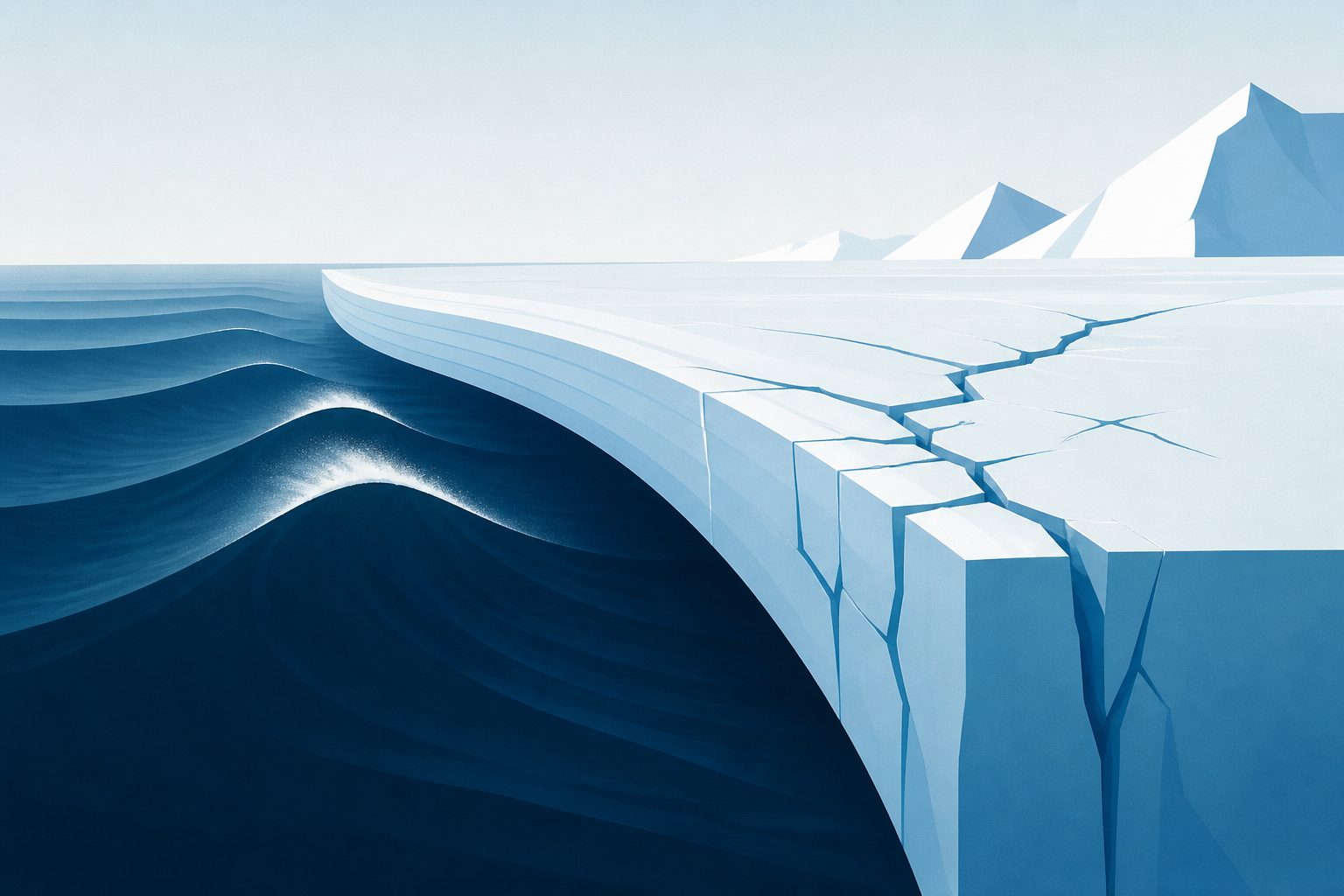
The study presents a mathematical and computer-based method for modelling how long ocean waves bend floating ice shelves. It represents the shelf as a thin elastic plate over shallow water and can account for changes in both horizontal directions, irregular shelf shapes and non-uniform thickness.
The researchers used the method to study how shelf shape, the direction of incoming waves and the grounded fraction of a shelf affect its movement. Running the model across a broad range of wave frequencies allowed them to identify resonant responses, and they also modelled the response of the Drygalski Ice Tongue.