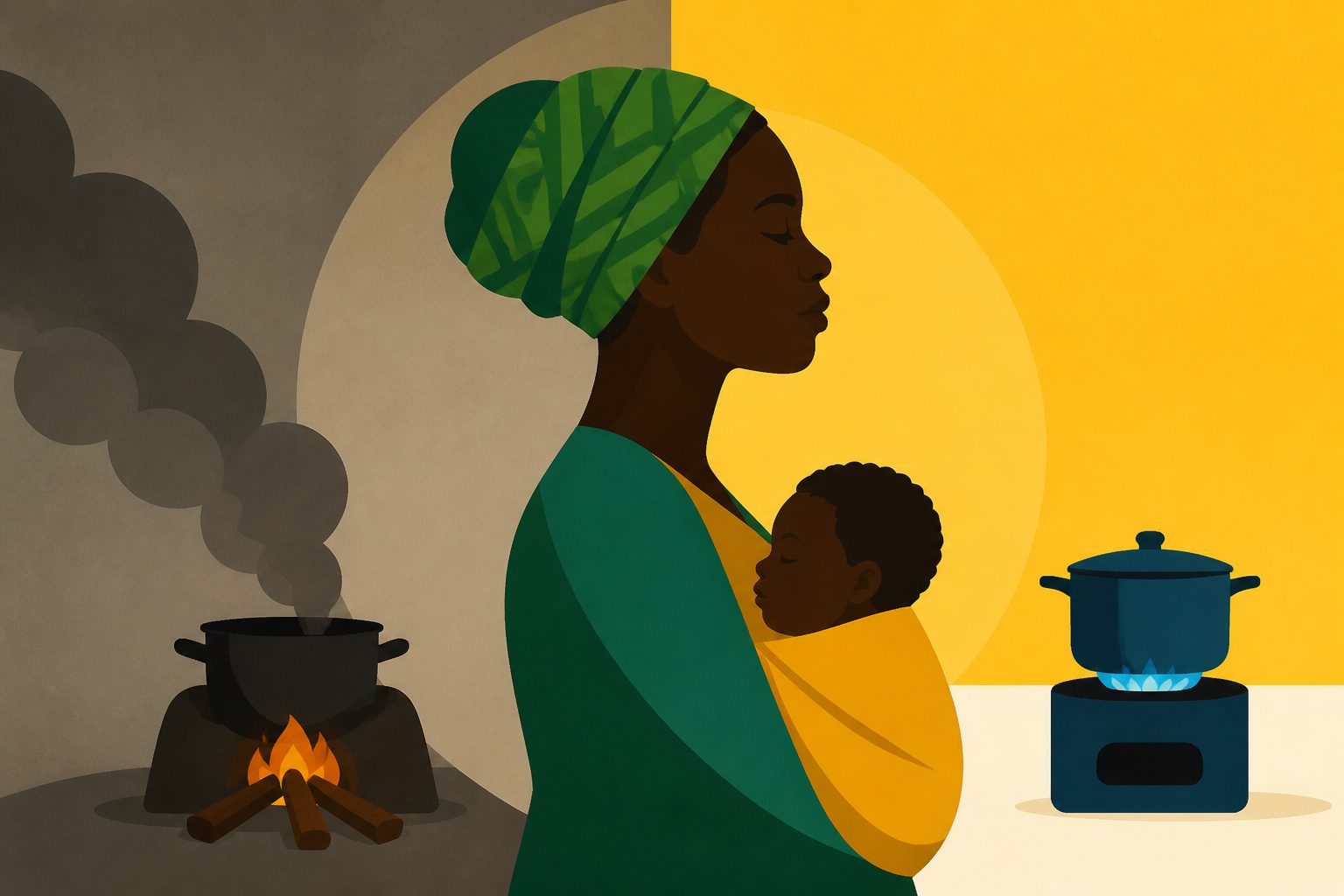
Scenario estimates for sub-Saharan Africa suggest the largest potential gains could come from expanding clean cooking in cities, while rural access remains limited.
A study of 102 developing countries links greater access to clean cooking fuels with better health and nutrition outcomes. The gains were larger in urban settings than in rural ones in the analysis.
Scenario simulations for sub-Saharan Africa estimated that expanding access could prevent about 84,000 infant deaths and reduce child stunting by roughly 1.68 million cases in rural areas. Universal urban access from a baseline of 35% was estimated to avert up to 377,000 infant deaths and save more than 11 million disability-adjusted life years, a measure of disease and early death.
Health gains from clean cooking
Across 102 developing countries studied from 2000 to 2022, improvements in access to clean cooking fuels were associated with better health and nutrition outcomes. The association was stronger in urban settings than in rural ones.
For sub-Saharan Africa, the researchers modeled two access scenarios. Increasing rural access from 10% to 25% was estimated to prevent around 84,000 infant deaths and reduce child stunting by approximately 1.68 million cases. In urban areas, raising access from a baseline of 35% to universal coverage was estimated to avert up to 377,000 infant deaths and save more than 11 million disability-adjusted life years.