An engineered carbon-fixing enzyme made bacterial photosynthesis less sensitive to oxygen
A screen of 15,000 Rubisco variants identified changes that improved performance in a photosynthetic bacterium, although one variant was less efficient overall.
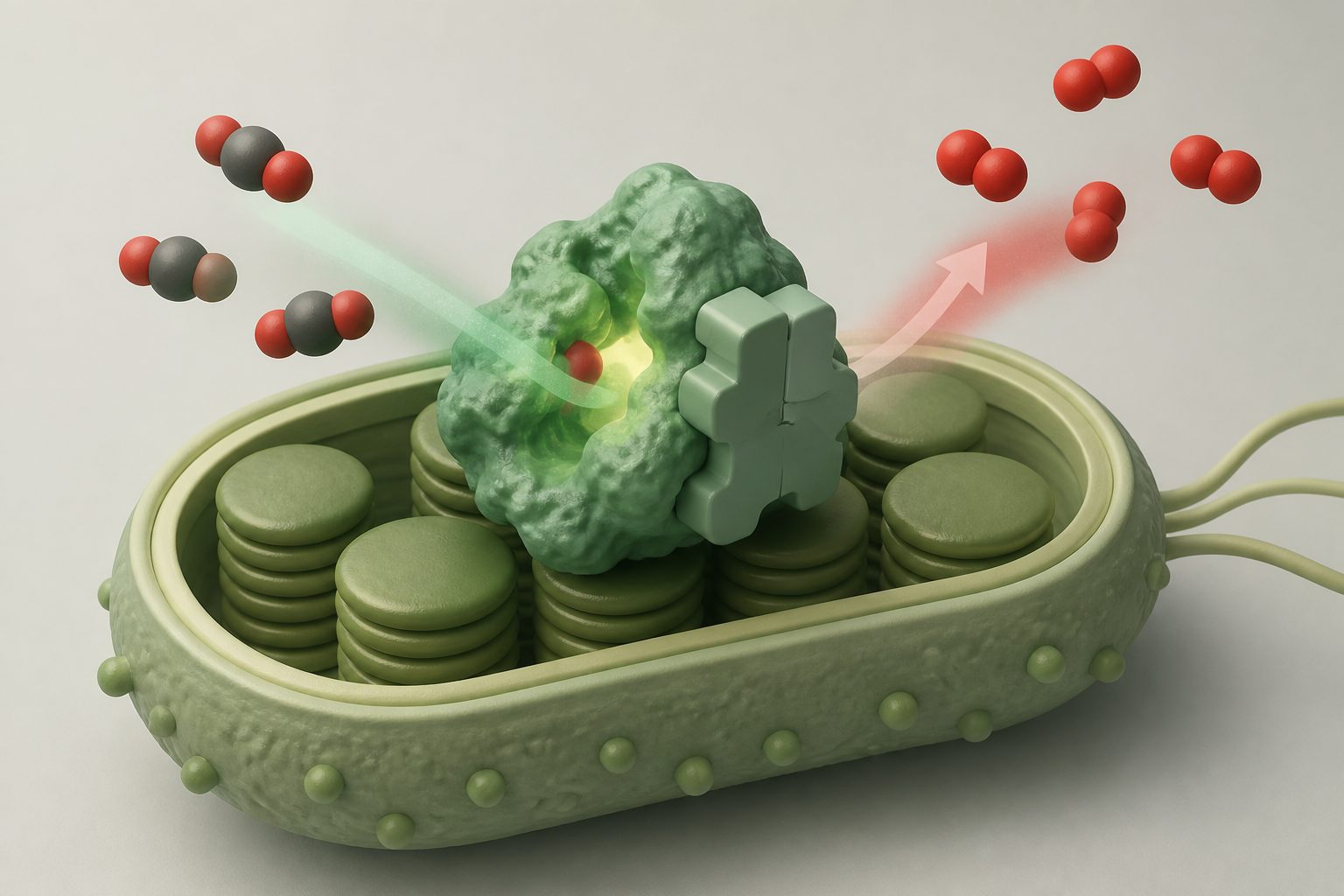
Editorial illustration — not from the study.
The team tested a library of 15,000 single-site and multi-site variants of a form II Rubisco enzyme from Gallionella in the cyanobacterium Synechocystis sp. PCC 6803. The screening method linked Rubisco activity to the bacterium’s growth, allowing the researchers to identify variants with higher fitness.
Changes near the enzyme’s active site, at the interface between its two protein units and in possible gas channels were associated with improved fitness. The researchers then used recombination and a trained transformer model to guide further protein engineering and examined two high-fitness variants in laboratory enzyme tests.
What the enzyme changes did
The growth-based screen identified beneficial changes in three parts of the Gallionella Rubisco: loop 6 near the active site, the dimer interface and possible gas tunnels. The results also included examples of epistasis, in which the effect of one change depends on other changes in the protein.
In vitro tests of two high-fitness variants found reduced catalytic efficiency for oxygenation in both variants. One variant also had a higher carboxylation turnover, meaning it turned over the carbon-fixing reaction more quickly. The findings were used to guide engineering of a foreign Rubisco toward lower oxygen sensitivity in photosynthesis.
Why oxygen tolerance matters
Oxygen can affect Rubisco’s activity, making oxygen tolerance relevant to efforts to improve photosynthesis and biobased production. This study shows that a foreign Rubisco can be screened and engineered in a photosynthetic bacterium to identify changes associated with reduced oxygen sensitivity.
The resulting dataset also provides a labeled set of Rubisco variants, including combinations whose effects depend on one another. The researchers say it could be used to test computational models that predict how protein changes affect function.
Evidence and caveats
The evidence comes from a growth-coupled screen of 15,000 Rubisco variants in Synechocystis, followed by laboratory enzyme measurements of two high-fitness variants. The screen identifies associations between particular protein changes and bacterial fitness, while the in vitro tests directly measured oxygenation efficiency and carbon-fixing turnover for those two variants.
The abstract does not report tests in plants or in industrial production systems. It also shows a trade-off: both tested variants had lower oxygenation efficiency, but only one had increased carbon-fixing turnover. The results therefore demonstrate a route for engineering oxygen tolerance, not a generally faster or more efficient Rubisco.
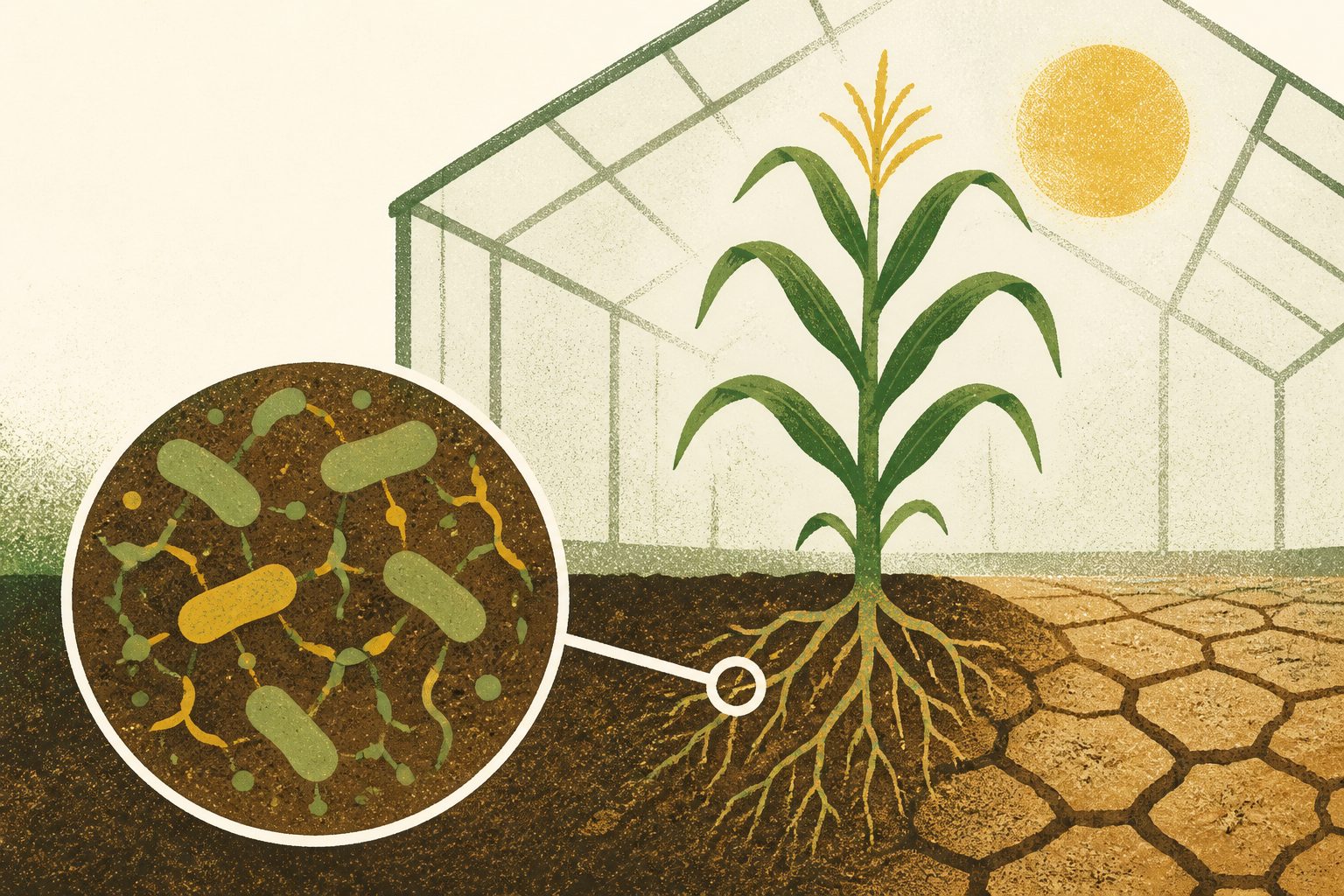
Certain Streptomyces bacteria improved maize growth when plants were grown with limited water in a greenhouse experiment. The effects varied among the four bacterial isolates, and further testing is needed before they can be considered for field use.
A review of five medicinal plants finds evidence that leaves, young stems, small branches and fruits may sometimes replace roots, bark or heartwood as sources of similar plant chemicals. The authors say these substitutions could reduce destructive harvesting, but therapeutic and safety testing is still needed.
Adding LED lighting and solid carbon dioxide generators to winter greenhouse cucumber production increased yield by 18% and income by 21% compared with the control. Plants also grew larger and produced wider, heavier fruit during the trial.