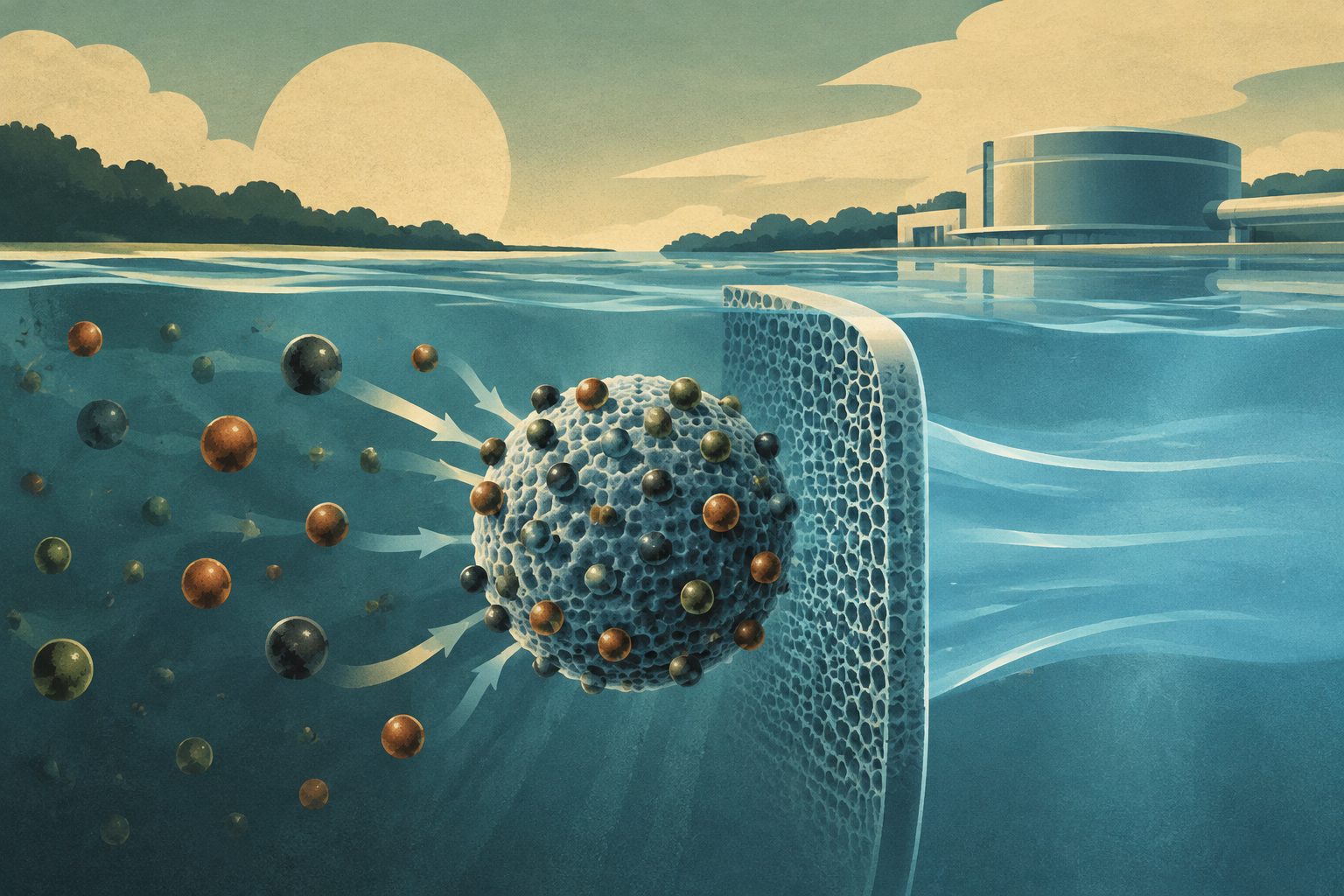
The acid-free method separates magnet-making swarf into iron, rare-earth oxides and hydrides in one reactor.
Magnet machining produces swarf containing rare-earth elements but also oils, oxides and other contaminants. In laboratory experiments, the researchers treated this waste with hydrogen plasma, causing it to melt and separate into a metallic iron-rich fraction and a nonmetallic fraction rich in rare-earth oxides.
The treatment also produced rare-earth hydrides, showing that some rare-earth material was reduced beyond the oxide stage. The authors describe the process as a single-step, acid-free route that could lower emissions and reduce reliance on newly mined rare-earth materials, although industrial-scale performance remains to be tested.
Why magnet waste matters
Rare-earth permanent magnets are used in electric vehicles, wind turbines and other electric motor systems, while global recycling rates remain below 0.2%. Machining swarf is a major waste stream from magnet production and contains about 20% rare-earth elements, but its fine particles, oxidation and contaminants make it difficult to process. Recovering separated iron and rare-earth feedstocks could reduce waste and reliance on primary rare-earth supplies. The authors identify the approach as a possible lower-emission alternative to conventional magnet production, whose stated footprint is about 70 kilograms of carbon-dioxide equivalent per kilogram of magnets.
Evidence and open questions
The findings come from laboratory treatment of prepared swarf samples, including a 15-gram sample, under controlled hydrogen-and-argon plasma conditions, along with phase and chemical analyses. The work demonstrates separation, contaminant removal and hydride formation, but it does not establish performance at industrial scale. The researchers say future work must scale the reactor, improve hydrogen use and stabilize the reduced hydride phases. A screening-level economic assessment is included, but the excerpts do not provide a full industrial emissions or cost validation.
// Source
Advanced Materials · 2026 · DOI: 10.1002/adma.75385
Authors: Naritai Chimed, Oliver Diehl, Ömer K. Büyükuslu, J. Manoj Prabhakar, Dennis Klapproth, Patricia Jovičević-Klug, Jürgen Gassmann, Dierk Raabe, Tim M. Schwarz, Matic Jovičević Klug
Institutions: Indian Institute of Technology Madras, Max-Planck-Institut für Nachhaltige Materialien, National Institute of Chemistry, Fraunhofer Research Institution for Materials Recycling and Resource Strategies IWKS, GTT-Technologies (Germany)