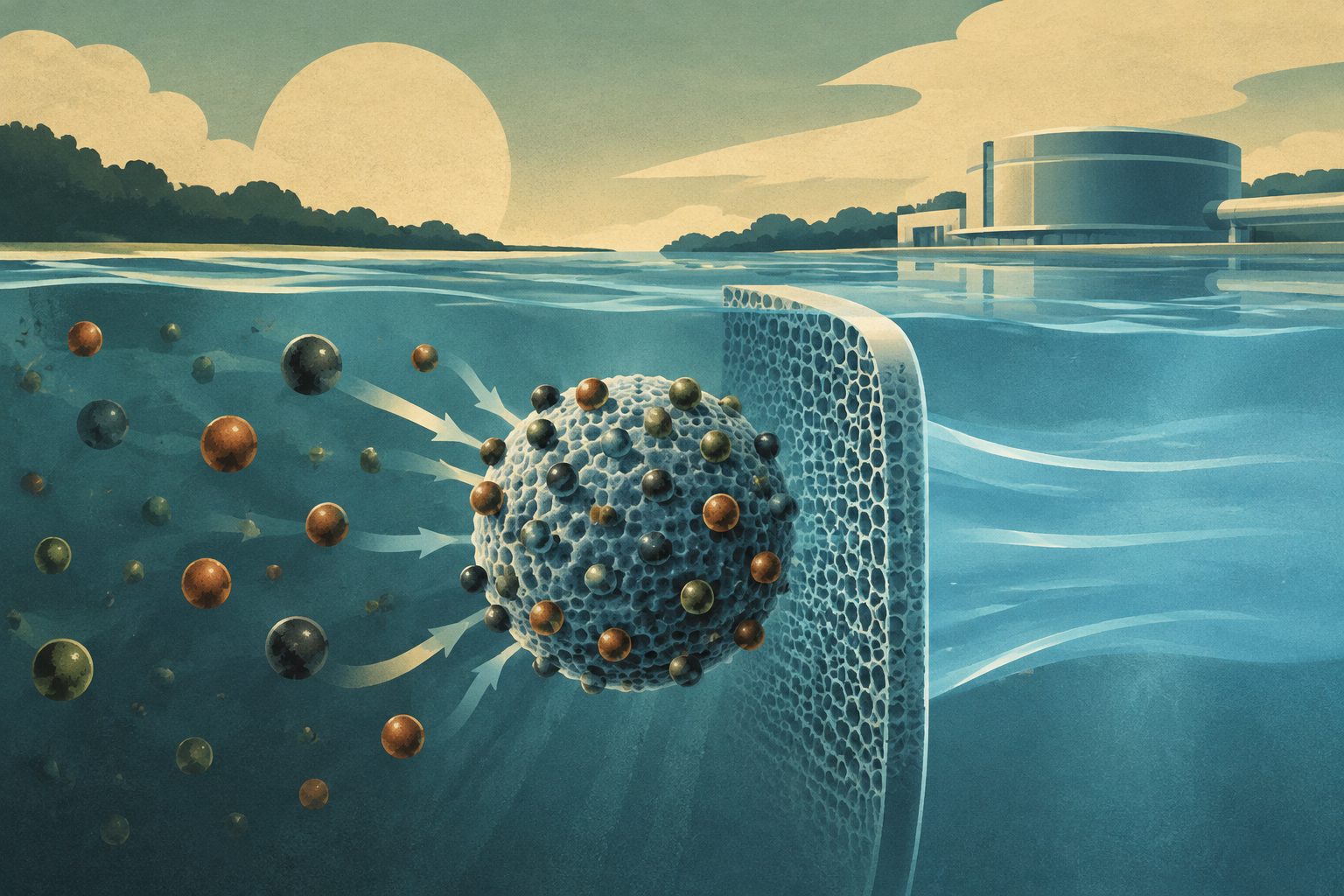
An article examines how tiny materials could improve water treatment through pollutant-trapping materials and fine filters.
The article describes several ways nanomaterials are being applied to water treatment, including nano-adsorbents that selectively capture toxic metals and nanomembranes that filter small contaminants. It also considers their potential role in removing emerging pollutants and pathogens that conventional treatment may not remove effectively.
The authors present nanotechnology as a possible route toward more efficient, affordable and environmentally friendly treatment and reuse of water. The article places these technologies in the wider context of threats to human health, economic development and environmental sustainability from water scarcity and pollution.
What the article does not show
This is an article discussing advances and potential applications, not a report of a particular experiment or clinical or field trial. The abstract gives no sample sizes, removal rates, cost estimates, details about material safety, or evidence from large-scale systems. It therefore does not establish how well these technologies perform in real-world settings, how sustainable they are over time, or whether they can provide affordable treatment globally.
// Source
Innovative Reviews in Engineering and Science · 2026 · DOI: 10.31838/ines/03.02.02
Authors: Alim Rahman Akin Zor