A foam-like shift may explain how one cell layer becomes several
Cell experiments and computer modeling suggest that scattered multilayer patches form first, then spread through epithelial tissue.
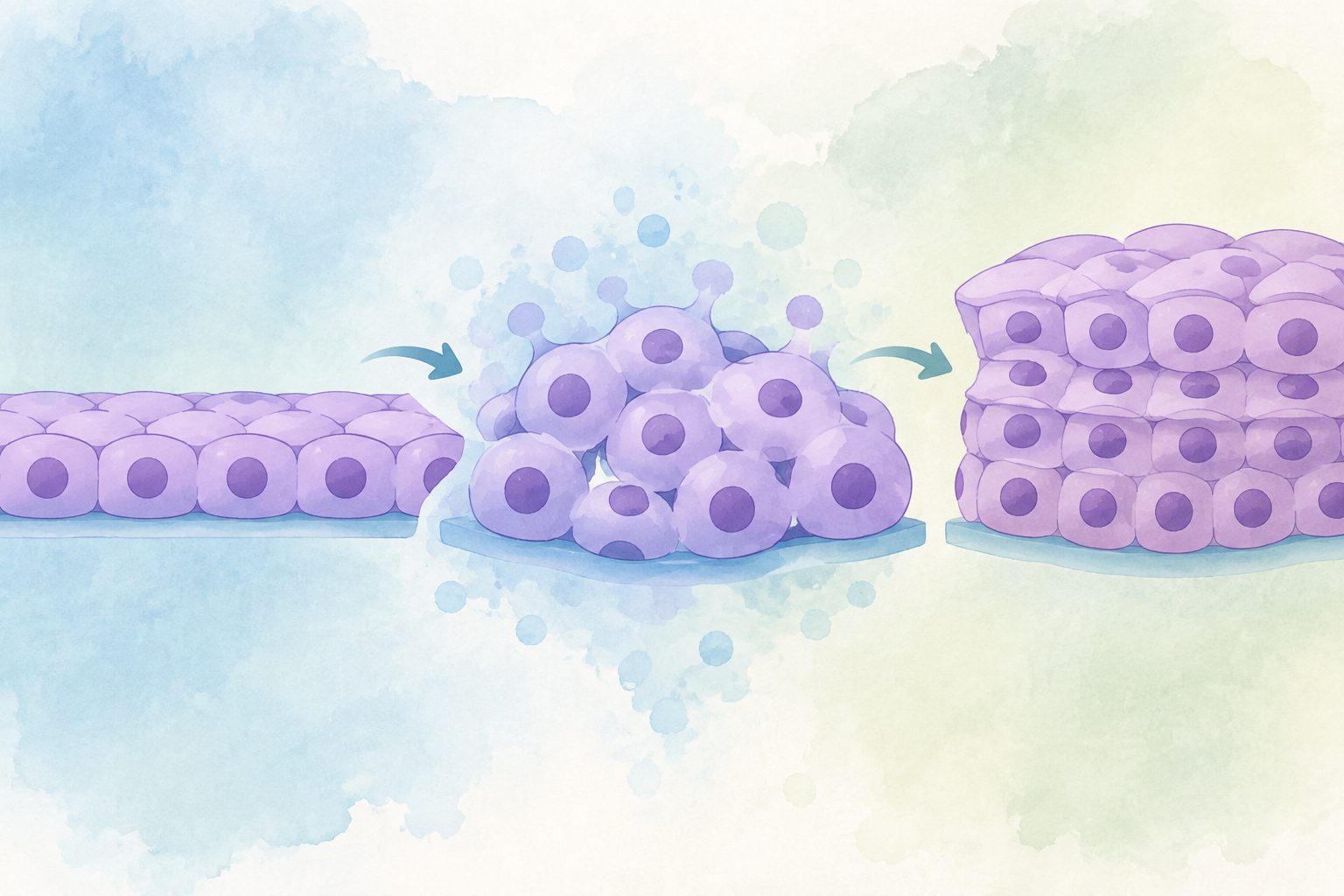
Editorial illustration — not from the study.
Epithelial tissues, which line and cover parts of the body, can change from a single layer of cells into several layers. Researchers found that this transition does not occur as one uniform event across the tissue. Instead, multilayer regions emerge at separate locations and grow through disordered intermediate states.
The team combined cell-culture experiments with three-dimensional vertex modeling, a computer approach that represents cells as connected shapes. Their results point to a mechanical instability arising from the foam-like arrangement of cells. The researchers also report that the same nucleation-and-growth idea applies to embryonic skin development and intestinal cancer transformation.
How layers form
The researchers describe epithelial stratification—the change from one cell layer to multiple layers—as a nucleation-and-growth process. In this process, origins of multilayer structure appear in a dispersed pattern and then expand across the epithelium. The transition passes through disordered intermediate states.
Cell-culture experiments and three-dimensional vertex modeling indicate that the process is induced by a mechanical instability inherent in the tissue’s foam-like geometry. The abstract also states that this framework applies to embryonic skin development and intestinal cancer transformation.
Why the pattern matters
The findings offer a physical explanation for how a change that affects an entire epithelial tissue can begin in scattered local regions and then spread. They connect several previously studied influences—including cell geometry, density, junctional tension and topological defects—within a broader picture of tissue structure changing through nucleation and growth.
Applying the same concept to embryonic skin and intestinal cancer transformation suggests that foam-like tissue mechanics may help describe more than one type of epithelial development. The study therefore provides a shared framework for thinking about normal tissue formation and cancer-related changes.
Evidence and caveats
The evidence combines cell-culture experiments with three-dimensional vertex modeling, rather than relying on either observations or theory alone. The abstract does not provide details about the number of experiments, the specific cell systems, or how closely the model parameters match living tissues.
It reports that the nucleation-and-growth concept applies to embryonic skin development and intestinal cancer transformation, but the abstract does not specify the evidence for those applications or establish that the mechanism governs every epithelial tissue. The findings support a mechanical explanation for the observed transitions, while the broader range of tissues to which it applies remains unclear from the abstract.
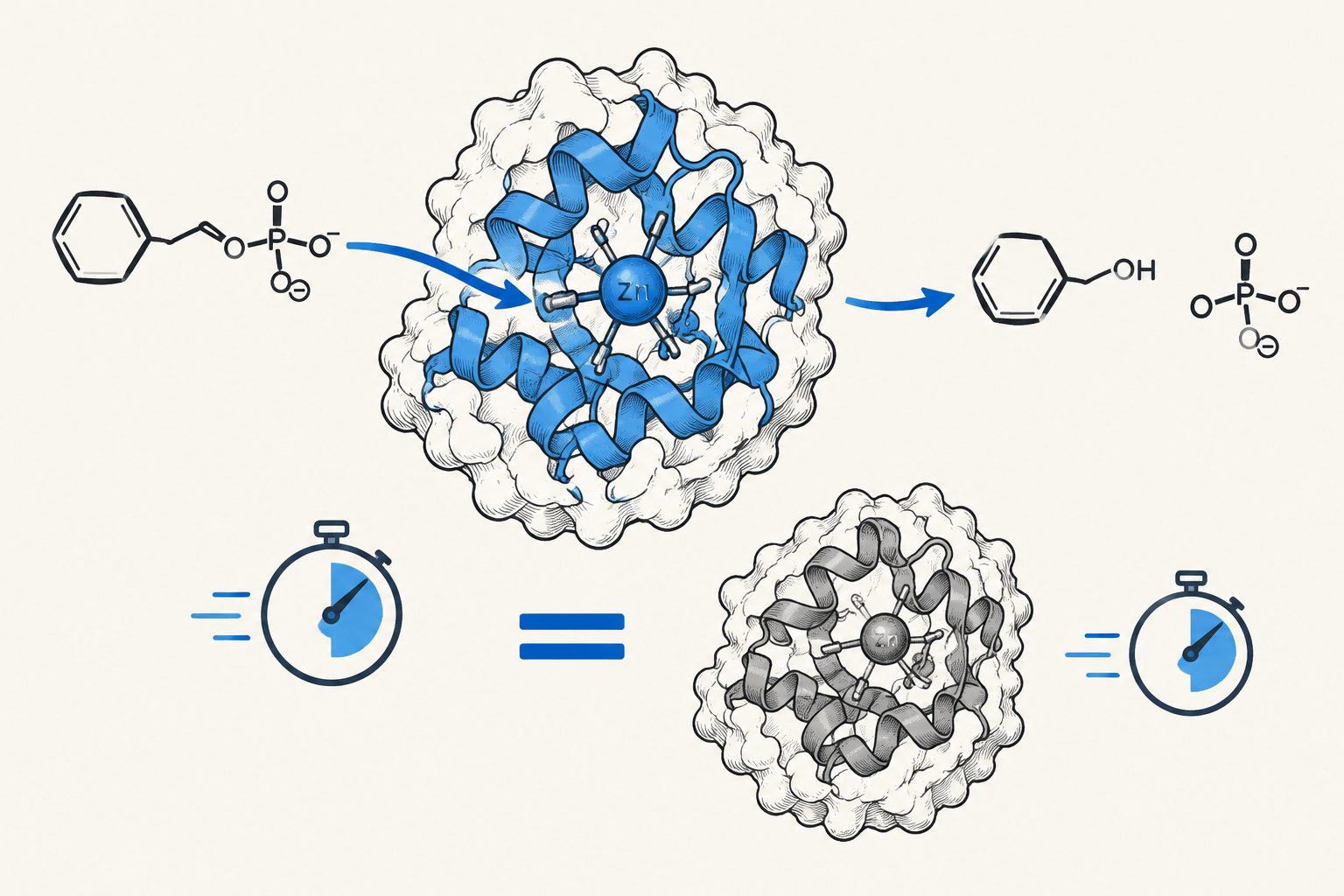
Researchers designed a zinc-containing enzyme from scratch, without a natural template, catalytic motif or evolutionary data. The enzyme showed activity against both phosphomonoesters and phosphodiesters, with rate enhancement comparable to characterized natural phosphatases.
A study of illicit alcohol in two Ugandan cities found that alcohol strength was inconsistent and sometimes under-declared, reaching 44.2%. Some spirits contained methanol above safe limits, while opaque beers showed bacterial contamination and many production and retail sites had poor sanitation.
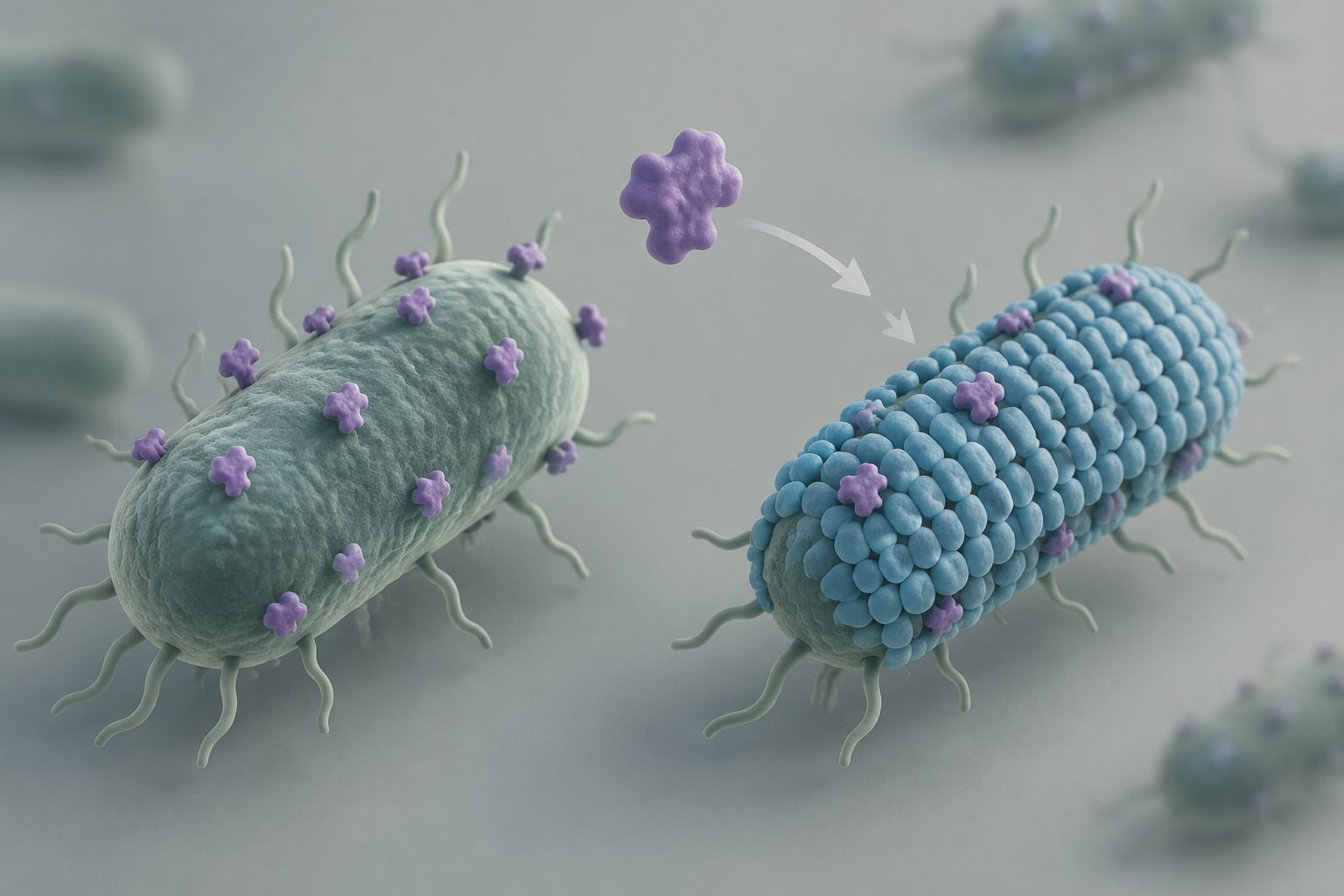
Researchers found that bacterial surface-layer proteins can evolve through modular changes and gene transfer, producing different outer structures. In closely related bacteria with the same type of surface layer, only pathogens showed resistance to the antimicrobial molecules LL-37 and lysozyme.