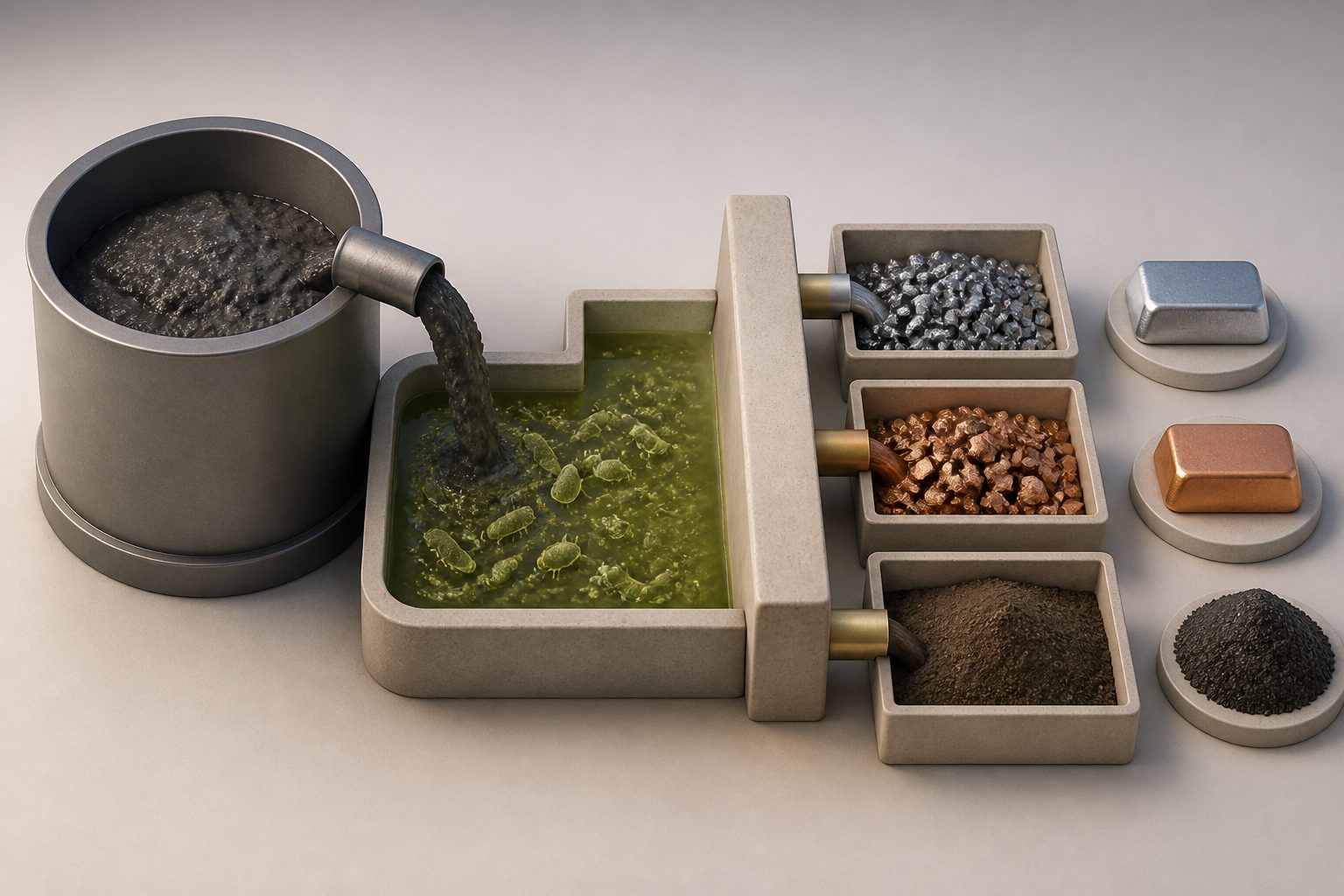
A roasting and leaching treatment removed zinc, lead and arsenic while leaving most of the iron behind.
The method first roasted jarosite-type sludge at 700 °C, then used water, a concentrated salt solution and sodium hydroxide at room temperature to remove different metals in sequence. Nearly 100% of the zinc entered the water solution, about 85% of the lead was removed with sodium chloride, and alkaline leaching extracted more than 90% of the arsenic and remaining lead.
The final residue contained 55% iron, while its total heavy-metal content was below 1%. A five-month continuous column test produced similar results to the smaller batch tests, and a separate 24-hour leaching test found that cadmium, copper, nickel, lead and zinc were released at levels below the study’s legal limits for hazardous waste.
What the treatment removed
After one hour of roasting at 700 °C, water leaching for one hour extracted nearly 100% of the zinc while leaving the iron in the solid residue. A sodium chloride solution then removed about 85% of the lead in two hours. Sodium hydroxide leaching for four hours extracted more than 90% of the arsenic and residual lead, bringing total lead removal above 98%.
In a continuous column experiment lasting five months, zinc, lead and arsenic removal was similarly effective and selective. Only 0.06% of the iron was cumulatively leached. The final solid contained 55 wt% iron and less than 1 wt% total heavy metals. Its leachability for cadmium, copper, nickel, lead and zinc was below the legal limits used in the study to classify hazardous waste.
Why the residue matters
Zinc production creates large amounts of iron-rich sludge containing heavy metals. The reported treatment could reduce the volume and hazard of this waste while producing solutions containing zinc, lead and arsenic for possible recovery.
The iron-rich final residue could potentially serve as a secondary material for ironmaking or construction, according to the researchers. The study demonstrates this potential through treatment and leaching tests, but does not establish that either end use has been implemented.
Evidence and caveats
The study combined small-scale batch experiments with a continuous column leaching test that ran for five months. The column results were comparable to the batch results, and a 24-hour leaching test assessed how readily metals were released from the final residue.
The abstract does not report the treatment’s costs, energy use, performance at full industrial scale or the results of using the residue in ironmaking or construction. The findings therefore show selective metal removal and reduced leachability under the tested conditions, rather than a complete industrial or commercial assessment.