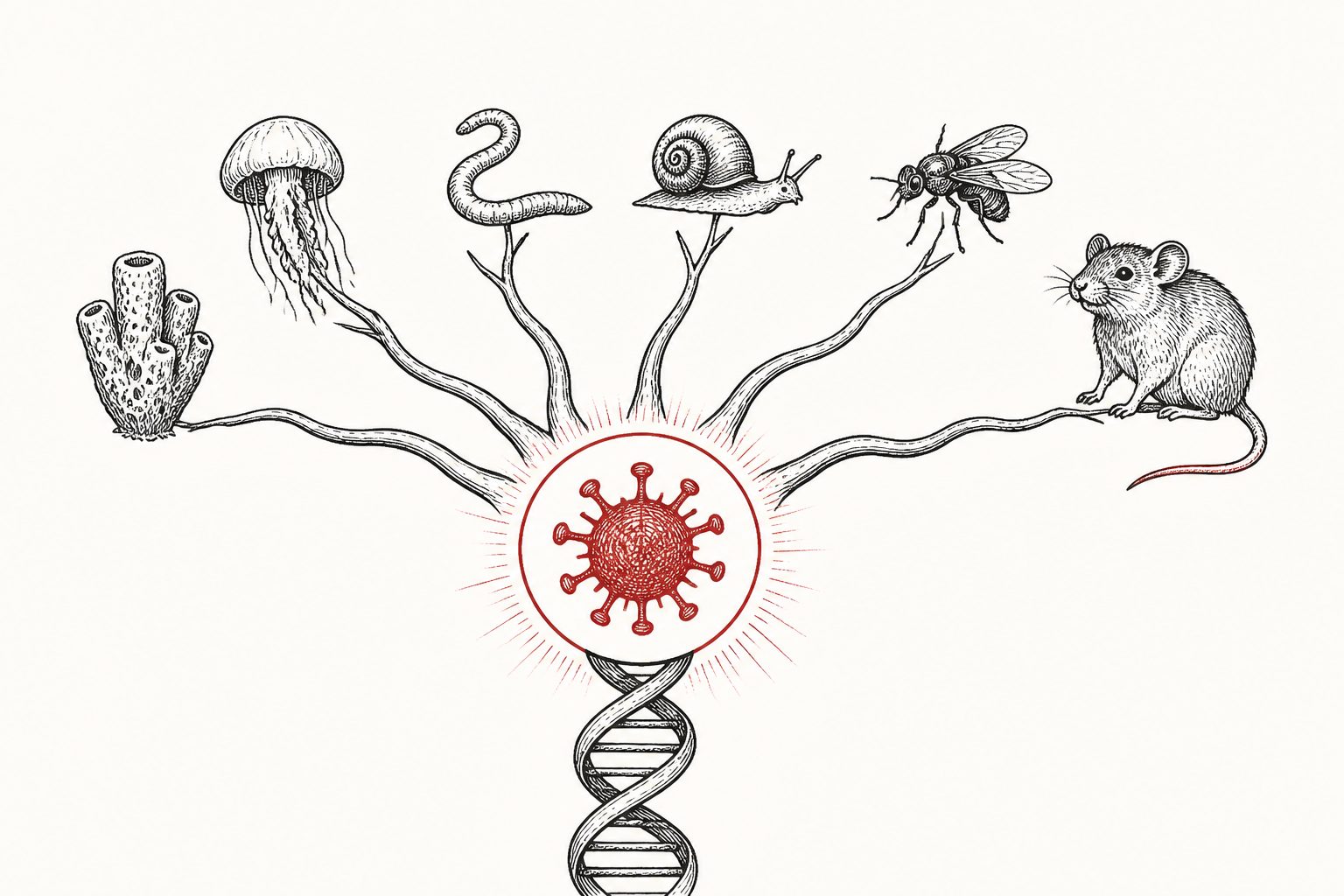
A survey found envelope-carrying genetic elements in cnidarians, ctenophores, tunicates and other invertebrate animals.
Researchers searched invertebrate animal genomes for intact endogenous retroviruses—genetic elements that can copy themselves in a host’s germline and usually carry genes called gag and pol. They found elements related to the Ty3/gypsy group in cnidarians, ctenophores, tunicates and other metazoans.
The elements carried two main kinds of envelope genes, resembling proteins from paramyxoviruses or herpesviruses. Comparisons of their sequences and structures suggested that the envelope genes generally evolved alongside the elements’ pol genes and their animal hosts, with little recombination. The researchers say this pattern is consistent with an ancient association that predates the split between bilaterian and non-bilaterian animals.
Ancient envelope-carrying elements
The study identified intact, envelope-carrying endogenous retroviruses related to Ty3/gypsy elements across diverse invertebrate metazoans, including cnidarians, ctenophores and tunicates. Some animal genomes contained multiple highly similar copies, consistent with recent expansion within those host lineages. The envelope genes fell into two broad groups: ones resembling paramyxovirus glycoprotein F and ones resembling herpesvirus glycoprotein B. The two types were described as equally abundant and widespread. Phylogenetic and structural analyses found that envelope genes had largely diverged together with pol genes and their animal hosts, and had recombined infrequently. The researchers interpret these findings as evidence that envelope genes joined these retrotransposons before the split between bilaterian and non-bilaterian animals, during the Precambrian era.
// Source
eLife · 2026 · DOI: 10.7554/elife.108449.3
Authors: Shashank Chary, Rippei Hayashi
Institutions: Australian National University