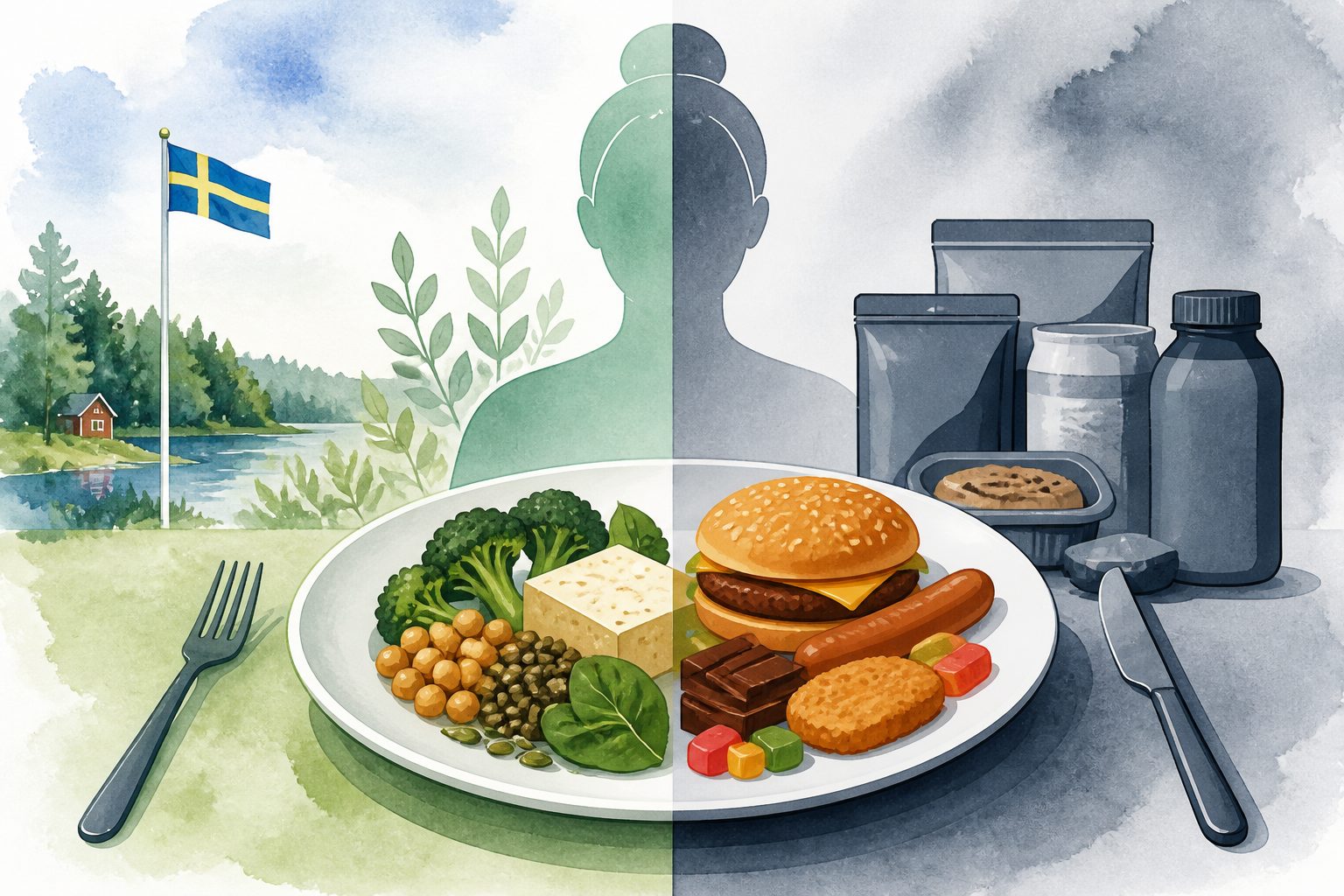
A Swedish youth study compared ultra-processed food intake across vegan, vegetarian, pescatarian and omnivore diets and found differences in where nutrients came from.
Researchers analyzed food intake from 244 youths aged 16–24 in the VeggiSkills-Sweden study. They classified foods as ultra-processed or not using the NOVA system and compared how much ultra-processed foods contributed to energy, nutrients and other dietary components across vegan, lacto-ovo-vegetarian, pescatarian and omnivore diets.
The study reported that vegans obtained more energy and nutrients (including n-3 fatty acids, vitamin D, vitamin B12, calcium and zinc) from ultra-processed foods than the other groups, and they reported that all vitamin D and vitamin B12 from ultra-processed foods. In the overall sample, those with the highest ultra-processed food intake had lower general nutrition knowledge and ate fewer whole grains, while free sugar intake was higher; biochemical indicators of nutritional status were not associated with ultra-processed food intake.
Nutrients differ by diet type
In the full study population, participants with the highest ultra-processed food intake had lower general nutrition knowledge and consumed less whole grain and more free sugars. They consumed less saturated fat and more polyunsaturated fat.
In comparisons across diets, youths following a vegan diet obtained more energy and more nutrients from ultra-processed foods than youths consuming lacto-ovo-vegetarian, pescatarian, or omnivore diets. The nutrients cited as coming in larger amounts from ultra-processed foods for vegans included n-3 fatty acids, vitamin D, vitamin B12, calcium and zinc, along with more salt. Vegans did not have a higher energy intake or higher body mass index. Vegans consumed more total dietary fiber and more polyunsaturated fatty acids, and less saturated fat. The study also reported that vegans obtained all their vitamin D and vitamin B12 from ultra-processed foods.
Across the entire study population, ultra-processed food intake was not associated with biochemical indicators of nutritional status.
One-time snapshot limits causes
This is a cross-sectional study, meaning it captured diet and nutrient information at one time point, so it cannot establish cause and effect. It relied on four 24-hour food recalls and classification of foods into ultra-processed versus non-ultra-processed using the NOVA system. The findings are based on 244 youths in Sweden (ages 16–24) in the VeggiSkills-Sweden study, so generalizability to other countries or age groups is uncertain. The abstract does not report biochemical marker details, and the study found no association between ultra-processed intake and biochemical nutritional status indicators, which limits conclusions about biological impact in this sample.
// Source
Nutrition Journal · 2026 · DOI: 10.1186/s12937-026-01378-8
Authors: Anna Turesson Wadell, Isabelle Mulkerrins, Christel Larsson
Institutions: University of Gothenburg