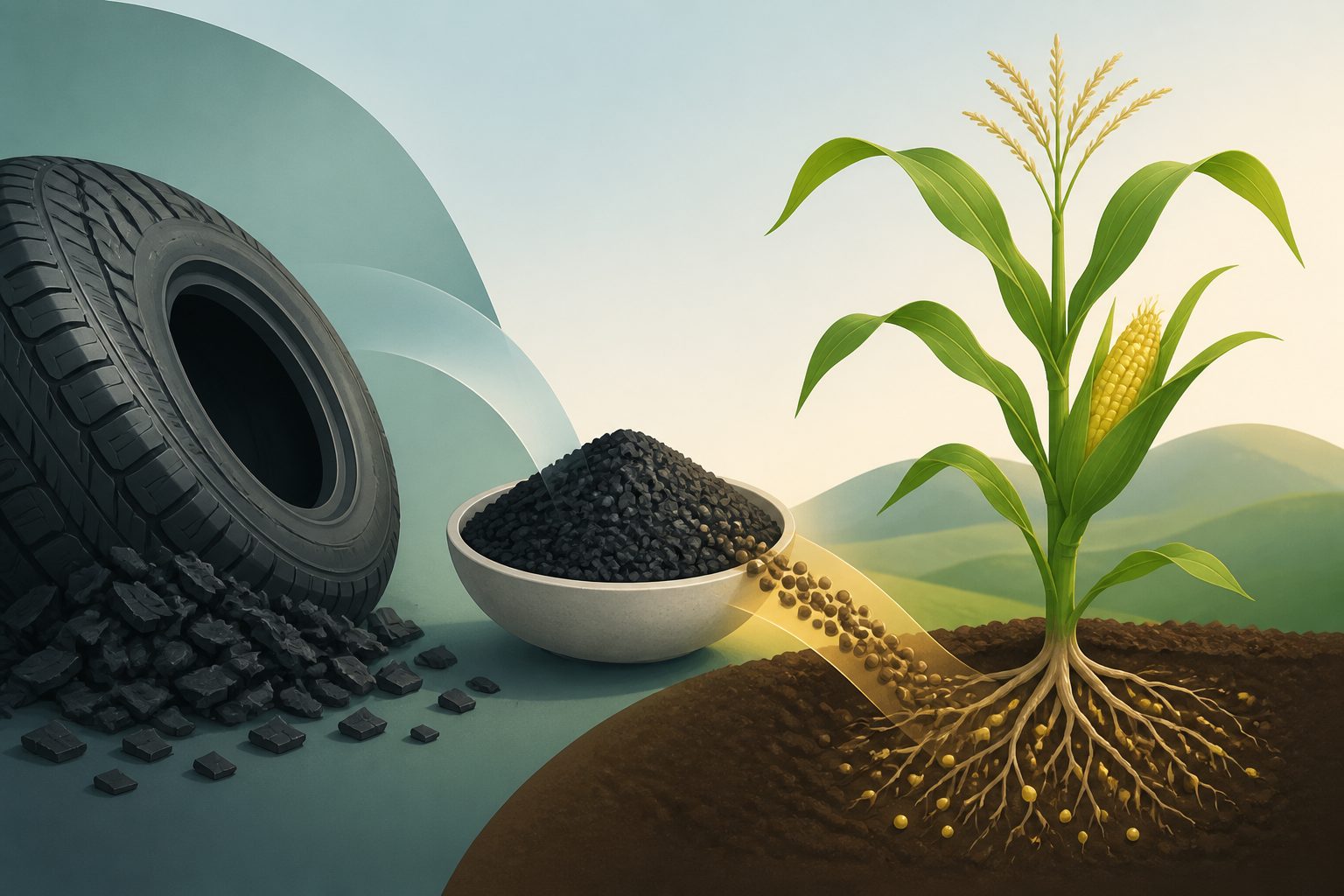
Treating tyre-derived biochar with hydrogen peroxide helped remove phosphorus from water and supported maize growth when the material was reused in soil.
Researchers produced biochar from waste tyres and treated it with a 10% hydrogen peroxide solution. In laboratory batch tests, the modified material removed far more phosphorus from simulated phosphorus-rich wastewater than untreated tyre biochar, with the researchers attributing the improvement to changes in its surface and to chemical and electrical interactions with phosphorus.
The team then tested phosphorus-loaded biochar in pots of nutrient-poor soil planted with maize. Plants grown with the modified biochar had nearly three times the shoot and root biomass of plants given phosphorus-loaded untreated biochar or no amendment, suggesting that the recovered phosphorus was more available to the plants.
What the treated biochar did
Hydrogen peroxide treatment improved the tyre biochar’s phosphorus-capturing properties. The modified biochar removed 99% of the phosphorus from the test solution, while untreated tyre biochar removed 20%. The researchers identified chemical bonding and electrical attraction as part of the removal process.
In a pot experiment, phosphorus-loaded modified biochar increased maize shoot and root biomass by nearly threefold compared with phosphorus-loaded untreated biochar and the unamended control. The findings indicate that the material could recover phosphorus from water and then release it gradually in soil as a fertiliser.