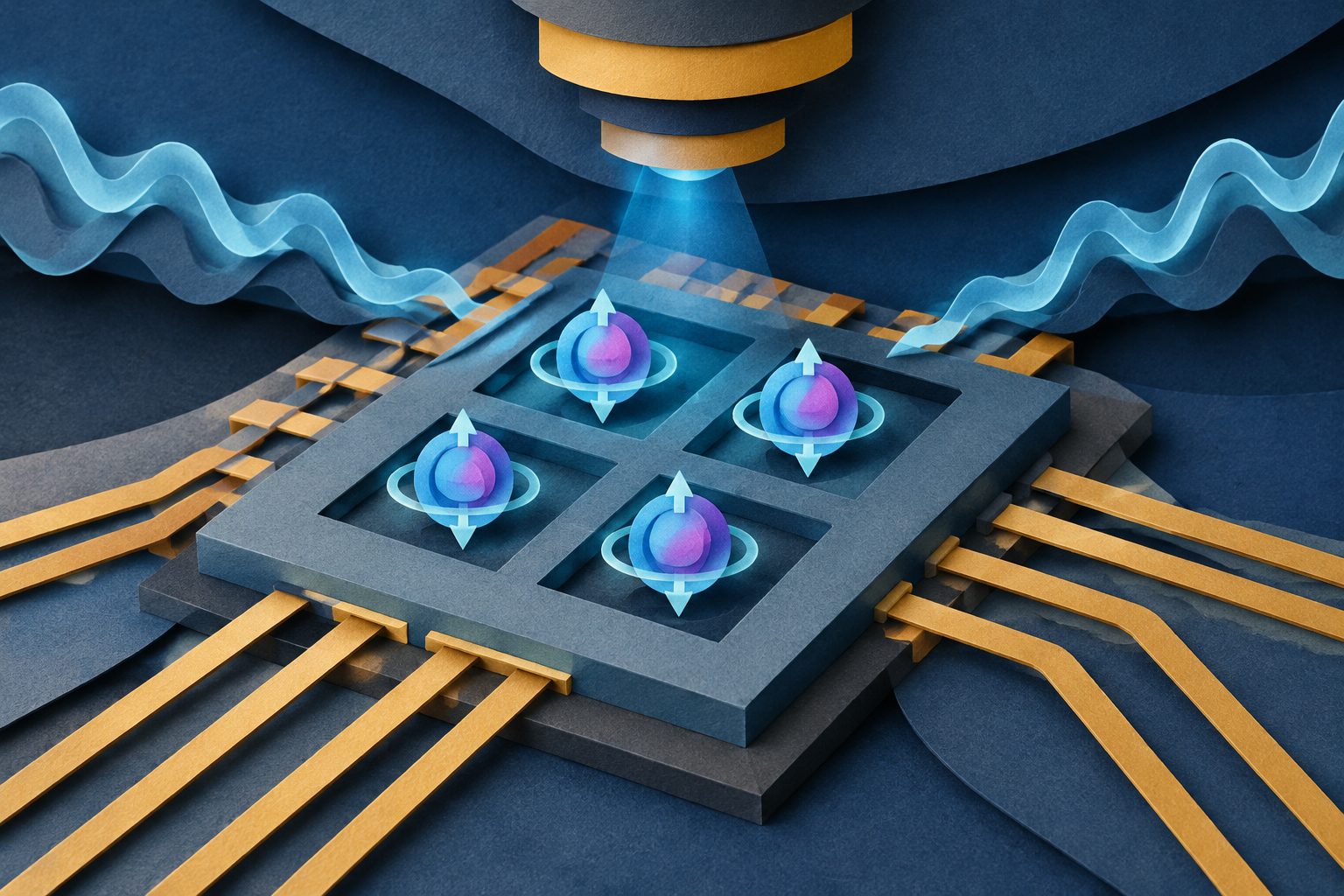
Researchers built a 36.7-milligram flying microrobot powered by ion wind, which produces thrust without mechanical moving parts. An onboard motion sensor and closed-loop control system let it perform controlled flight and hover while carrying an image sensor and a fiber-optic sensor.
Physics & Space2 months ago
Tiny robot flies, hovers and senses without moving parts
The 36.7-milligram machine used ion wind, onboard motion sensing and closed-loop control to fly while carrying two sensors.
How the robot flew
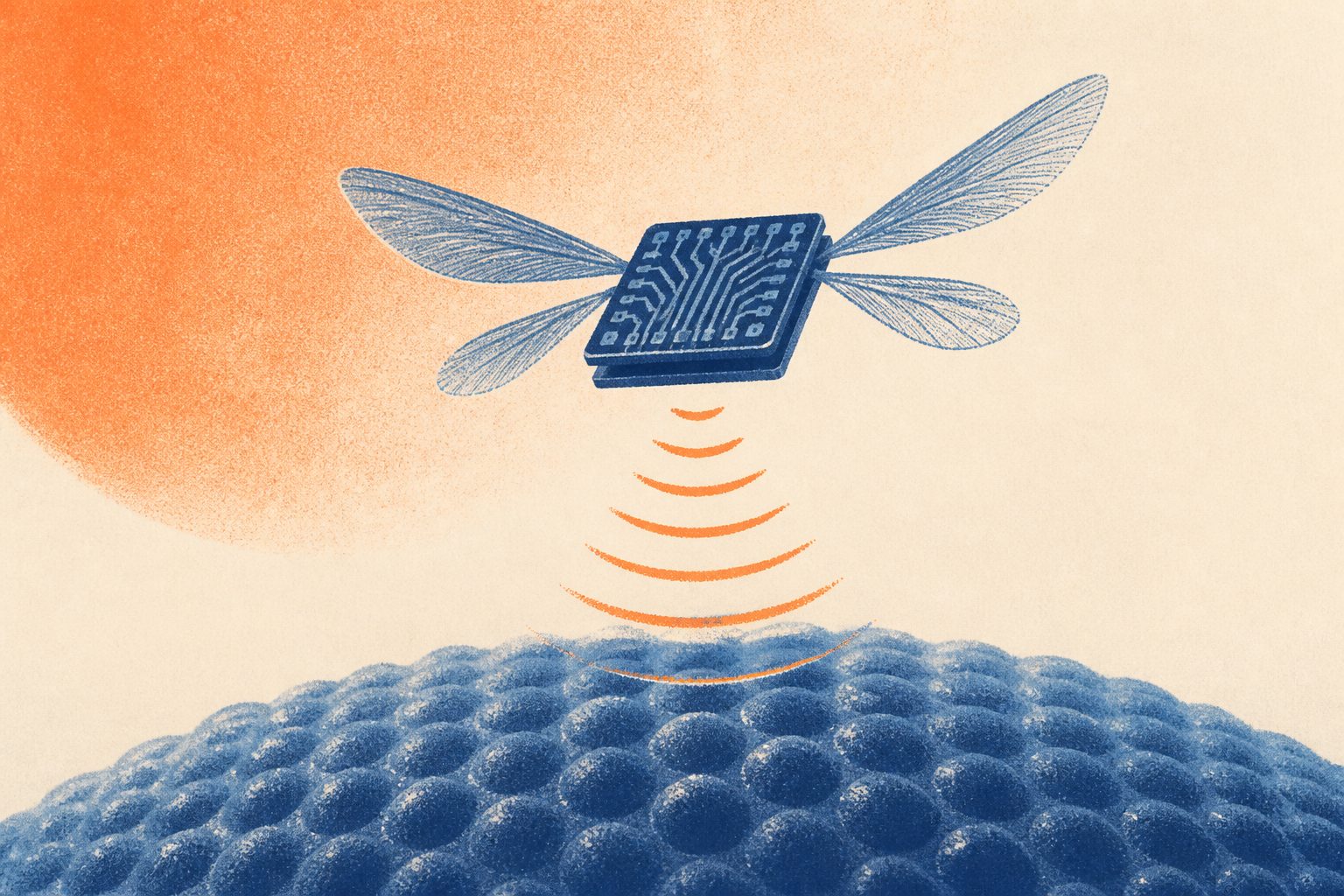
The microrobot used ion wind for propulsion and an inertial measurement unit, a sensor that tracks motion and orientation, to control its flight. It achieved a thrust-to-weight ratio of 5:1 and completed tethered hovering for one hour without mechanical actuators. The control system reduced the root mean square pitch error by 83.11% and the roll error by 89.21%. The robot carried a high-fidelity image sensor and a fiber Bragg grating sensor, then used them during predefined tasks including environmental surveillance and material identification while retaining enough maneuverability to complete those tasks. The researchers used an origami-inspired structure and metal-polymer composites designed for rapid assembly at a disposable cost.
Why the design matters
Ion propulsion could help make flying microrobots lighter and simpler because it generates thrust without mechanical moving parts. In this work, the robot’s control system and sensor payload address two barriers identified by the researchers: carrying useful equipment and maintaining control across multiple directions. The manufacturing approach may also support low-cost, rapidly assembled robots for potential swarm use, although the abstract does not show a deployed swarm or operation in the proposed hazardous environments.
Evidence and limits
This is an experimental research article reporting tests of a 36.7-milligram ion-propelled microrobot. The researchers demonstrated controlled flight, tethered hovering and predefined sensing tasks, but the abstract does not report untethered flight duration, performance in real-world environments or deployment of a robot swarm. The suggested uses in surveillance, disaster rescue and hazardous-environment exploration remain potential applications rather than results shown here.
// Source
Nature Communications · 2026 · DOI: 10.1038/s41467-026-76462-y
Authors: Qiannan Tao, Yang Gu, Xinshuai Wang, Zhi Chen, Fei Lv, Fu Xu, Tahir Bashir, Yu Zheng, Yunqi Cao, Xianfa Cai, Khadga Thakuri, Bin Han, Wei Li
Institutions: Zhejiang University, Huazhong University of Science and Technology, University of Vermont, Nanjing University of Posts and Telecommunications, Nanjing University