Study suggests a possible heart-related action of SGLT2 medicines
Experiments with human heart samples and laboratory tests linked these medicines to an enzyme involved in fuel use.
Very low evidenceMixed evidenceInterpret with caution
Medical disclaimer: This article summarizes research findings and is for informational purposes only. It is not medical advice.
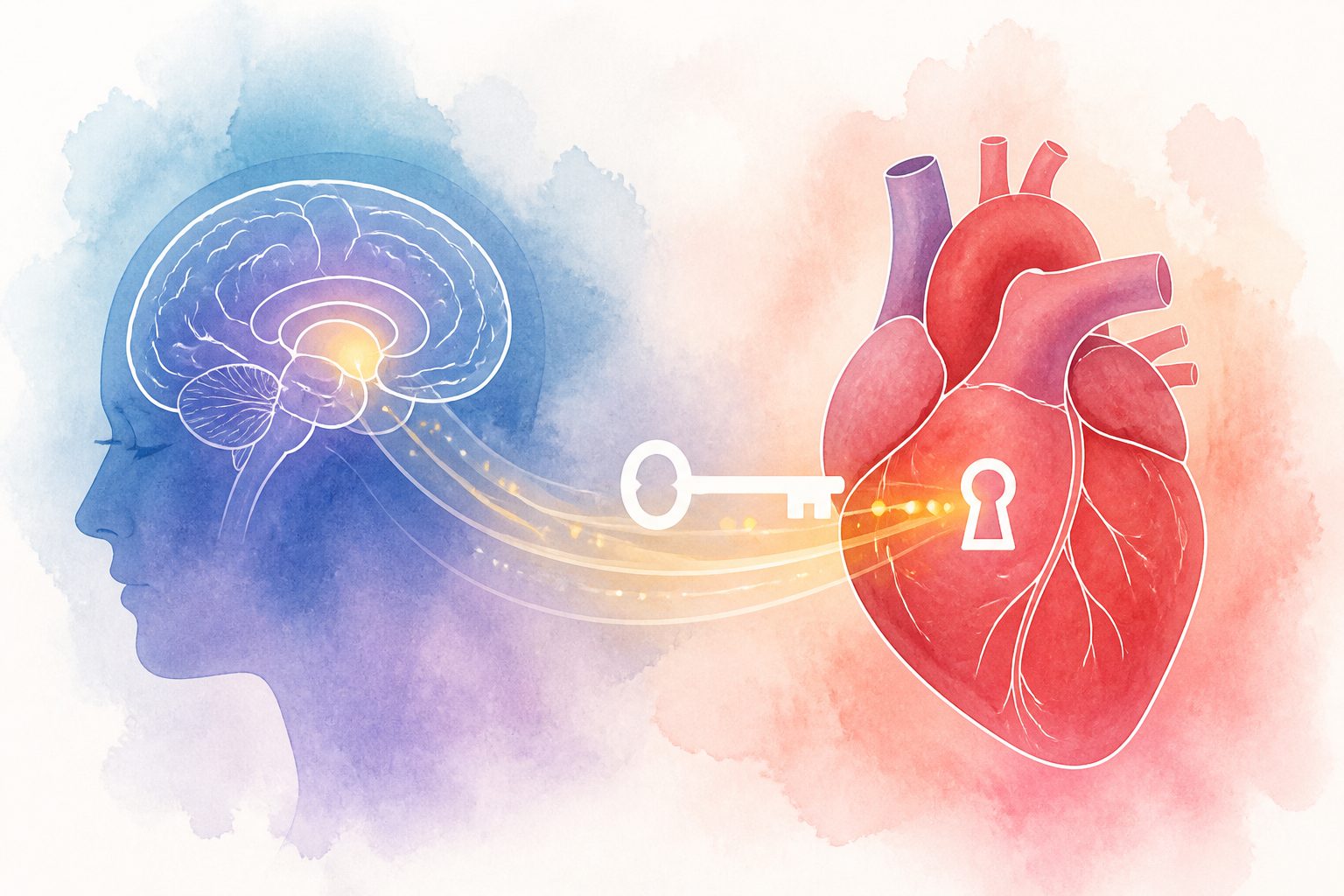
Editorial illustration — not from the study.
The researchers focused on pantothenate kinase 1, or PANK1, an enzyme that begins the conversion of vitamin B5 into coenzyme A. Coenzyme A helps cells use different fuels, including in the heart. In experiments involving human failing-heart samples and isolated adult human heart cells, SGLT2 inhibitors were associated with increased activity in this pathway and increased contractility of isolated heart cells.
Additional tests with purified components suggested that the medicines can bind directly to PANK1 and increase its activity. Computer modeling proposed how this binding might reduce a form of inhibition of the enzyme. These findings describe a possible mechanism, but they do not by themselves show how much the mechanism contributes to outcomes in people taking these medicines.
What the study looked at
The study examined whether SGLT2 inhibitors act on PANK1, an enzyme involved in producing coenzyme A. The abstract reports stable-isotope studies, experiments using ex vivo perfused human heart tissue from patients with heart failure, tests in isolated adult human heart cells, experiments with purified components, and computer-based dynamic modeling. The number of human samples, cells, and experimental replicates is not provided in the abstract. This was not described as a randomized trial, clinical trial, or observational study of patients receiving treatment.
Key findings
In the reported human heart-tissue and heart-cell experiments, SGLT2 inhibitors were associated with greater pantothenate use, increased coenzyme A synthesis, and restoration of lower coenzyme A levels in failing-heart samples. The researchers also reported broader fuel use in ex vivo human heart tissue and increased contractility in isolated adult human heart cells. In laboratory tests with purified components, the medicines directly bound to PANK1 and increased its enzyme activity. Inhibition of PANK1 prevented the increased contractility seen with SGLT2 inhibitors in isolated heart cells. Computer modeling suggested a possible binding site and activation mechanism. These results support a possible biological association and mechanism; they do not prove that PANK1 activation causes the medicines’ clinical benefits in patients.
Who this may apply to
The findings are most directly relevant to biological research involving human heart tissue and cells from people with heart failure, as well as laboratory investigations of PANK1 and coenzyme A. They do not yet establish effects in people taking SGLT2 inhibitors, people without heart failure, or any particular patient group. No treatment or medication decision should be inferred from these experiments alone.
Why this matters
SGLT2 inhibitors are already associated with clinical benefits in heart failure, but the abstract says those benefits appear to occur independently of the drug target for which the medicines were originally developed. Identifying another possible target could help researchers understand their effects on heart metabolism. However, the new findings mainly come from ex vivo human tissues, isolated cells, purified laboratory systems, and modeling. They may not translate directly to how the medicines work in whole people or explain patient outcomes.
Limitations & evidence assessment
The abstract provides too little information about the number of human samples, cells, experimental repetitions, comparison groups, and duration of the experiments. The work was not described as a clinical study and did not measure symptoms, hospitalizations, survival, or other patient outcomes. Ex vivo tissues and isolated cells do not reproduce the full body, and purified laboratory tests and computer models may not capture all biological conditions. The study’s evidence for a possible mechanism therefore does not establish that PANK1 activation is responsible for the known clinical effects of SGLT2 inhibitors.
Why this evidence level: The work combines experiments using human heart tissue and heart cells with purified laboratory components and computer modeling, rather than a clinical trial in people. It provides a possible biological explanation for known effects of SGLT2 inhibitors, but the abstract does not show that this mechanism causes health benefits in patients.
Evidence levels are editorial estimates derived from study metadata — they are not clinical appraisals.
A study used chemical imaging to compare Pseudomonas aeruginosa biofilms grown on a laboratory surface and on mouse lung tissue. Biofilms on lung explants showed greater production and deeper tissue penetration of pyocyanin, a phenazine involved in biofilm activity and host interactions.
Certain Streptomyces bacteria improved maize growth when plants were grown with limited water in a greenhouse experiment. The effects varied among the four bacterial isolates, and further testing is needed before they can be considered for field use.
A review of five medicinal plants finds evidence that leaves, young stems, small branches and fruits may sometimes replace roots, bark or heartwood as sources of similar plant chemicals. The authors say these substitutions could reduce destructive harvesting, but therapeutic and safety testing is still needed.