In marine and freshwater fish, selected genetic variants were concentrated near genes that differed in activity between tissues.
Researchers compared gene activity in brain and gill tissues from wild-caught sticklebacks living in one marine and two freshwater environments. They then examined whether genes with different activity in freshwater fish were more likely to contain genetic variants showing earlier signatures of natural selection.
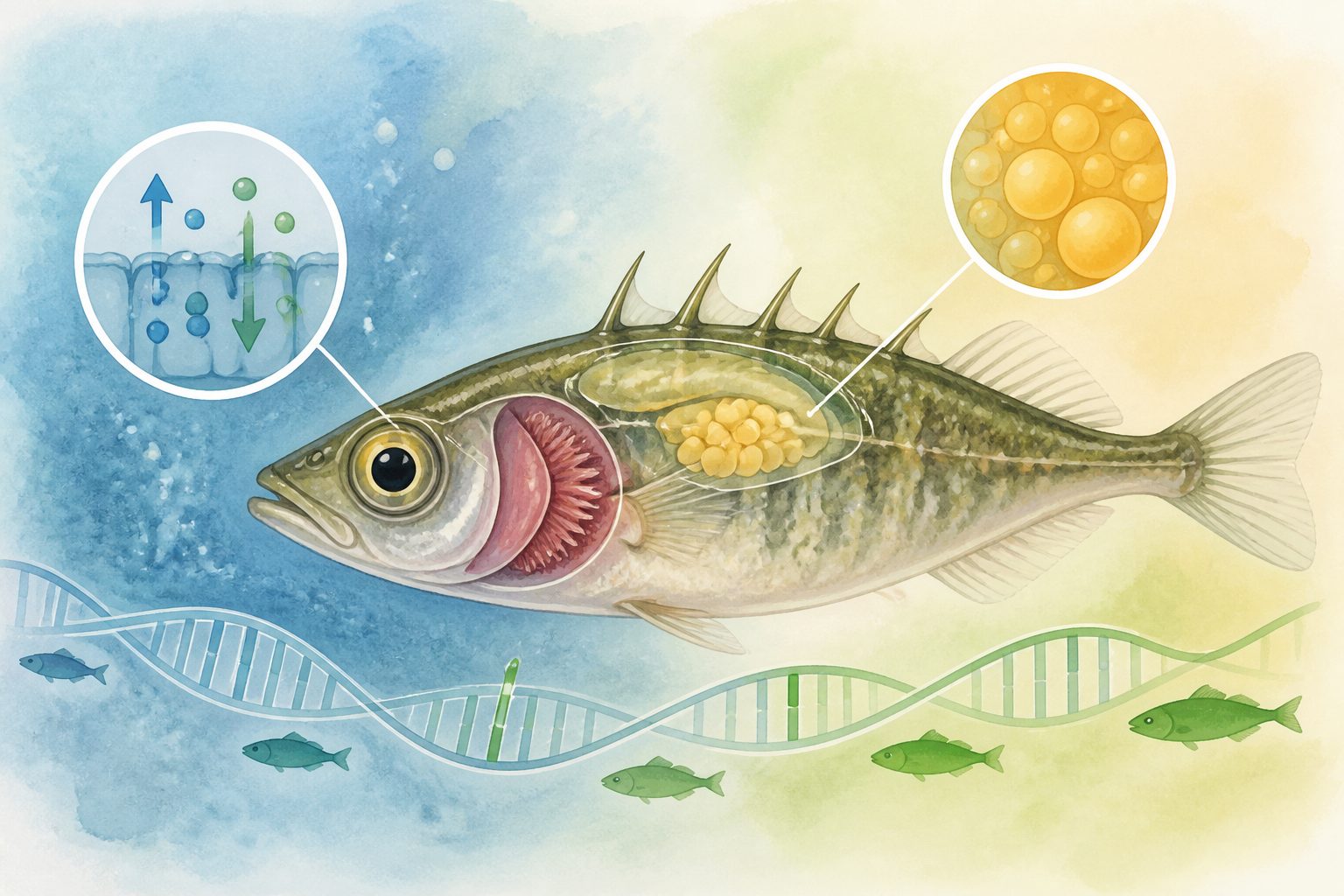
The freshwater-differentially expressed genes were enriched for previously identified adaptive single-nucleotide polymorphisms and statistical outliers in genetic differentiation between populations. Many variants were in regulatory DNA near genes, while examples included pvalb4 in gill calcium regulation and acsl4a in brain fatty acid metabolism.
Selected genes in fish tissues
Genes expressed differently in freshwater populations were enriched for single-nucleotide polymorphisms previously associated with rapid adaptation and for variants that stood out as unusually different between populations. Most of these variants were in cis-regulatory regions—DNA sequences that can influence the activity of nearby genes—and were predicted to have low to moderate effects on proteins.
The researchers also identified a high-impact variant in col8a1b that leads to a premature stop codon. Among the highlighted genes, pvalb4 was linked to calcium regulation in the gills, while acsl4a was involved in fatty acid metabolism in the brain. The study examined wild-caught fish from one marine and two freshwater environments using gene-expression measurements from brain and gill tissue.
Connecting genes to adaptation
The findings connect genetic differences between marine and freshwater sticklebacks with changes in activity in specific tissues. That provides a way to narrow the gap between genome scans, which identify candidate selected variants, and the physiological processes those variants may influence.
The results point to ion regulation in gills and fat metabolism in the brain as parts of the molecular response associated with freshwater adaptation. They also suggest that changes in gene regulation, rather than changes to protein structure alone, may account for many of the selected variants identified in these fish.
Evidence and caveats
This was a genomic and transcriptomic study of wild-caught threespine sticklebacks. The researchers measured gene activity in brain and gill tissues and tested whether differentially expressed genes were enriched for previously identified adaptive variants and genetic-differentiation outliers.
The enrichment links selection signatures with tissue-specific gene-expression differences, but it does not by itself show that any particular variant causes a specific physiological trait. The abstract does not provide sample sizes, and the study covered one marine and two freshwater environments and two tissues, so the findings do not establish how broadly the patterns apply to other populations, environments or tissues.