Hybrid fathers cared for young in ways linked to lower offspring survival, while hybrid mating remained possible.
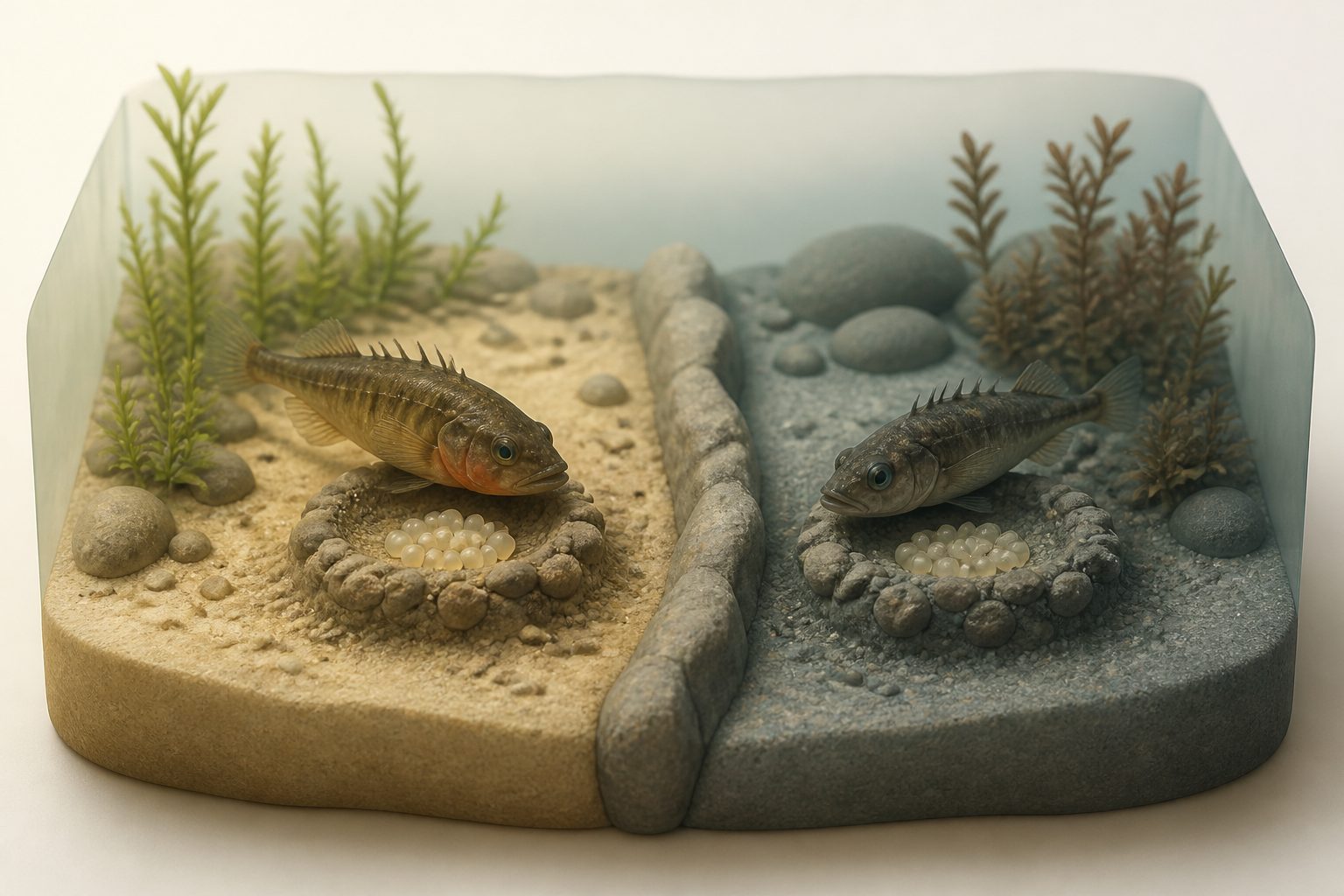
In the common stickleback type, males fan their eggs and defend their nests. The white type has lost this care and instead disperses embryos into the surrounding environment. Researchers compared common, white and hybrid fathers to examine whether these differences affect offspring survival and mating between the types.
The embryos themselves showed no inherent incompatibility. But first-generation hybrid fathers displayed dysregulated care linked to lower survival of parented offspring, while second-generation hybrids showed higher rates of eating their own young after fertilization. In laboratory tests, hybrid males mated at similar rates to common and white males, and genetic analysis found small proportions of suspected hybrids at sites where the types live together.
What hybrid fathers did
The researchers found no intrinsic incompatibility in the embryos. However, first-generation hybrid fathers showed poorly regulated parental care, and the offspring they parented had lower survival. The authors suggest this may involve disruption of the feeding and parenting systems that guide care. Supporting that possibility, second-generation hybrids showed significantly higher rates of eating their own offspring after fertilization than common or white fathers.
Despite major differences in nest building and courtship, first-generation hybrid males achieved mating success at similar rates to common and white males in the laboratory. This suggests that barriers before fertilization may be weak in these tests. Population genetic analysis found low proportions of suspected hybrids at sites where the two types occur together.
Why parental care matters
The findings identify parental behavior as a possible barrier that acts after mating and fertilization. If hybrid fathers are less able to care for offspring successfully, their young may be less likely to survive, which could reduce genetic mixing between the two stickleback types.
This may help explain how common and white sticklebacks remain phenotypically distinct despite evidence that they can mate. The authors say the results also suggest that hybridization probably occurs at low rates in the wild, although the study does not establish how often it happens across natural populations.
Evidence and caveats
The evidence comes from comparisons of parental care and offspring survival in common, white and hybrid sticklebacks, laboratory observations of mating success, and population genetic analysis of fish from sites where the types live together. The study shows an association between hybrid fathers’ dysregulated care and lower survival of parented offspring, but the abstract does not establish which specific behavior causes the mortality.
The mating results were obtained in laboratory-based studies, so they may not represent all conditions in the wild. The genetic analysis detected low proportions of putative hybrids, but the abstract does not provide sample sizes or explain how widely the sampled sites represent the species’ range. It also does not quantify the survival differences or the rates of hybridization in nature.