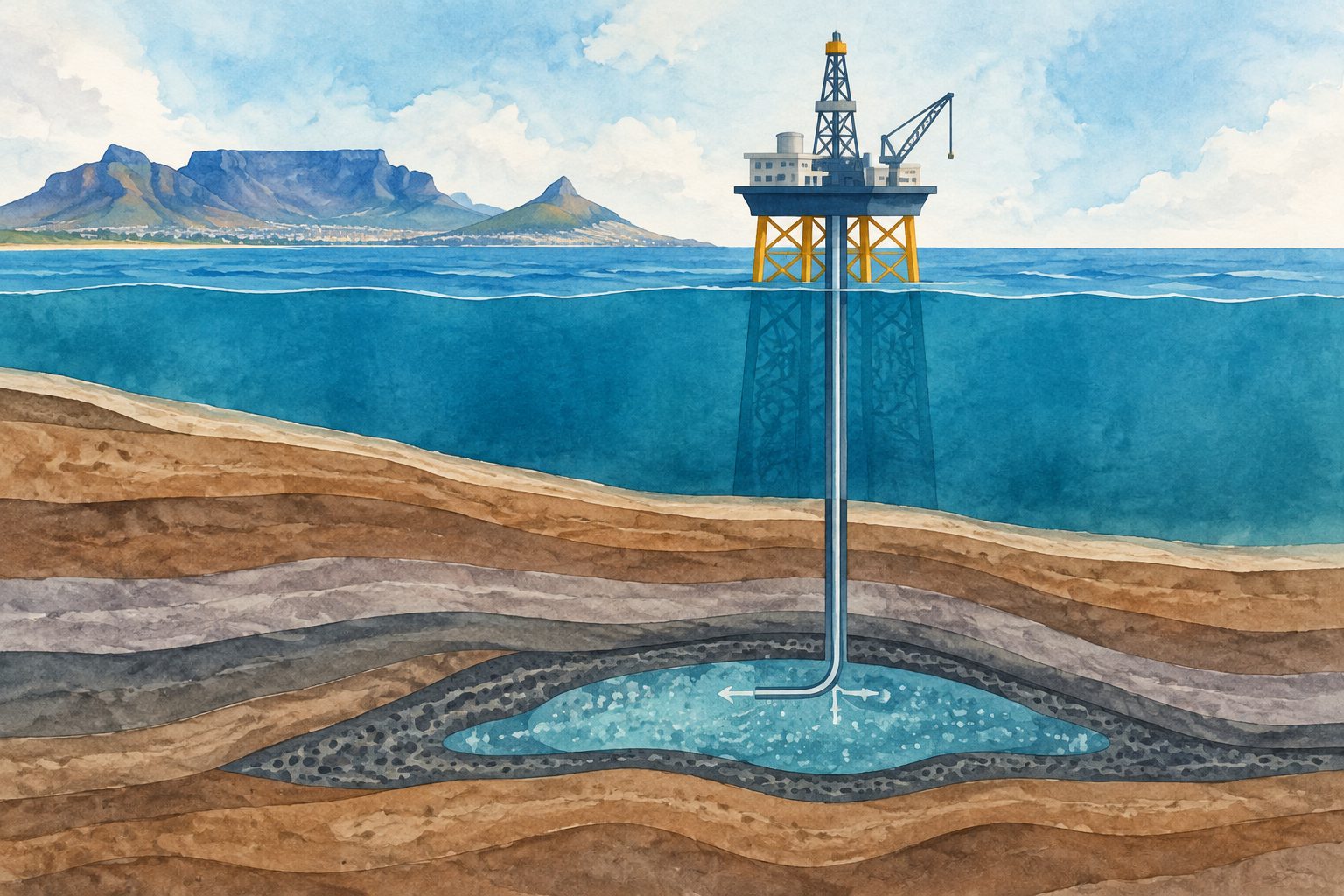
A review estimates 150 gigatons of theoretical storage capacity, while highlighting major barriers to putting projects into practice.
South Africa’s fossil-fuel and industrial carbon dioxide emissions reached 401.89 million tonnes in 2023, according to the paper. Because the country relies heavily on coal and has committed to reaching net-zero emissions by 2050, the review examines whether underground storage could contribute to a lower-carbon transition.
The assessment finds substantial theoretical storage potential in geological formations across the country’s sedimentary basins, concentrated almost entirely offshore. But the authors say much more work is needed to determine how much carbon dioxide could realistically be stored and to establish whether projects would be technically, financially and socially workable.
South Africa’s storage potential
The review estimates that South Africa’s geological formations have a theoretical carbon dioxide storage capacity of 150 gigatons, almost entirely offshore. It identifies potential opportunities in sedimentary basins but also lists infrastructure needs, financial constraints, regulatory restrictions, technical difficulties and limited stakeholder support as obstacles to developing a storage project. The authors call for detailed studies of geology and storage behaviour, including geophysical, rock-property, mechanical, chemical, sediment-related and computer-based assessments.