The study tested acoustic emission sensors, which detect stress waves produced when pressurised gas escapes, on a six-metre pipeline containing bends, joints and valves. The researchers varied leak conditions and sensor positions to assess both leak detection and source location.
Engineering & Technology4 days ago
Sound sensors detected leaks in carbon-dioxide pipelines and valves
Tests found leaks as small as 0.5 litres per minute at a valve and estimated large potential savings from monitoring.
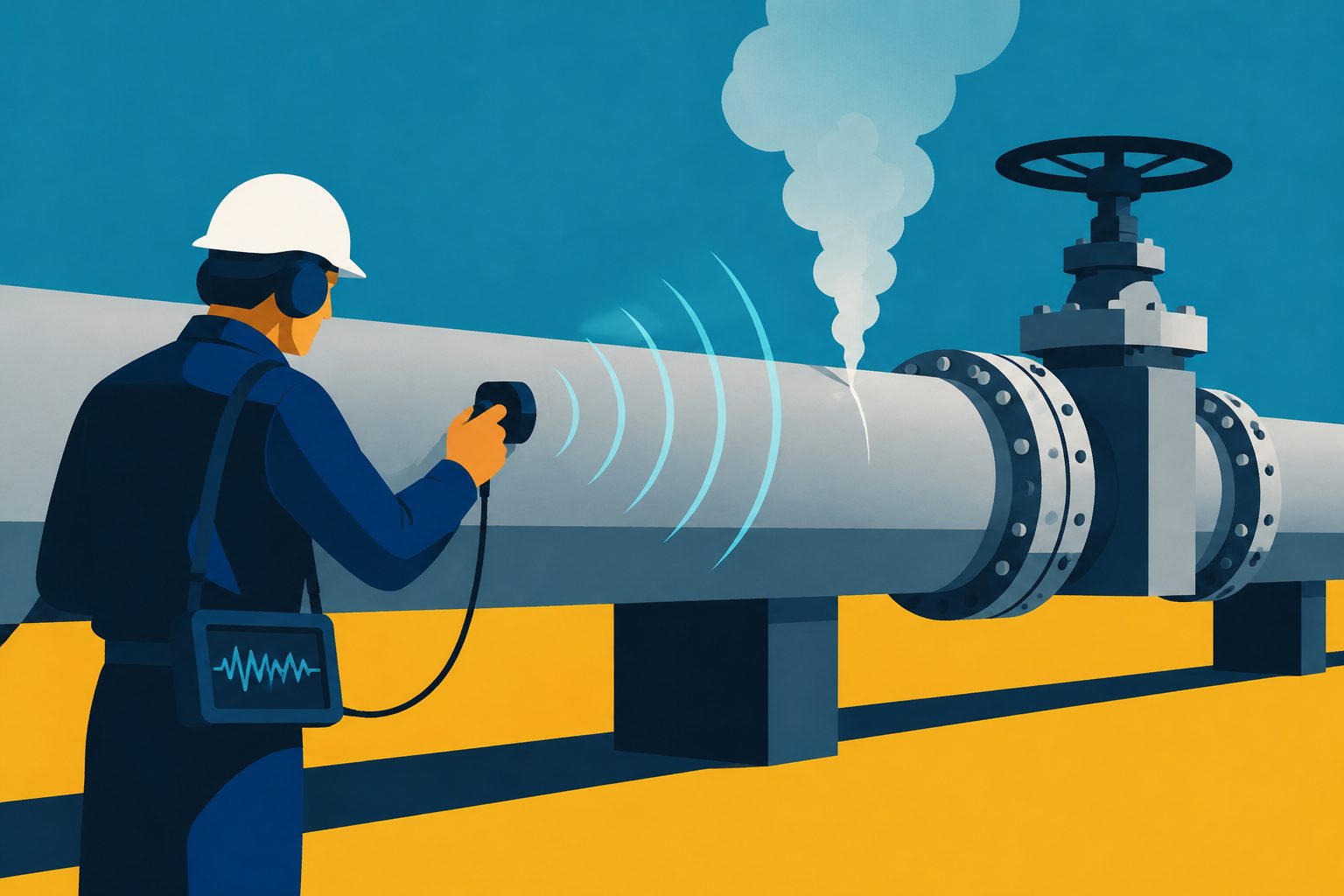
What the sensors detected
The sensors identified leaks as small as 0.5 litres per minute from a valve and 42 litres per minute from the pipeline. Several signal measures, including signal strength and frequency characteristics, changed with the leak rate and could be used to monitor leaks. A classifier using one signal-strength measure also showed high accuracy in distinguishing leaks. A source-location method produced errors of less than 0.1% across the tested sensor arrangements when configuration-specific corrections were used. Based on the tested detection limits, assumed dense-phase carbon-dioxide transport conditions for the economic calculation, and international carbon-dioxide prices in December 2025, the researchers estimated annual savings of $225,482 from monitoring a single valve and approximately $18.9 million from monitoring pipelines.
Why leak monitoring matters
Leaks from carbon-dioxide pipelines can cause safety, environmental and financial problems. The results suggest that acoustic monitoring could provide continuous detection and help operators locate leaks for maintenance. The estimated savings indicate that the potential financial value may extend from hundreds of thousands of dollars for a valve to millions for pipeline monitoring, although the estimates depend on the study's assumptions and would need to be assessed for commercial systems.
Evidence and limits
This was an experimental study using a six-metre test pipeline under static conditions: the system was pressurised, held at pressure and monitored. The tests used gaseous carbon dioxide at ambient laboratory conditions, with pressure limited to 20 bar, rather than the denser, higher-pressure conditions typically associated with industrial transport. The authors therefore describe the results as a proof of concept. The economic estimates also assumed equivalent dense-phase transport conditions and used a December 2025 gas price. The study notes that wider industrial use would require further analysis of sensor and installation costs, data processing, pipeline length, environmental penalties and integration with existing infrastructure. It also identifies operational and technical barriers, including in subsea settings.
// Source
Journal of Nondestructive Evaluation · 2026 · DOI: 10.1007/s10921-026-01436-5
Authors: Vignesh Vishnudas Shanbhag, Nabil Belbachir, Rune Schlanbusch
Institutions: NORCE Research AS