Shijiazhuang’s haze controls cut pollution, but severe haze persisted
A 45-day campaign reduced several local emissions, while pollution carried from elsewhere and unfavorable weather kept fine particles at very high levels.
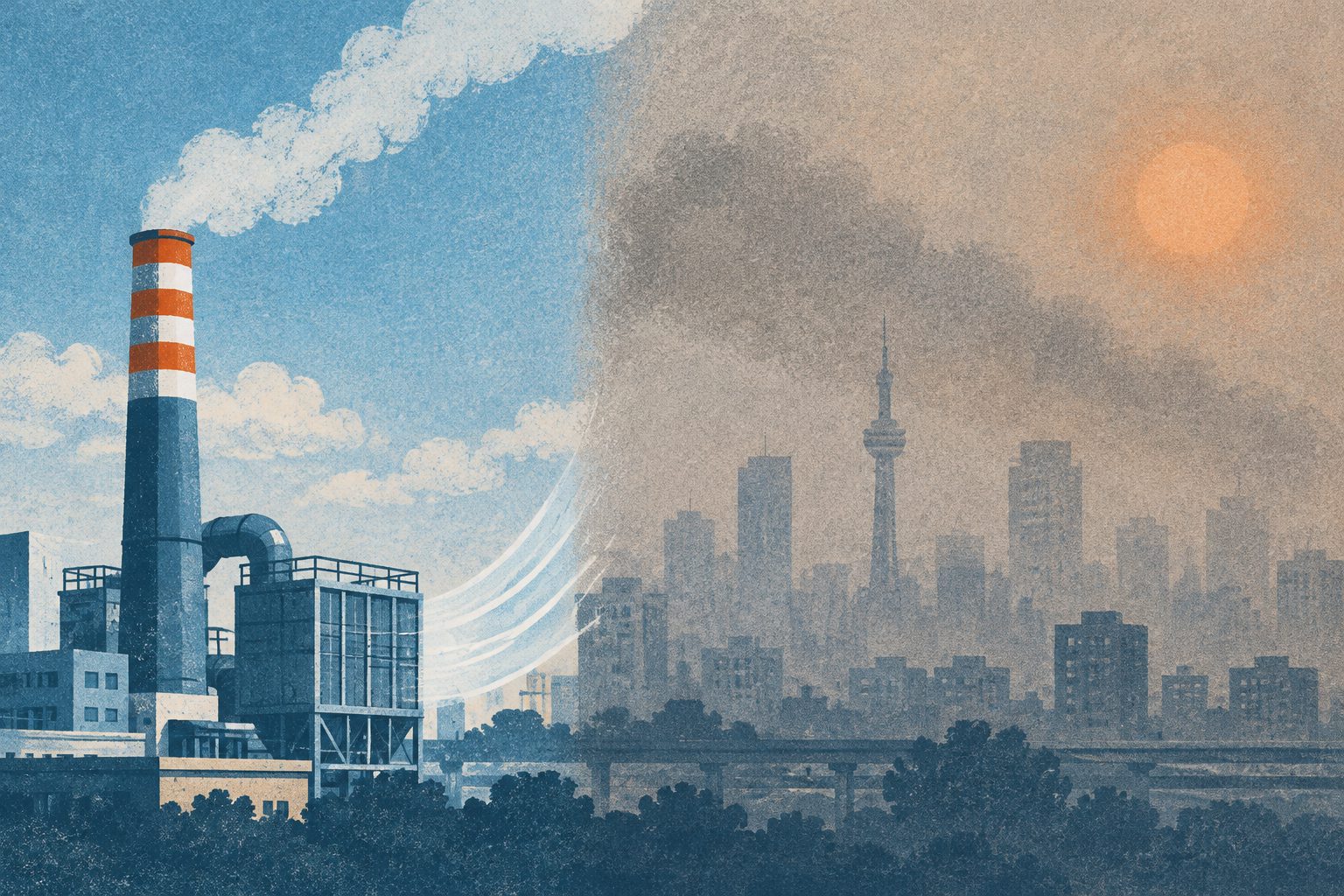
Editorial illustration — not from the study.
Researchers evaluated Shijiazhuang’s 45-day “Sharp Sword to Cut Haze” campaign, which included temporary shutdowns in some heavy industries and restrictions on vehicle use. They combined weather-adjusted pollution data, comparisons with similar cities and machine-learning predictions to estimate what pollution would have been without the campaign.
The analysis found reductions in both local emission strength and measured pollutant concentrations. Independent analysis of PM2.5 chemical components also found lower contributions from vehicles, steelmaking and coal burning than during the comparable period in 2017. Even so, severe haze continued, pointing to the limits of action confined to one city.
What the controls changed
The estimated local emission strengths of PM2.5, PM10, sulfur dioxide, nitrogen dioxide and carbon monoxide fell by 4.3%, 4.8%, 15.8%, 5.8% and 15.3%, respectively, during the campaign. Estimated concentrations fell by 42.1 micrograms per cubic meter for PM2.5, or 14.8%; 47.4 micrograms per cubic meter for PM10, or 12.4%; 13.8 micrograms per cubic meter for sulfur dioxide, or 16.6%; 15.8 micrograms per cubic meter for nitrogen dioxide, or 15.5%; and 0.9 milligrams per cubic meter for carbon monoxide, or 19.6%.
The PM2.5 source analysis provided an independent check: contributions from vehicle emissions, steelmaking and coal combustion were 4.1%, 11.0% and 21.7% lower, respectively, than during the corresponding period in 2017. Despite these reductions, PM2.5 averaged 243.2 micrograms per cubic meter during the intervention.
Why local action was not enough
The results show that stringent local measures can reduce emissions and pollution concentrations during a severe haze event, but they may not be enough to keep air quality safe when pollution moves across regional boundaries or weather traps pollution near the ground. The findings support coordinating emergency controls across regions rather than relying on measures in a single city.
Evidence and caveats
This was a retrospective, model-based evaluation of Shijiazhuang’s 2016 campaign. Researchers used weather-adjusted observations, an augmented comparison with cities that did not have comparable interventions, and machine-learning predictions to estimate the campaign’s effects in relation to a no-intervention scenario. Chemical analysis of PM2.5 provided a separate check on changes in pollution sources.
The no-intervention results are counterfactual estimates rather than direct observations of what would have happened without the campaign. The study examines one city and one 45-day intervention, so its results do not by themselves establish how the same controls would perform elsewhere or during another haze episode.
Images from the European Space Agency’s JUICE mission show that small volcanic or subvolcanic features on a lunar highland are distributed in ways consistent with control by impact-generated and regional fractures. The same observations also reveal mafic, or iron- and magnesium-rich, material inside Langrenus crater, although its exact minerals remain uncertain.
A study of the PARADeS flood-risk project in Ghana argues that effective flood planning needs more than technical analysis. It finds that working with communities and other stakeholders through shared research, trust-building and long-term institutional support can produce knowledge that is more socially grounded and actionable.
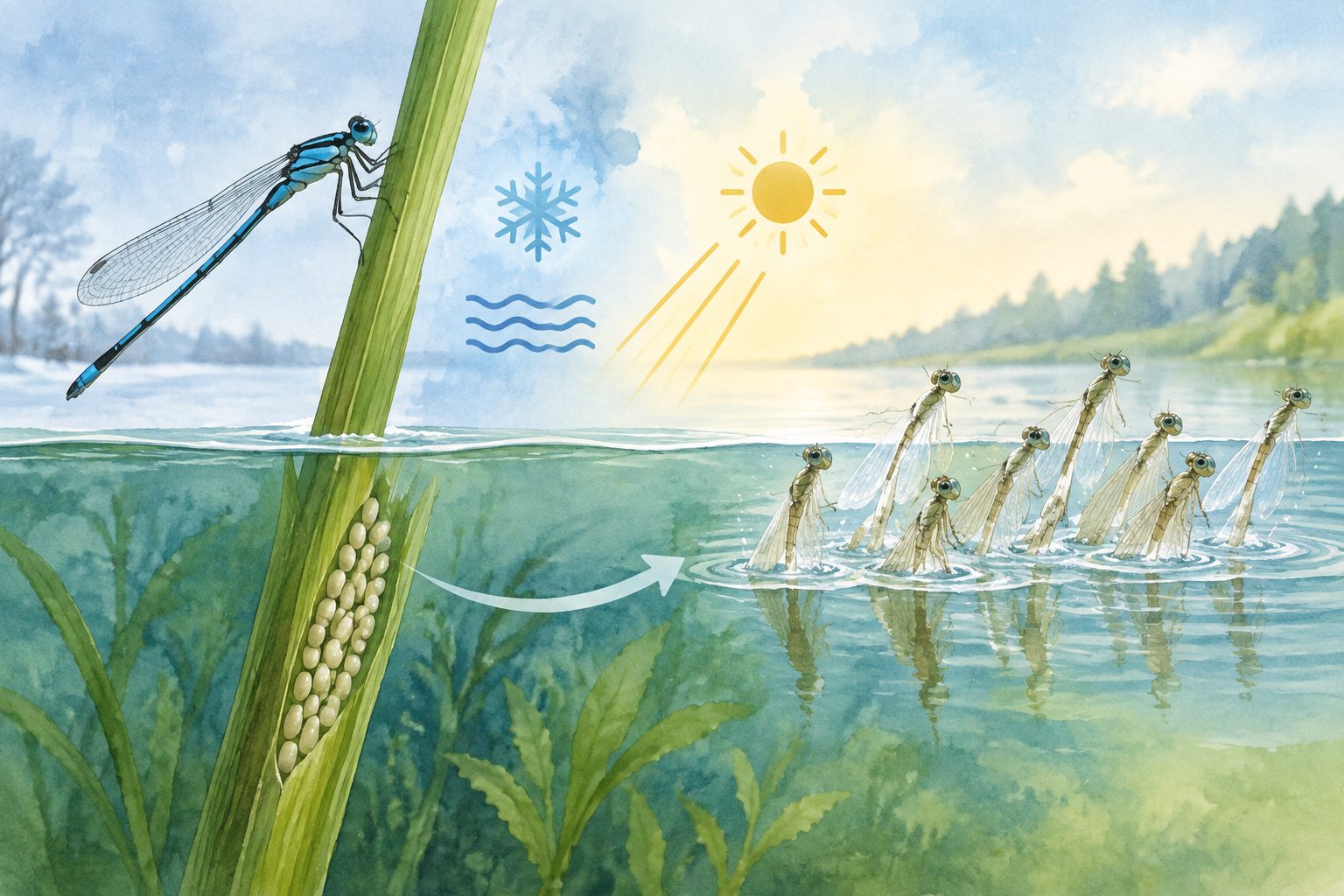
Damselfly eggs from different latitudes responded to winter cold and day length in ways that helped time hatching for spring. The eggs could hatch at 5 °C, and newly hatched larvae survived two weeks near 0 °C, suggesting that warmer winters could allow some hatching during winter.