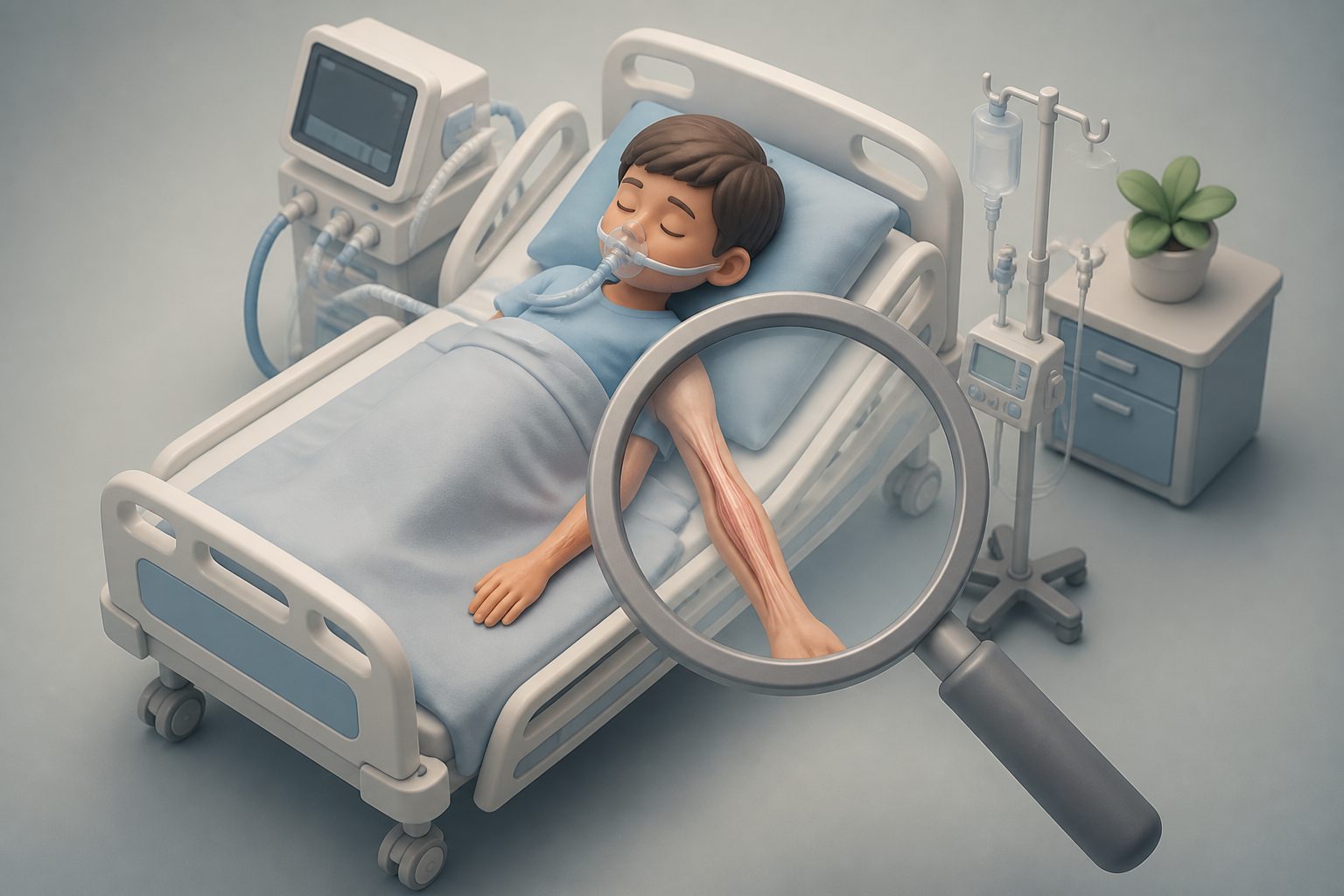
Researchers combined nine studies that measured the thickness of the quadriceps muscle with ultrasound at least twice during a pediatric intensive care stay. On average, muscle thickness was 7.89% lower after seven days, while the greatest reported loss during admission averaged 10.77%.
Health & Medicine1 week ago
Review finds muscle loss is common in children in intensive care
An analysis of nine studies found that nearly half of the children had more than 10% muscle thinning during their intensive care stay.
High evidenceReviewSome caution advised
Medical disclaimer: This article summarizes research findings and is for informational purposes only. It is not medical advice.
The question reviewed
The researchers searched five medical databases for observational studies of children in pediatric intensive care units. Eligible studies used ultrasound to measure quadriceps femoris muscle thickness at a minimum of two time points during the admission. Nine studies, including 536 patients, were included in the review and quantitative analysis. The researchers also examined clinical and demographic factors associated with greater muscle loss.
Key conclusions
The pooled average reduction in muscle thickness after seven days was 7.89% (95% confidence interval, 4.41% to 11.36% reduction). The maximum observed loss during admission was 10.77% on average (95% confidence interval, 8.67% to 12.87% reduction). An estimated 49.4% of children had clinically significant atrophy, defined in the review as a reduction greater than 10%. Greater loss was associated with use of neuromuscular blocking medicines, older age compared with infancy, and larger accumulated protein and calorie deficits. Because the included studies were observational, these associations do not establish that these factors caused the muscle loss.
Who this may apply to
These findings may apply most closely to children with characteristics similar to those included in the nine pediatric intensive care studies. They should not automatically be generalized to healthy children, adults, children outside intensive care, or every pediatric intensive care setting. The results describe muscle-thickness changes and associated factors, not the effects of specific treatments or the expected recovery of an individual child.
What this could mean
Muscle thinning was measured early during critical illness in children, suggesting that changes in muscle size may be common during pediatric intensive care. The findings may help researchers and clinicians understand the extent of this problem and evaluate ultrasound as a way to measure it. The review did not establish whether ultrasound monitoring or any particular intervention improves strength, function, recovery, or long-term health.
Limitations & evidence assessment
The analysis included only nine studies and 536 children, so its estimates may be affected by differences among the studies, patients, ultrasound methods, and timing of measurements. All included studies were observational and did not establish cause and effect or provide the same strength of evidence as randomized trials. The abstract does not provide enough information about study-to-study variation, patient selection, underlying illnesses, or longer-term functional outcomes. Muscle thickness is a measurement of muscle size and does not by itself show how strong or functional a child is.
Why this evidence level: Meta-analysis pooling multiple studies sits at the top of common evidence hierarchies.
Evidence levels are editorial estimates derived from study metadata — they are not clinical appraisals.
// Source
Jornal de Pediatria · 2026 · DOI: 10.1016/j.jped.2026.101599
Authors: Marcelo de Araújo Nazaré, Olga Naila Ayo Menezes Liberato Franz de Carvalho, Daniel Dominguez Ferraz, Bruno Prata Martinez
Institutions: Universidade Federal da Bahia, Complexo Hospitalar Universitário Professor Edgard Santos, Universidade Salvador