Review examines family therapy for eating disorders in autistic young people
The authors summarize reported outcomes and experiences and describe possible changes to communication, environments, and therapy structure.
Moderate evidenceReviewSome caution advised
Medical disclaimer: This article summarizes research findings and is for informational purposes only. It is not medical advice.
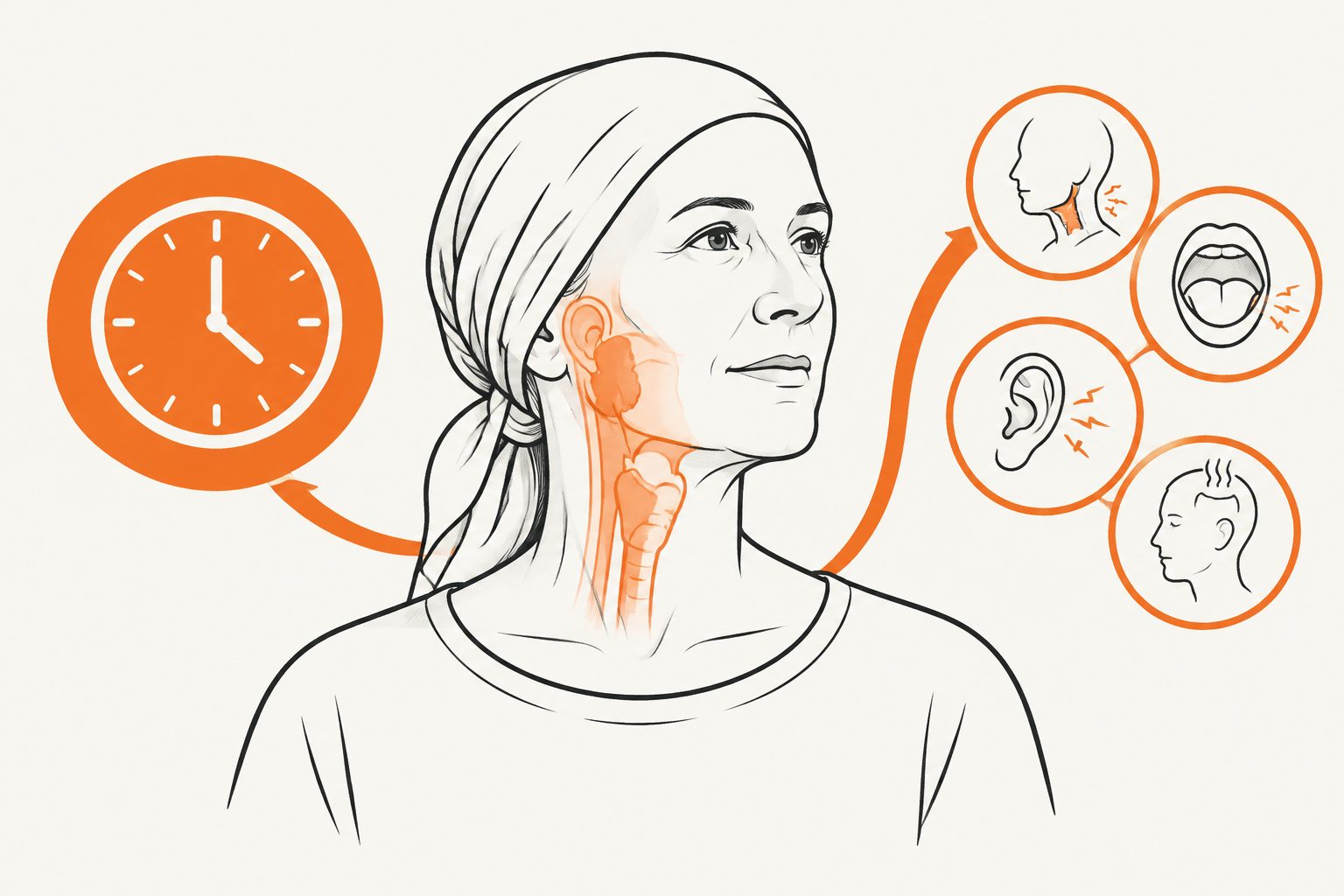
Editorial illustration — not from the study.
A narrative review in Current Psychiatry Reports examined recent research on eating-disorder-focused family therapy, often called FT-ED, for autistic children and young people. It considered reported outcomes, experiences of care, and adaptations suggested for autistic needs.
The reviewed research suggests that autistic young people in outpatient FT-ED may be more likely than non-autistic peers to need more intensive care. Autistic young people and their parents or carers also commonly described poorer experiences, while clinicians reported limited confidence in adapting a structured therapy approach.
The question reviewed
The review examined recent developments in eating-disorder-focused family therapy for autistic children and young people. It brought together quantitative research on outcomes, qualitative research on experiences reported by autistic young people and their parents or carers, and clinician reports about adapting a manualized approach. The abstract does not state the number of studies or participants included, nor does it describe a formal systematic-review or meta-analysis method.
What the evidence shows
The reviewed quantitative studies suggest that autistic children and young people, and those with high autistic traits, receiving outpatient FT-ED were more likely to require escalation to more intensive levels of care than non-autistic peers. Because these were reported findings from underlying studies summarized by a narrative review, the abstract does not establish that autism caused the difference.
Qualitative studies found that autistic young people and their parents or carers often reported poor experiences of FT-ED. Clinicians described a lack of confidence, especially when trying to adapt a manualized therapy. Suggested adaptations included quieter or dimmer environments, attention to sensory-related and historical eating patterns, clear and literal communication, communication passports, education about autism and eating disorders, careful consideration of how eating-disorder thoughts and behaviors are discussed, and separated sessions. The abstract does not report whether these adaptations improved recovery or other outcomes.
Where this may apply
The review concerns autistic children and young people, including those with high autistic traits, receiving outpatient eating-disorder-focused family therapy. Its conclusions may be relevant to similar clinical settings, but they do not establish that every autistic patient will have the same experiences or outcomes, and they do not directly evaluate other age groups, treatments, or care settings.
Why it matters
Family therapy is one approach used in eating-disorder care for young people, but this review indicates that autistic patients and their families may experience outpatient FT-ED differently from non-autistic peers. It also highlights practical areas that researchers and clinicians have identified for further development, such as sensory-aware settings and clearer communication. The review does not demonstrate that any particular adaptation is effective, nor does it determine which changes support recovery without interfering with eating-disorder care. Further guidance and decision-making tools were identified as areas for development rather than established solutions.
Limitations & evidence assessment
The abstract does not report how many studies or participants were included, how studies were selected, or whether the findings were formally combined. As a narrative review, it may not capture all available research, and its conclusions depend on the quality and design of the underlying studies. The abstract also does not provide the size of the reported differences, follow-up periods, or enough detail to determine whether autistic status itself caused poorer outcomes or experiences.
Why this evidence level: This is a narrative review bringing together quantitative and qualitative research, rather than a systematic review or a new controlled trial. The underlying studies appear to include observational and experience-based evidence, and the abstract does not provide enough detail to judge their size or overall quality.
Evidence levels are editorial estimates derived from study metadata — they are not clinical appraisals.
// Source
Current Psychiatry Reports · 2026 · DOI: 10.1007/s11920-026-01710-3
This systematic review examined randomized human trials of concurrent chemotherapy and radiation for locally advanced head and neck, cervical, esophageal, and non-small-cell lung cancers. Across the included trials, combined treatment was reported to provide better overall survival than radiation alone, but it also caused more severe short-term side effects. The review did not provide enough information in its abstract to show how many trials or patients were included.
Researchers pooled results from seven human studies comparing multiple-staged with single-stage removal and reconstruction of congenital melanocytic nevi, sometimes called congenital moles. Staged surgery was associated with fewer major wound complications and recurrences, as well as slightly shorter and narrower scars, but the studies did not find a clear difference in cosmetic or overall patient satisfaction.
A cluster-randomized human study in 210 adults with recently detected stage 1 hypertension in Uzbekistan compared salt-sensitivity testing followed by assigned medication choices with conventional management. After 12 weeks, more participants in the testing-guided group reached the study's blood pressure target, although the study was small, short, and conducted in only three primary care centers.