Researchers report drug-resistant Klebsiella in Johannesburg hospital patients
Genomic testing found resistance-related genes in many invasive bacterial isolates collected from hospitalized adults.
Low evidenceHuman studySome caution advised
Medical disclaimer: This article summarizes research findings and is for informational purposes only. It is not medical advice.
Editorial illustration — not from the study.
The researchers used laboratory surveillance and whole-genome sequencing to examine invasive Klebsiella pneumoniae infections in hospitalized adults. They assessed antimicrobial-resistance genes, resistance measured in laboratory tests, plasmids that can carry resistance genes, and selected links with clinical outcomes.
Overall, 79.1% of the isolates contained genes associated with a multidrug-resistant pattern. Resistance detected from genes was higher than resistance seen in laboratory testing for aminoglycosides and carbapenems, similar for third-generation cephalosporins, and lower for colistin. One bacterial sequence type, ST2497, was associated with a higher risk of death in statistical modeling, but this association does not establish causation.
The question examined
This human observational study examined the genetic and antimicrobial-resistance characteristics of 508 Klebsiella pneumoniae isolates collected during laboratory-based surveillance in 2023 and 2024. The isolates came from blood and cerebrospinal fluid cultures of adults hospitalized in Johannesburg, South Africa. Researchers used whole-genome sequencing to study resistance genes, plasmids, bacterial lineages, virulence-related characteristics, and associations with death. The abstract does not provide enough information to determine the number of hospitals, how patients were selected, or the length of follow-up.
What researchers observed
Among the 508 isolates, 79.1% carried genes associated with a multidrug-resistant phenotype. Genotypic resistance—resistance suggested by genes—was more common than phenotypic resistance measured in laboratory testing for aminoglycosides and carbapenems. The two measures were similar for third-generation cephalosporins, while genotypic resistance was lower than phenotypic resistance for colistin. IncX3, IncFII, and IncFIB were the plasmid types most often linked with beta-lactamase genes identified in the abstract as blaCTX, blaTEM, blaNDM, and blaOXA. Statistical modeling found that isolates classified as ST2497 were associated with a higher risk of death. This was an association, not proof that ST2497 caused deaths.
Who this may apply to
These findings may be most relevant to researchers and public-health teams studying invasive Klebsiella pneumoniae infections and antimicrobial resistance in Johannesburg or similar hospital settings. They do not directly describe resistance patterns in the general population, people outside hospitals, other regions, or all patients with Klebsiella infections. The reported association between ST2497 and death should not be assumed to apply to individual patients or to show that the bacterial type caused the outcome.
The significance
The study adds genomic information about invasive Klebsiella pneumoniae and antimicrobial resistance in a region where the abstract says molecular surveillance remains limited. Comparing resistance genes with laboratory test results may help researchers understand how resistance is being carried and detected in this setting. However, the findings describe bacterial isolates from hospitalized adults in Johannesburg and should not be interpreted as estimates for all South African residents, all African countries, or all people with Klebsiella infections.
Limitations & evidence assessment
This was an observational study from a specific hospital-based surveillance setting, so it cannot establish cause and effect. The abstract provides limited information about the number of hospitals, patient selection, patient characteristics, possible differences in clinical care, and follow-up for outcomes. The sample included isolates from invasive infections only, so the results may not represent other Klebsiella infections or people who were not hospitalized. The abstract also does not report uncertainty measures for all resistance estimates or enough detail to judge how broadly the statistical association with death applies.
Why this evidence level: This was an observational genomic surveillance study of 508 bacterial isolates from hospitalized adults at hospitals in Johannesburg, rather than a randomized trial or a systematic review. Its findings are useful for describing resistance patterns in this setting, but they cannot establish that particular bacterial strains or genes caused death or would have the same patterns elsewhere.
Evidence levels are editorial estimates derived from study metadata — they are not clinical appraisals.
// Source
npj Antimicrobials and Resistance · 2026 · DOI: 10.1038/s44259-026-00264-x
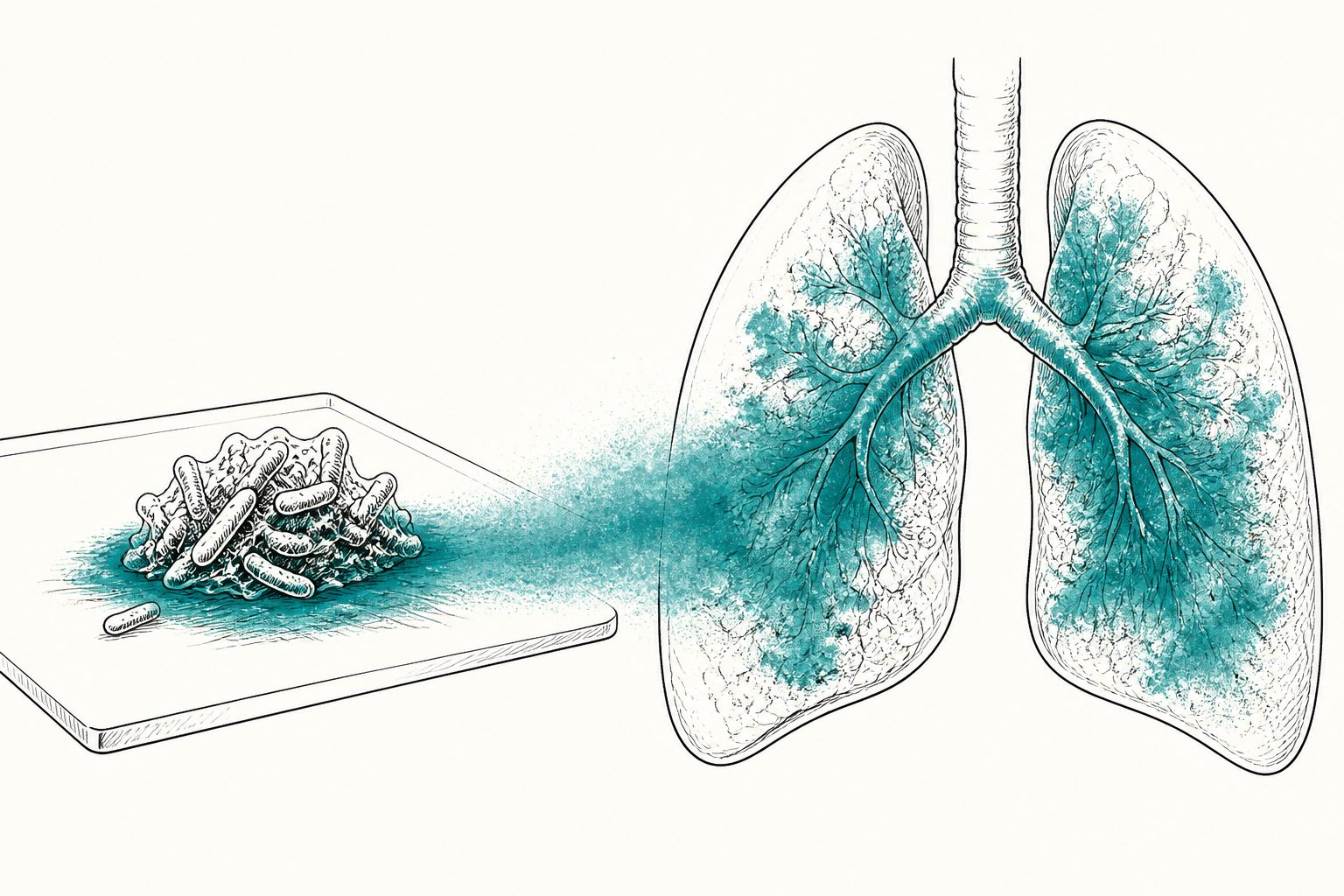
A study used chemical imaging to compare Pseudomonas aeruginosa biofilms grown on a laboratory surface and on mouse lung tissue. Biofilms on lung explants showed greater production and deeper tissue penetration of pyocyanin, a phenazine involved in biofilm activity and host interactions.
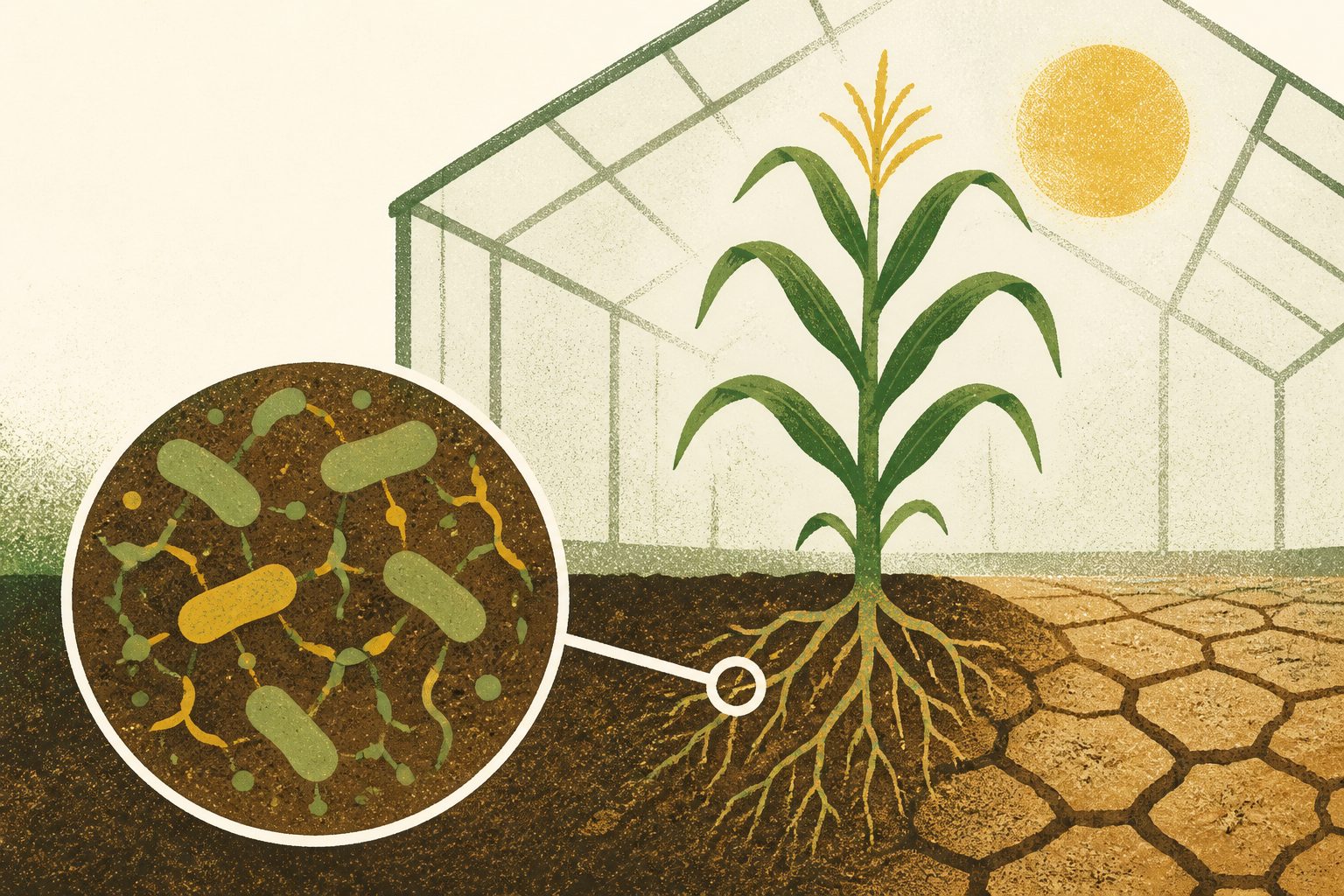
Certain Streptomyces bacteria improved maize growth when plants were grown with limited water in a greenhouse experiment. The effects varied among the four bacterial isolates, and further testing is needed before they can be considered for field use.
A review of five medicinal plants finds evidence that leaves, young stems, small branches and fruits may sometimes replace roots, bark or heartwood as sources of similar plant chemicals. The authors say these substitutions could reduce destructive harvesting, but therapeutic and safety testing is still needed.