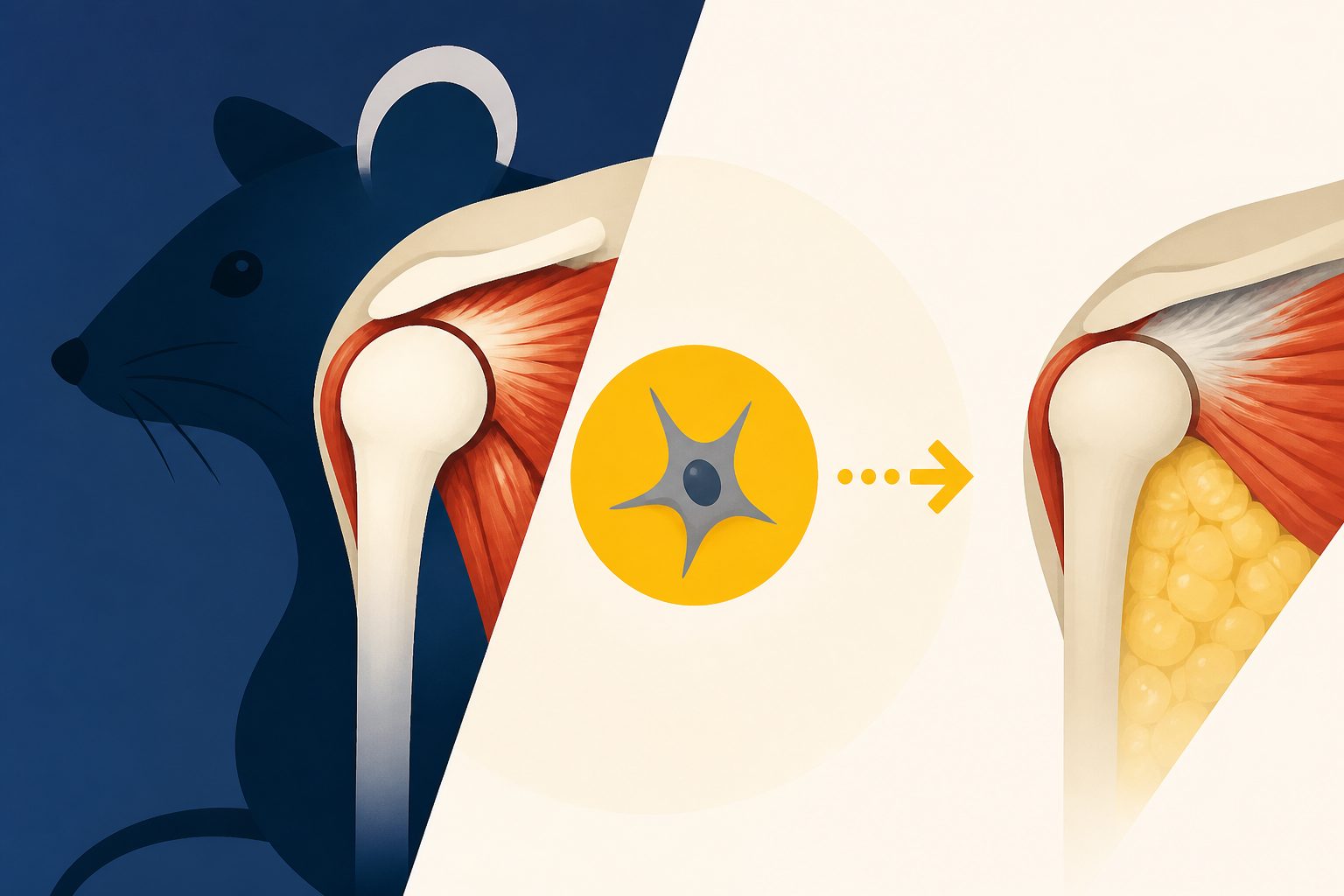
Fibroadipogenic progenitors (FAPs) are resident muscle cells that can become fat or scar-forming cells after injury. They are also thought to help muscle regrow, but their roles in different injury settings are not well defined.
Using a FAP-depletion mouse approach, researchers examined two injury models relevant to muscle and tendon disorders: a rotator cuff tear model affecting the supraspinatus and infraspinatus tendons and a nerve, and a volumetric muscle loss model in the tibialis anterior muscle. They then measured muscle changes and function six weeks after surgery.