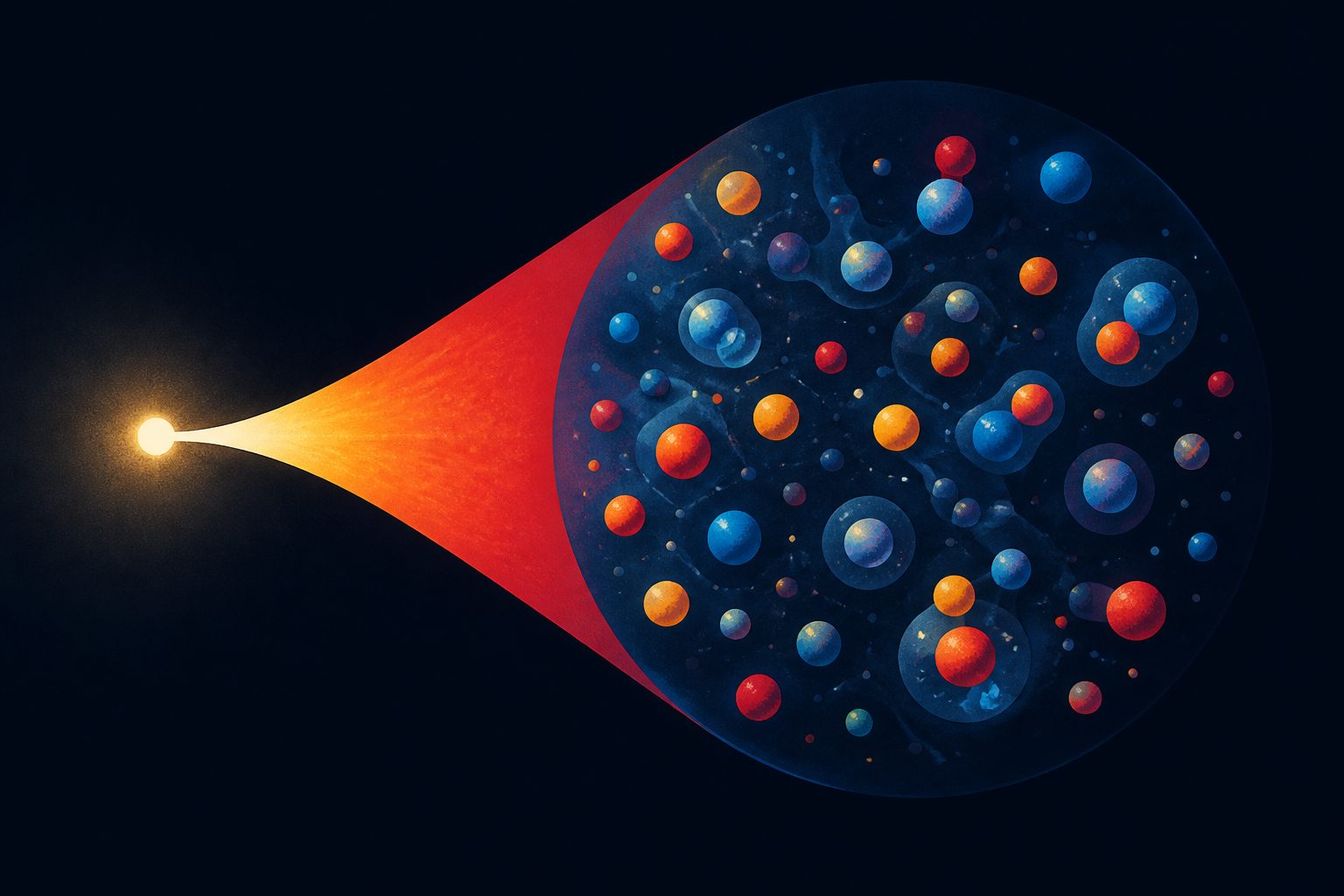
The review examines the quark–gluon plasma, a hot form of matter made mainly of quarks and gluons, and its transition into protons, neutrons and other strongly interacting particles as the early universe cooled. Researchers have studied this matter in accelerator experiments worldwide for about 40 years.
The authors summarize recent work on the structure of the possible phases of this matter, including measurements of the particles produced in high-energy nuclear collisions and their fluctuations. They also describe future opportunities at fixed-target and collider facilities.