
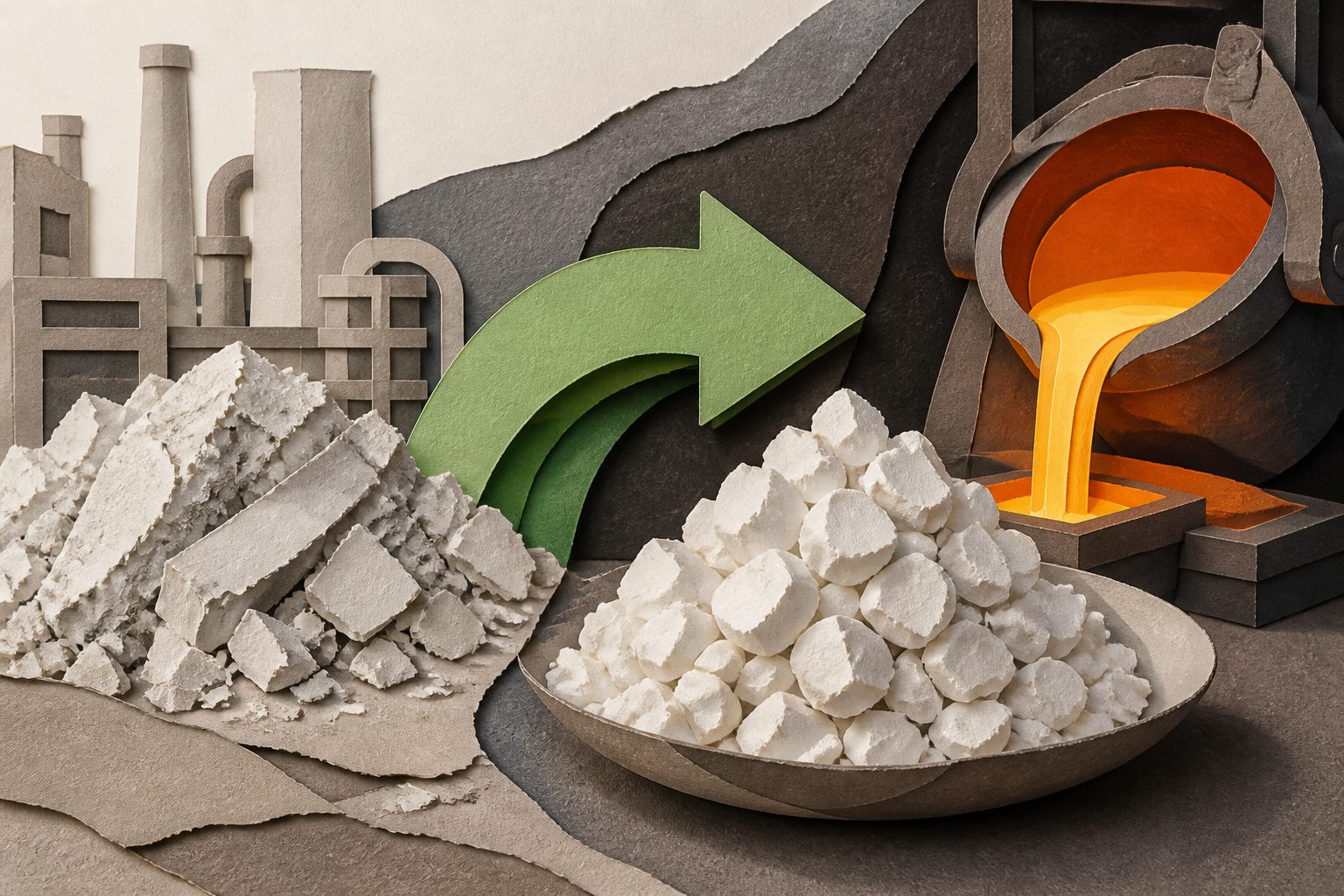
The study tested how temperature, sodium carbonate concentration, the liquid-to-solid ratio and contact time affect the conversion of phosphogypsum into calcium carbonate, also called phosphochalk. Fine particles made by existing approaches can be difficult to filter and limit potential uses.
The researchers found that temperatures of 90–100 °C and a liquid-to-solid ratio of 10 encouraged calcium carbonate crystals to form larger agglomerates. With 250 grams per litre of sodium carbonate and contact lasting up to three hours, the process produced phosphochalk with a D90 of 45 micrometres and a conversion degree of 98.8%.


