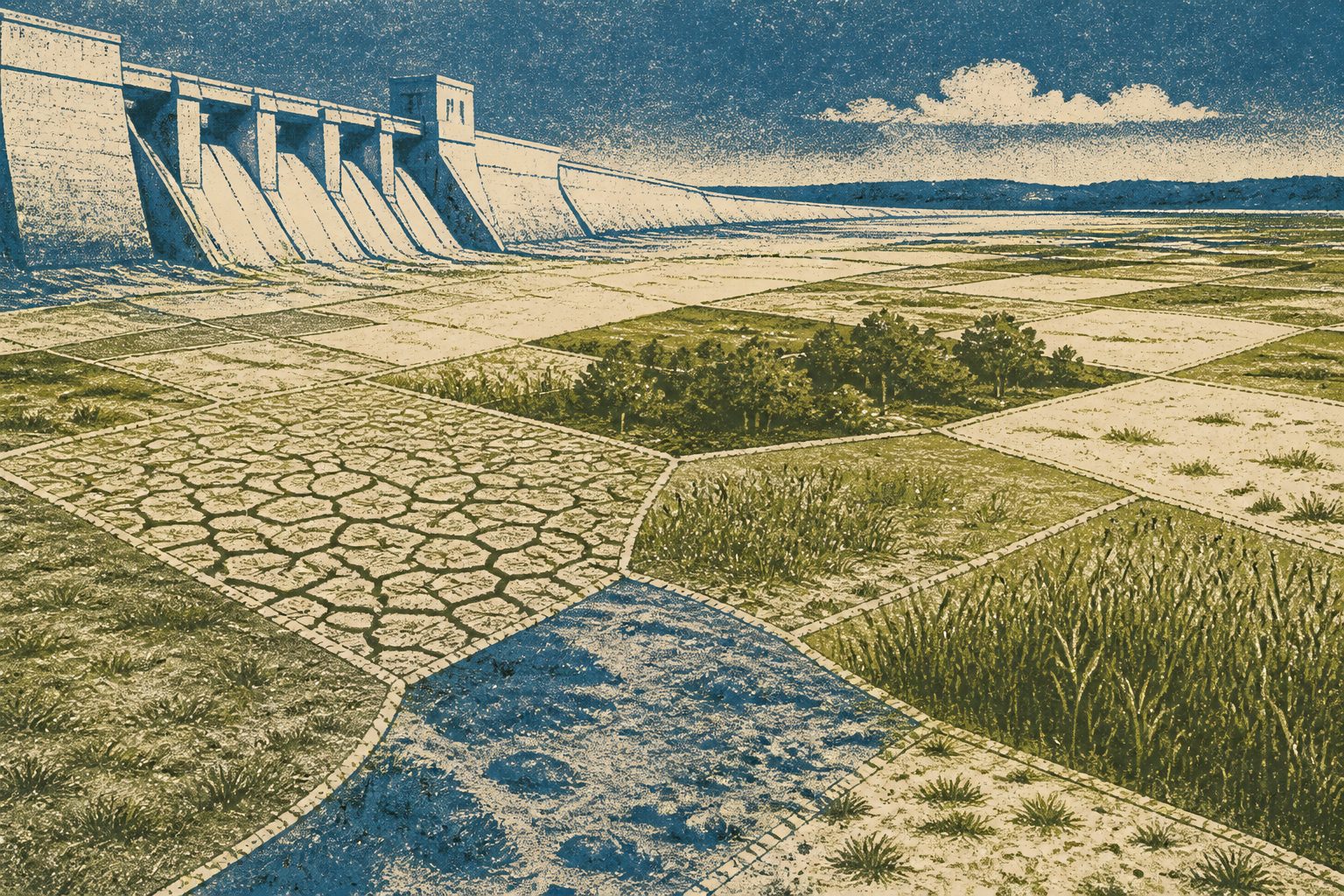
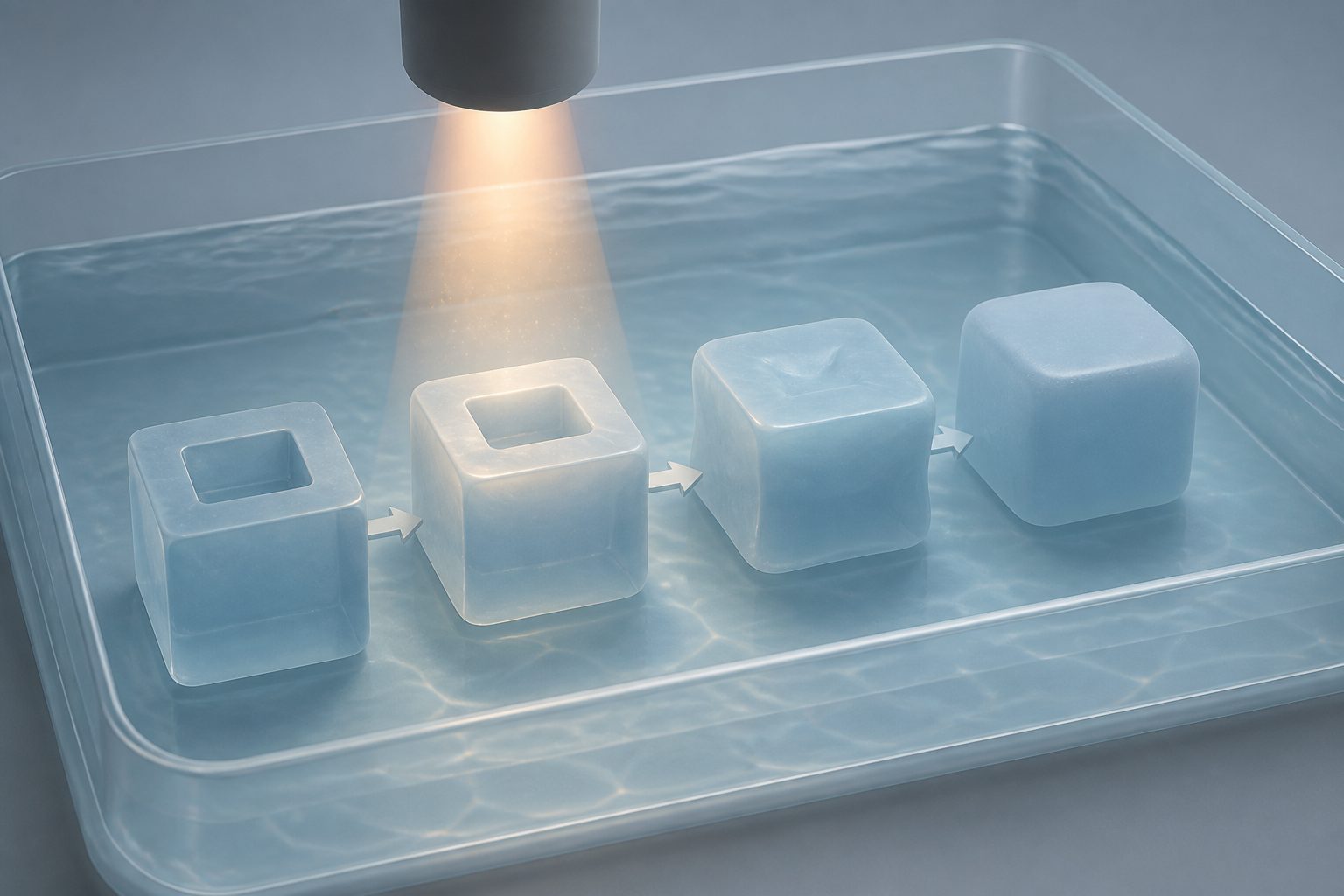
A review explains how drying, material flow and crystal formation can make large films uneven during manufacturing.
The review brings solution-based and vapor-based manufacturing under a common framework focused on crystal formation. For solution methods, it examines how liquid flow, solvent evaporation, solute movement and drying shape the film; for vapor methods, it focuses on precursor transport, surface reactions and how materials become incorporated into the growing film.
Across both approaches, the authors identify uneven transport and solidification as sources of nonuniform crystals, defects and performance losses. They discuss meniscus-guided methods such as blade and slot-die coating, as well as vapor processes, and outline roles for multiscale modeling, real-time measurements and process control in future manufacturing.
How the crystals form
The review's central finding is that large-area perovskite manufacturing depends on keeping crystal formation synchronized across the film. In solution-based processing, the wet film's thickness and composition are shaped by liquid flow, meniscus stability, surface wetting, solvent evaporation and internal flows during drying. These conditions set the stage for supersaturation, nucleation and crystal growth.
In vapor-based processing, the key controls are precursor generation and transport, chemical composition, surface reactions and the speed at which material becomes part of the growing film. Although the two routes use different equipment, the review finds that both must regulate the local conditions that drive perovskite formation. It identifies blade coating and slot-die coating as major meniscus-guided approaches compatible with large-area and continuous manufacturing, and points to unified process measures such as wet-film thickness, evaporation rate, precursor flow and substrate temperature as useful inputs for future control systems.
Why scale changes the problem
Small laboratory devices can be made under conditions that are more uniform than those encountered on large substrates. During scale-up, differences in film thickness, evaporation, temperature, concentration or precursor flow can make crystallization occur at different times and places. The review links these variations with uneven films, defects, inconsistent device performance and reduced operational stability.
This makes crystal-growth control a manufacturing issue, not only a materials question. Understanding how transport, heat, chemical driving forces and crystal formation interact could help researchers compare solution and vapor processes and develop more reproducible routes to reliable, high-throughput perovskite modules.