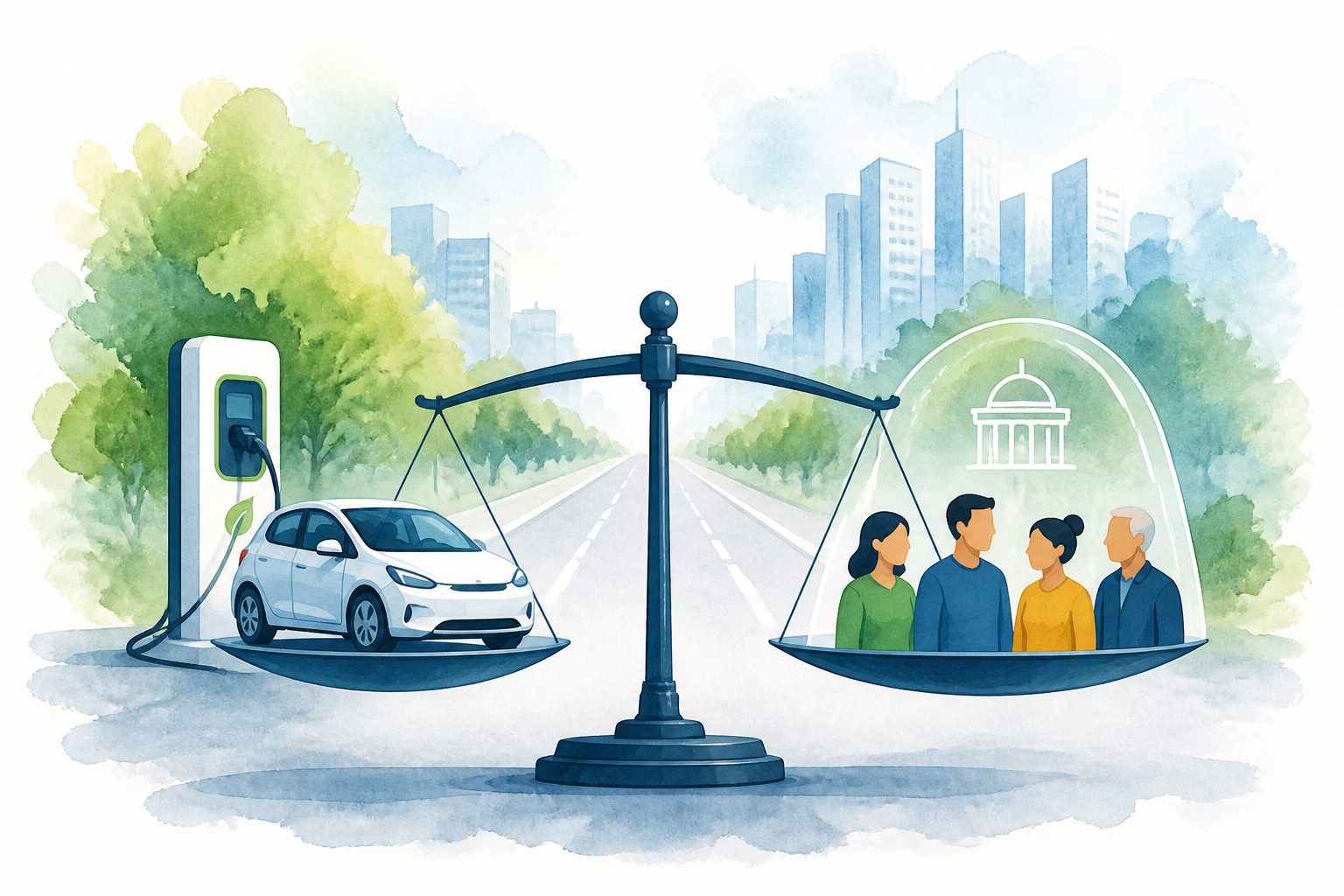
A study finds that clear revenue plans and public or not-for-profit control matter more to support than complex pricing systems.
The study examined which features of road user charging policies most influence public support. Participants assessed different policy features, and the researchers used those choices to identify three broad groups with different priorities: transport efficiency, fairness and consistency, and wider public benefit.
Across the groups, governance and institutional arrangements were important to whether a charging scheme appeared legitimate. Public ownership, not-for-profit operation, independent investment decisions and transparent use of revenue were strongly preferred. More complicated pricing mechanisms were less popular.
What people preferred
The researchers identified three behavioural classes, reflecting different priorities around efficiency, fairness and consistency, and broader public benefit. Across these groups, people placed strong importance on how a road-charging scheme is governed. Public ownership, not-for-profit operation, independent decisions about investment and transparent use of revenue were preferred, while more complex pricing mechanisms were viewed less favourably.
// Source
Transportation Research Part A Policy and Practice · 2026 · DOI: 10.1016/j.tra.2026.105229
Authors: Matthew J. Beck, Michiel C.J. Bliemer, John M. Rose
Institutions: The University of Sydney