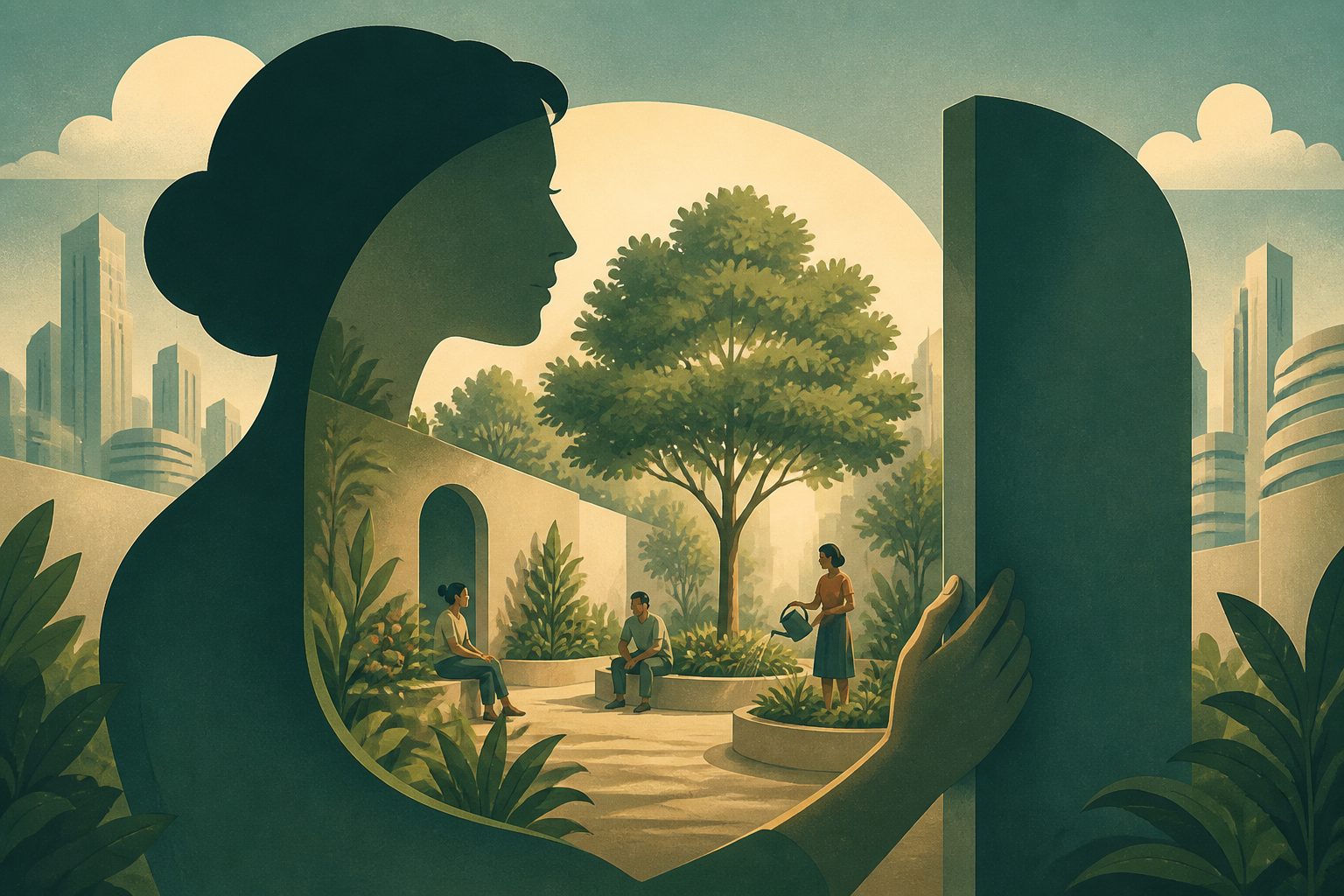
People using mental health services described accessible urban nature as a place for connection, purpose and a sense of control.
Researchers used creative writing and in-depth qualitative data to explore six aspects of deeper well-being, including self-acceptance, autonomy, purpose in life, personal growth, social relationships and control over one’s surroundings. Participants often described feelings of accomplishment and agency in nature, as well as meaningful encounters with people, animals and plants.
The study identified five pathways connecting deeper well-being with the instrumental, intrinsic and relational values people assign to nature. Meaningful places were often close to home or care settings, including hospital courtyards and home gardens, and participants also described old natural features such as mature trees as important.
How nature supported well-being
The 15 participants frequently linked urban nature with environmental mastery—the feeling of being able to act effectively in their surroundings—and with good social relationships. They described nature as a setting for meaningful interactions with people, animals and plants, and said that shared presence and encounters with more-than-human beings could bring contentment.
Participants also described feeling small but connected to something larger, and saw the apparent purposefulness of nature as connected to human life. Across the accounts, researchers identified five pathways linking deeper well-being with the instrumental, intrinsic and relational values of nature. Accessible places, including hospital courtyards and home gardens, were often the most meaningful.
Why nearby green space matters
The findings suggest that urban nature does not need to be distant or large to be meaningful for people using preventive mental health services. Nearby, accessible green spaces can provide places for social contact, agency, belonging and reflection.
For urban planning, the study points to the value of inclusive, community-oriented green spaces and of preserving natural features such as old trees. Accessibility matters because the places participants valued were often part of or close to everyday settings.
Evidence and caveats
This was an in-depth qualitative study based on creative writing and other qualitative data from 15 users of services provided by mental health associations. It offers detailed accounts of how these participants experienced nature and deeper well-being, rather than a statistical test of whether urban nature improves mental health.
The small, specific sample means the findings cannot establish how common these experiences are or show that accessible green spaces cause better well-being. The abstract does not report a comparison group or measurements of changes over time, so the results may not apply to all urban residents or all people using mental health services.
// Source
Ecosystems and People · 2026 · DOI: 10.1080/26395916.2026.2725012
Authors: Joha Järekari, Salla Eilola, Nora Fagerholm
Institutions: University of Turku