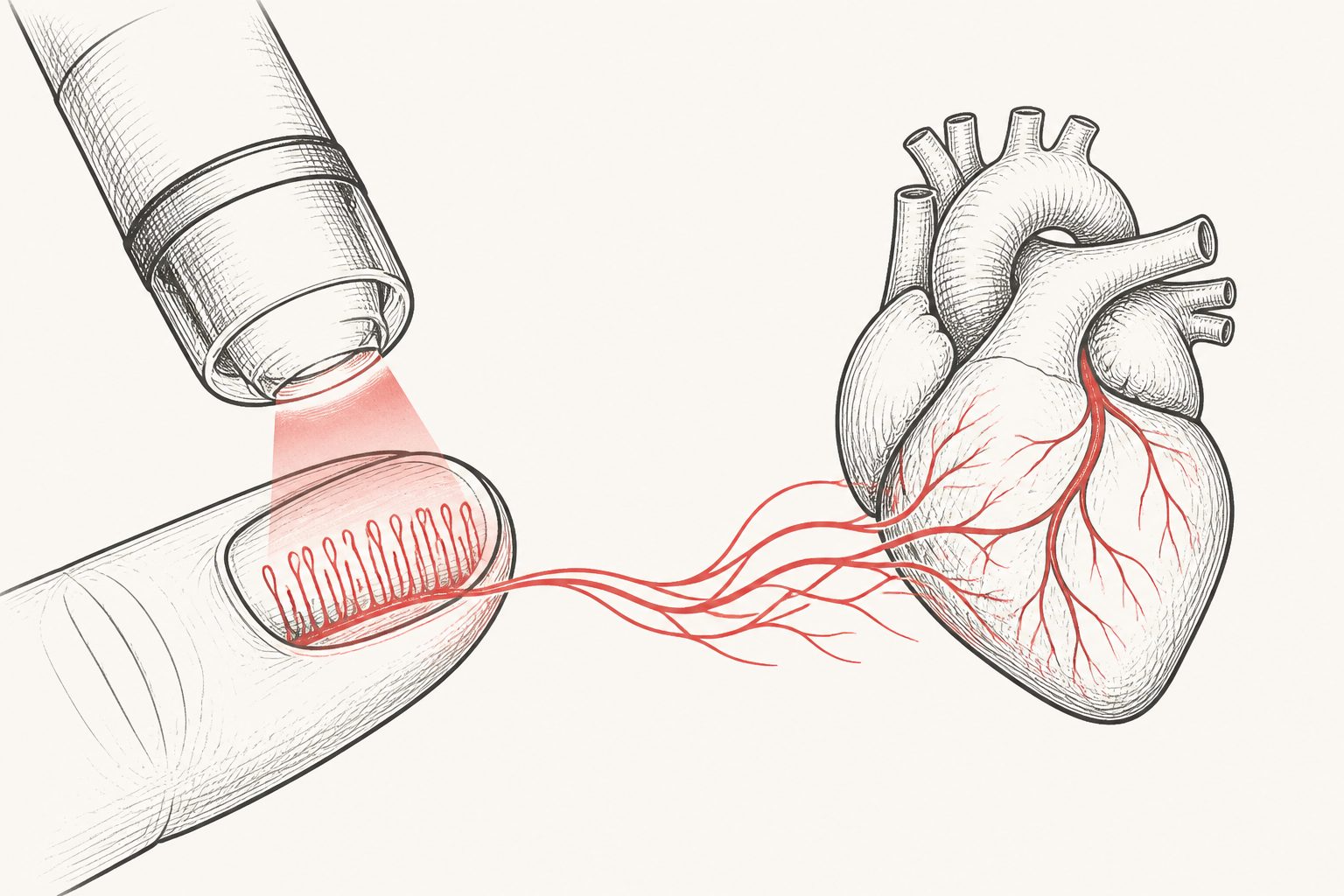
Researchers used optical coherence tomography angiography, an imaging method that shows small blood vessels, to examine the proximal nailfold—the area where the fingernail meets the skin—in 104 adults aged over 80. They measured 12 features of the vessels and used a computer-based clustering method to group participants according to similarities in their vascular patterns.
The group with denser, smaller and less tortuous, or less winding, vessels had more favorable cardiovascular measures. These included resting heartbeats, heart pumping function, the size of the left ventricle and arterial stiffness, a measure of how flexible the arteries are.