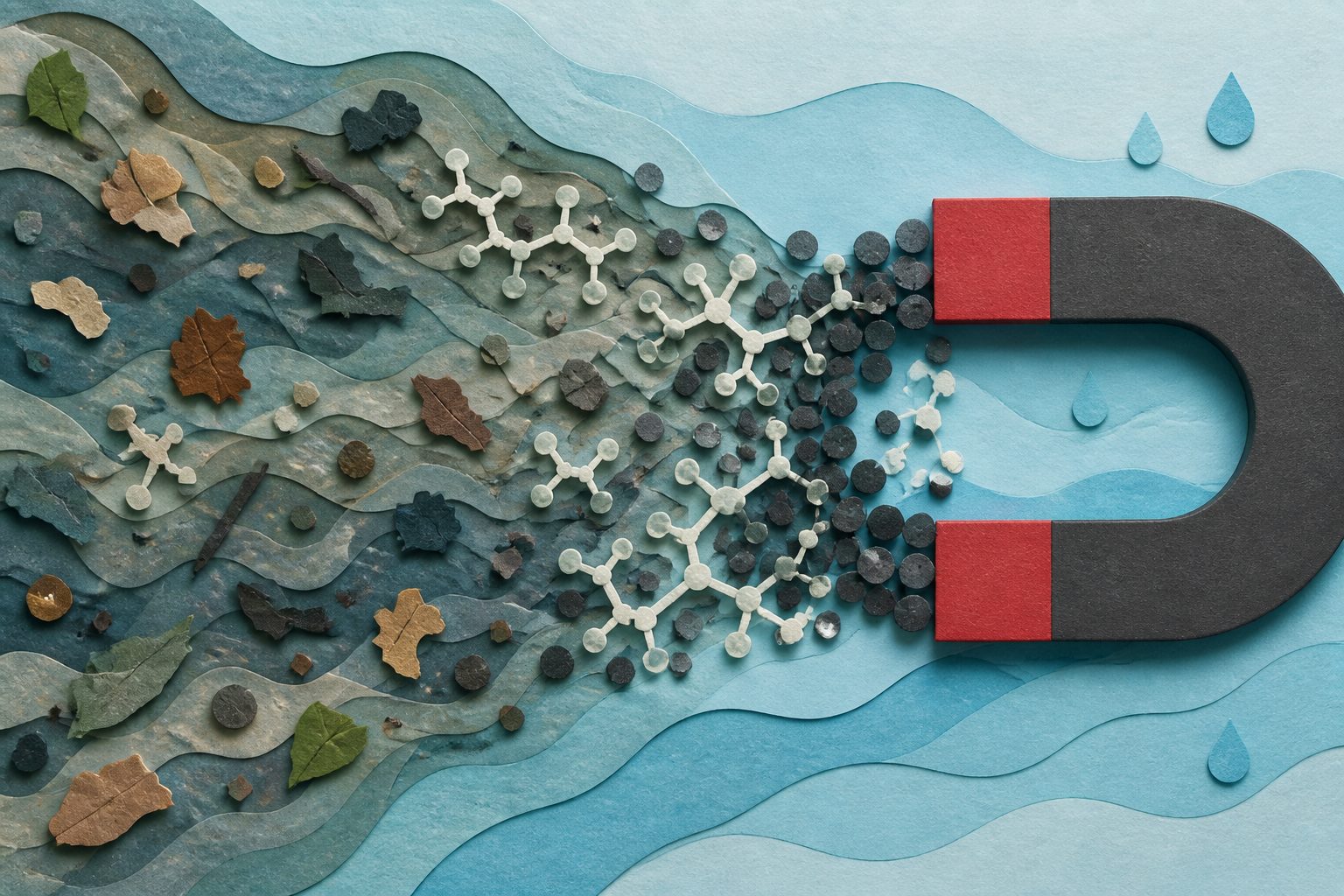
Researchers tuned the surface of magnetic iron particles so they can grab different PFAS—and even microplastics—from drinking water, wastewater, and other water types.
Per- and polyfluoroalkyl substances (PFAS) are known for being hard to break down, which helps them persist in the environment and accumulate in living things. Traditional cleanup methods can struggle when PFAS are present at low levels or mixed with other substances.
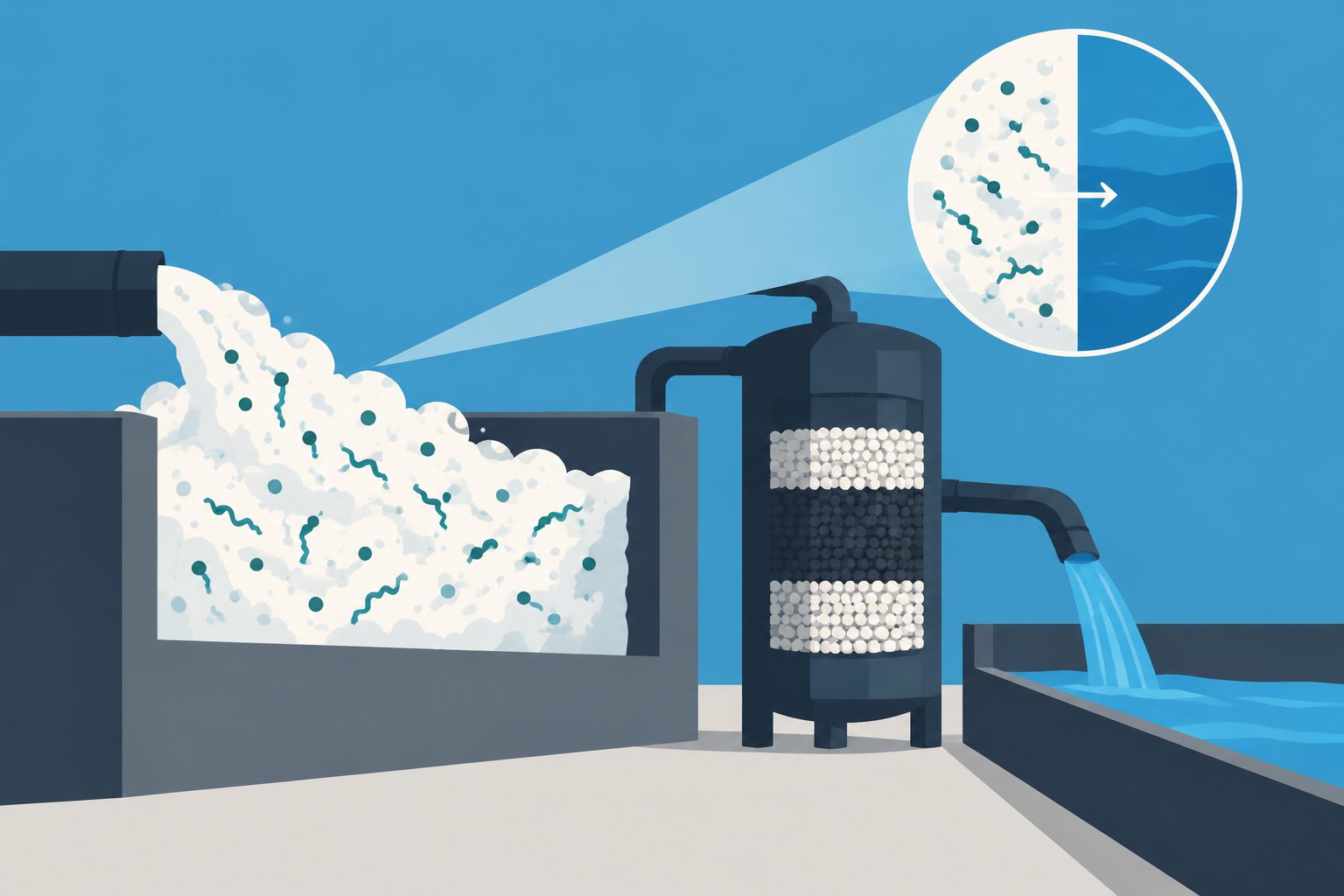
In the study, scientists used coated superparamagnetic iron oxide nanoparticles—tiny magnetic particles—designed to attract different PFAS types through electrical and water-repelling interactions. They report high removal efficiencies across drinking water, soil wash-off, river water, and laundry wastewater, and they describe a regenerable version that maintained performance, with PFAS reductions up to 95.4%.
Magnetic particles capture PFAS broadly
The researchers report that functionalized superparamagnetic iron oxide nanoparticles can capture a range of PFAS in diverse water conditions, including amphiphilic and neutral PFAS compounds, and even microplastics. By tuning the nanoparticles’ surface chemistry using a self-assembled monolayer, they achieved high removal efficiencies in contaminated drinking water, soil wash-off, river water, and laundry wastewater. They also report that regenerable hydrophobic nanoparticles maintained high performance, reducing PFAS levels by up to 95.4%.
Tested in several water types, with unspecified scope
This is a journal article presenting experimental results from tests in several types of contaminated water (including a contaminated drinking water source, soil wash-off, river water, and laundry wastewater) and conditions designed to reflect complexity. The abstract does not specify sample sizes, PFAS concentrations, how “high removal efficiencies” were quantified, or how performance compares directly with existing treatment methods, which limits how precisely the results can be generalized beyond the tested setups.
// Source
Materials Today · 2026 · DOI: 10.1016/j.mattod.2026.103471
Authors: Johannes Voß, Linda Rockmann, Victoria Meyer, Harald Unterweger, Dominik Bröse, Lukas Heinen, Lukas Müller, Henrik Gaß, Rene Stein, Laura Sophie Dreyer, Julia Fröhlich, Cristina Velasco-Schön, Christoph Alexiou, Holger Knapp, Marcus Halik
Institutions: Friedrich-Alexander-Universität Erlangen-Nürnberg, Else Kröner-Fresenius-Stiftung