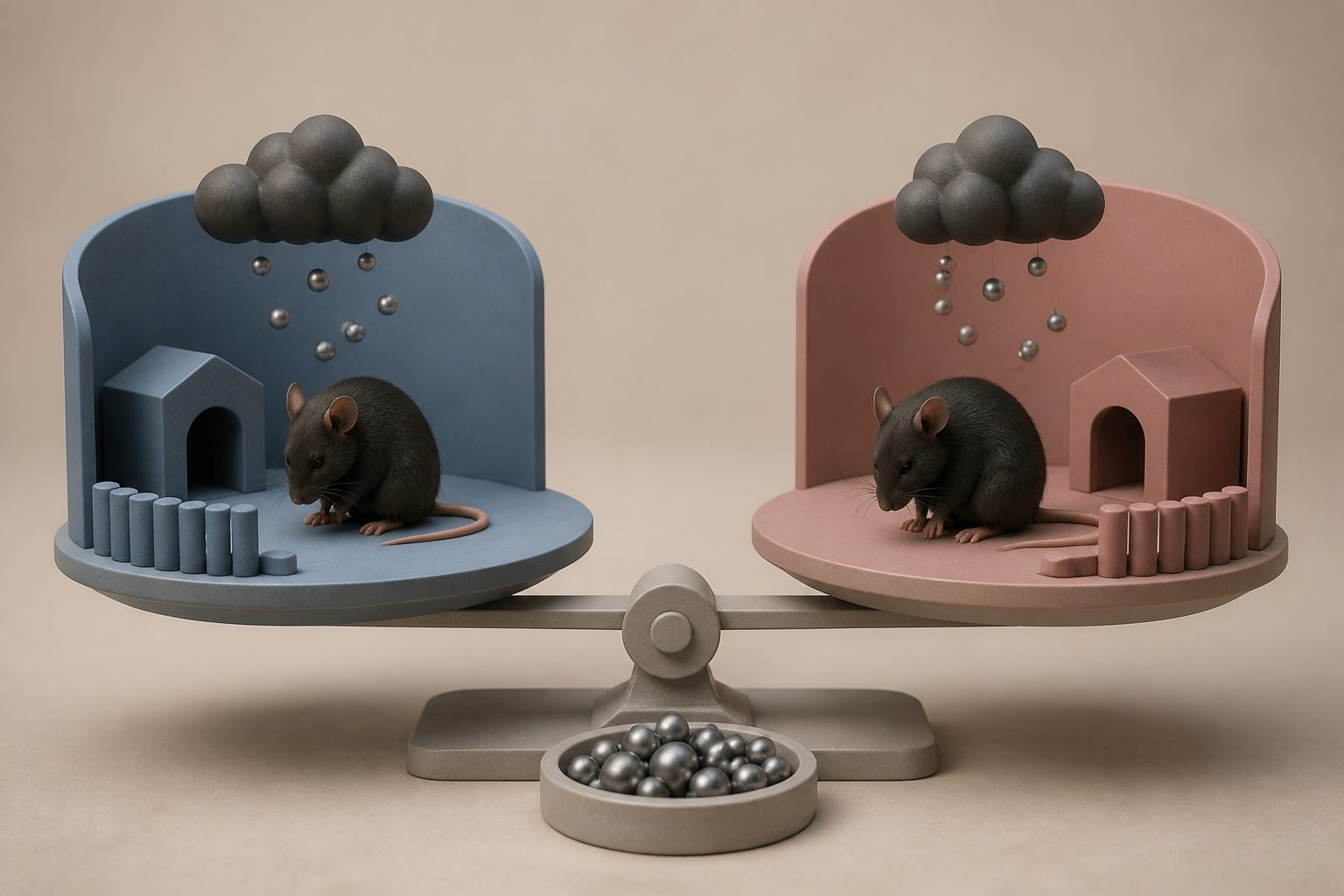
The experiment found different changes in brain chemistry and stress-hormone responses after long-term exposure beginning before birth.
Researchers exposed pregnant mice to lead acetate in their drinking water from the start of pregnancy until their offspring reached adulthood. They then assessed depression-like behavior, oxidative stress in the brain, and the stress hormone corticosterone in male and female offspring.
Lead exposure increased immobility in two behavioral tests and raised oxidative stress markers in the prefrontal cortex and hippocampus. The stress-hormone response also differed by sex: males had a delayed peak, while females remained elevated 24 hours after stress.
Different effects in male and female mice
Pregnant C57BL/6J mice received 250 parts per million lead acetate in their drinking water from gestational day 0 until their offspring reached adulthood. In the offspring, chronic lead exposure increased immobility in both the forced-swimming test and the tail-suspension test, behaviors the researchers used as measures of depression-like behavior.
Lead exposure also increased markers of oxidative stress in the prefrontal cortex and hippocampus, with differences depending on sex and brain region. After behavioral stress, males showed a delayed peak in the stress hormone corticosterone. Females showed a prolonged corticosterone response that was still elevated 24 hours later.