A two-molecule coating filled gaps and reduced defects at a key interface, helping a 17.14-square-centimeter mini-module reach 17.0% efficiency.
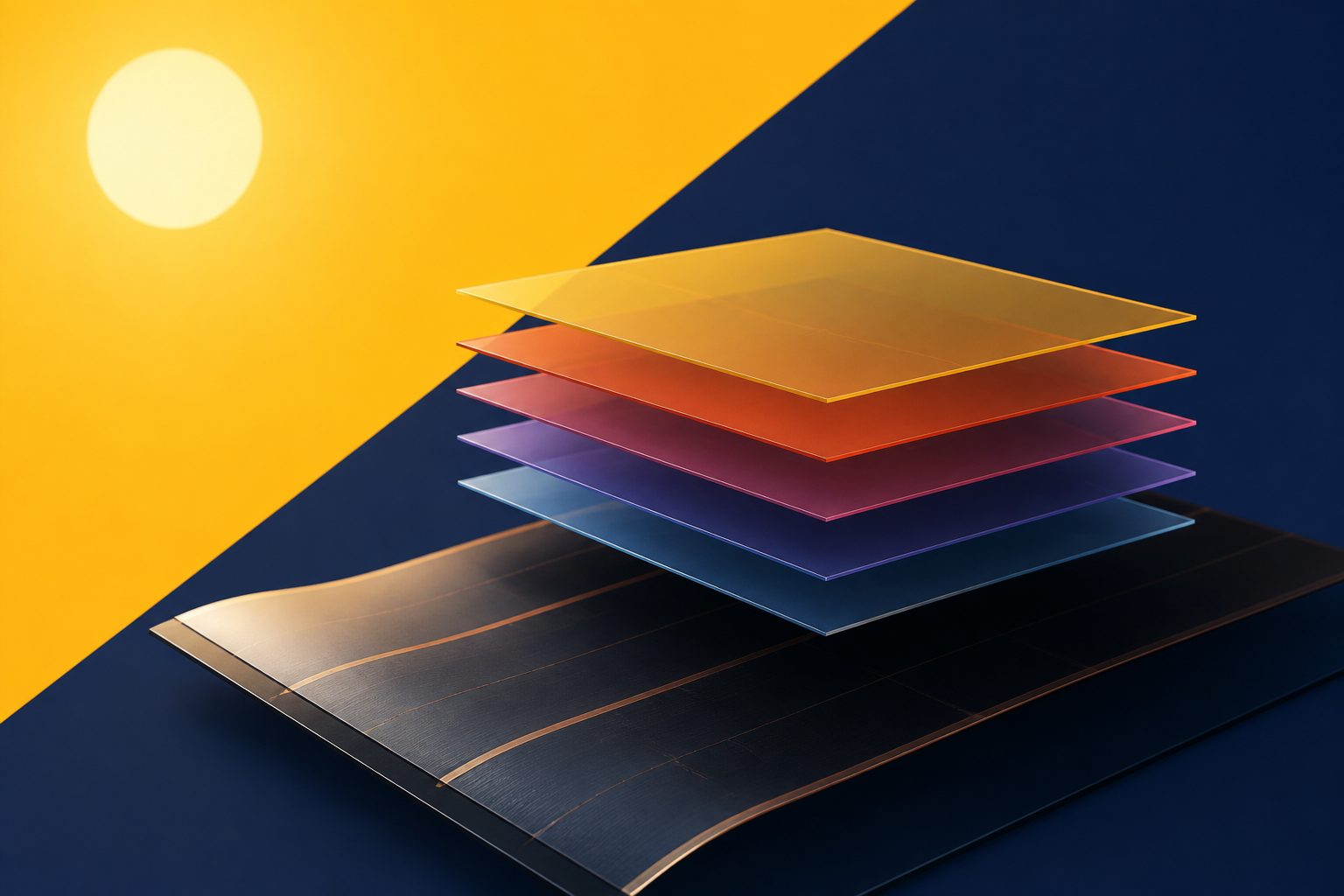
Researchers developed a layered coating made from two self-assembling molecules for use between the transparent electrode and the light-absorbing material in organic solar cells. The design aims to cover gaps at this interface and reduce defects that can hinder charge collection, especially as devices become larger.
A solar cell using the coating reached 20.1% efficiency, compared with a lower result for the single-molecule coating used as the control. In a six-cell mini-module measuring 17.14 cm², the layered coating produced 17.0% efficiency, compared with 12.2% for the control.
What the layered coating does
The researchers combined the molecules 2PACz and 2Cl-4PACz using either blend casting or sequential casting to form a multilayer self-assembled coating. Their measurements and simulations support a structure with a 2PACz-rich layer next to the indium tin oxide electrode and a 2Cl-4PACz-rich upper layer. The upper layer filled interfacial voids, improved molecular packing and passivated defects, while the combined structure reduced trap-assisted recombination and supported charge extraction and collection.
A representative D18:L8-BO organic solar cell using the sequentially cast coating reached a power conversion efficiency of 20.1% over an area of 0.042 cm². A mini-module measuring 17.14 cm², made from six series-connected subcells, reached 17.0% efficiency. The 2PACz control reached 12.2% in the mini-module.
Evidence and open questions
The study combines photoelectron spectroscopy, X-ray analysis, molecular simulations and measurements of organic solar-cell devices. The reported results include a representative 0.042 cm² cell and a 17.14 cm² mini-module with six series-connected subcells. The abstract does not report long-term stability, manufacturing yield, or performance across a broad set of device designs, so the wider practical impact remains to be established.