A computer model found dust generally stayed within the landfill boundary in one simulated operation, but some levels exceeded UK and EU limits when background pollution was included.
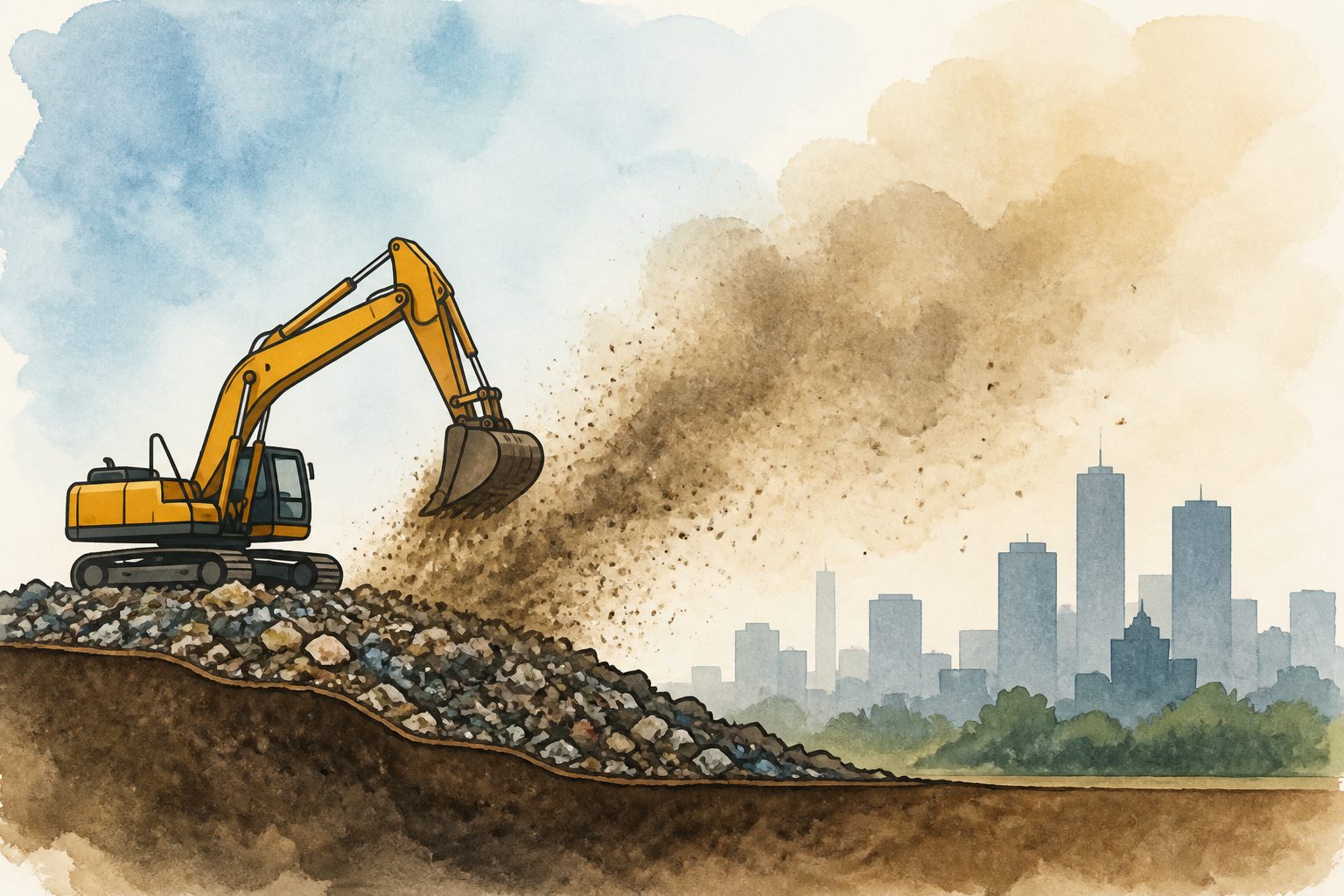
Landfill mining can recover materials and energy while making land available for other uses, but disturbing waste may release dust and other potentially hazardous compounds. Researchers modelled dust from nine landfill-mining activities under representative weather conditions.
For one working-face operation covering about 3,000 square metres, the model kept dust concentrations within the landfill boundary. Some concentrations nevertheless exceeded UK and EU limits for PM10, a category of airborne particles, when existing background pollution was included.
Where the dust travelled
The researchers modelled airborne dust from nine landfill-mining activities, including point, line and area sources. When they simulated one phase of work at a working face of about 3,000 square metres, dust concentrations remained within the landfill boundary. However, some dust concentrations exceeded the UK and EU PM10 Air Quality Strategy limit when background concentrations were added, indicating a potential risk to human health and the environment.
// Source
Scientific Reports · 2026 · DOI: 10.1038/s41598-026-66639-2
Authors: Mohammed Zari, Richard Smith
Institutions: University of Nottingham, King Abdulaziz University, TGS (United Kingdom)