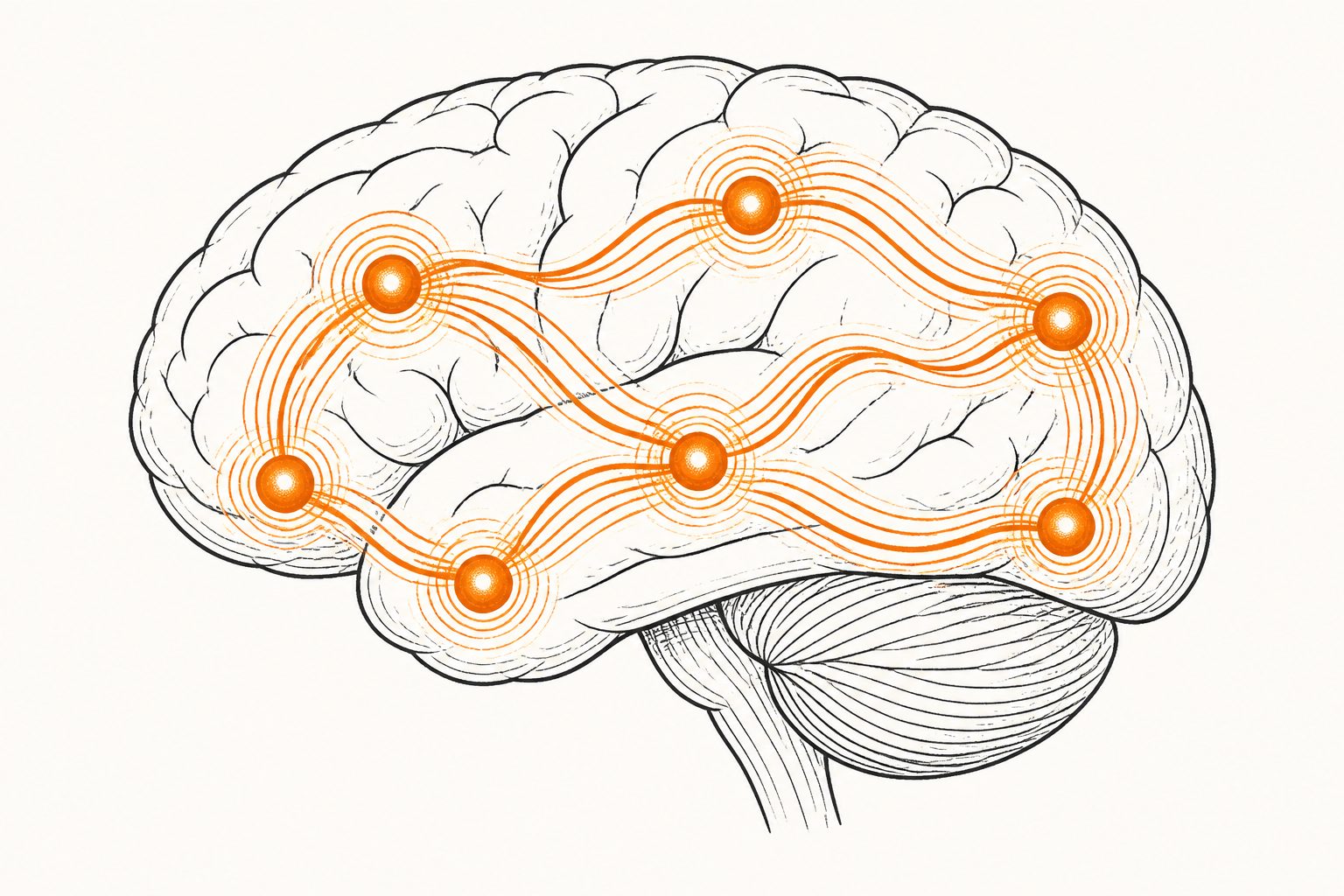
A high-field brain scan study found coordinated glutamate patterns in people experiencing psychosis for the first time, despite no clear differences in levels within individual regions.
Researchers used 7-tesla proton magnetic resonance spectroscopy to measure glutamate in five brain regions in 47 people with first-episode psychosis who were not taking antipsychotic medication, and in 21 healthy controls. The regions were the anterior cingulate cortex, dorsolateral prefrontal cortex, basal ganglia, hippocampus and thalamus.
Glutamate concentrations did not differ between the groups in the main analyses. But in exploratory analyses, glutamate levels were significantly correlated across six of 10 pairs of regions in the psychosis group, with correlations ranging from 0.3 to 0.4; this pattern was not seen in the controls. Four of these correlations were associated with the severity of positive symptoms, such as hallucinations or delusions, although the abstract does not report the size or direction of those associations.
Glutamate patterns across regions
The study found no group differences in glutamate concentration in any of the five brain regions; all reported p-values were above 0.2. A possible association between glutamate in the basal ganglia and negative symptoms did not remain significant after correcting for multiple comparisons.
In contrast, people with first-episode psychosis showed significant correlations between glutamate levels in six of 10 pairs of regions, spanning cortical and deeper brain structures. The correlations ranged from 0.3 to 0.4, with p-values from 0.01 to 0.04. Four of these regional relationships were associated with positive symptom severity, with p-values from 0.03 to 0.05.
// Source
Translational Psychiatry · 2026 · DOI: 10.1038/s41398-026-04487-4
Authors: Olga B. Baltzersen, S. J. Godfrey, Vanessa Wiggermann, Warda T Syeda, Daban K. Sulaiman, Maria M. Hjørngaard, Kristina B. Scholtz, Kirsten Borup Bojesen, Birte Yding Glenthoj, Henrik Lundell, Hartwig Roman Siebner, Bjørn Hylsebeck Ebdrup
Institutions: University of Copenhagen, Bispebjerg Hospital, Copenhagen University Hospital, Frederiksberg Hospital, Melbourne Health, Hvidovre Hospital, Glostrup Hospital, Amager Hospital