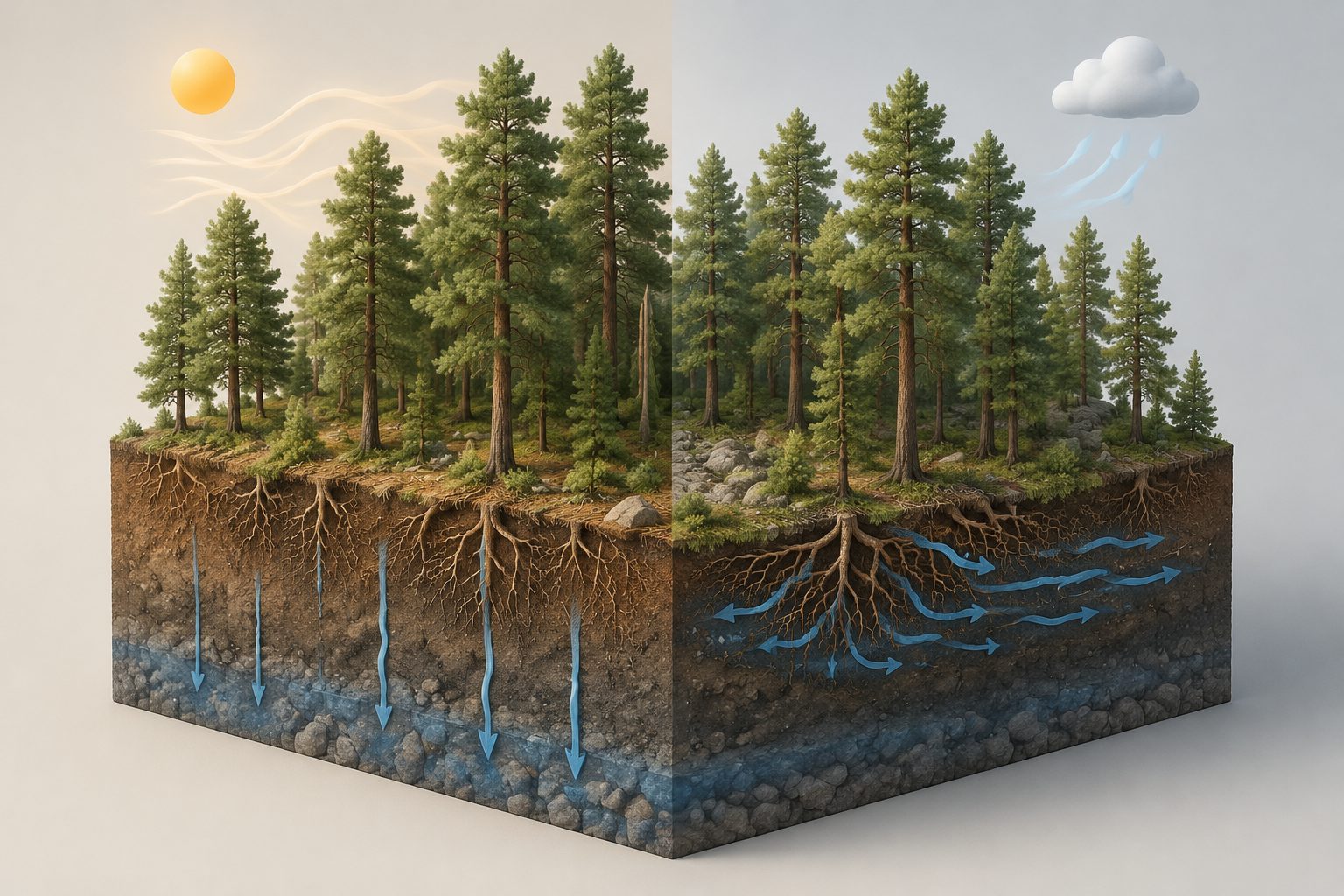
Researchers used fine mist to lower atmospheric dryness around forest stands, while separate plots received extra irrigation or had half their rainfall excluded. The design allowed them to study atmospheric drought and soil drought independently rather than treating them as one condition.
During periods when atmospheric dryness was especially high, the mist lowered it by an average of 21%. Soil drying followed sustained high-dryness periods, starting in the topsoil and appearing later at greater depths. With the same water inputs, plots with lower atmospheric dryness showed different patterns of water loss deeper in the soil.