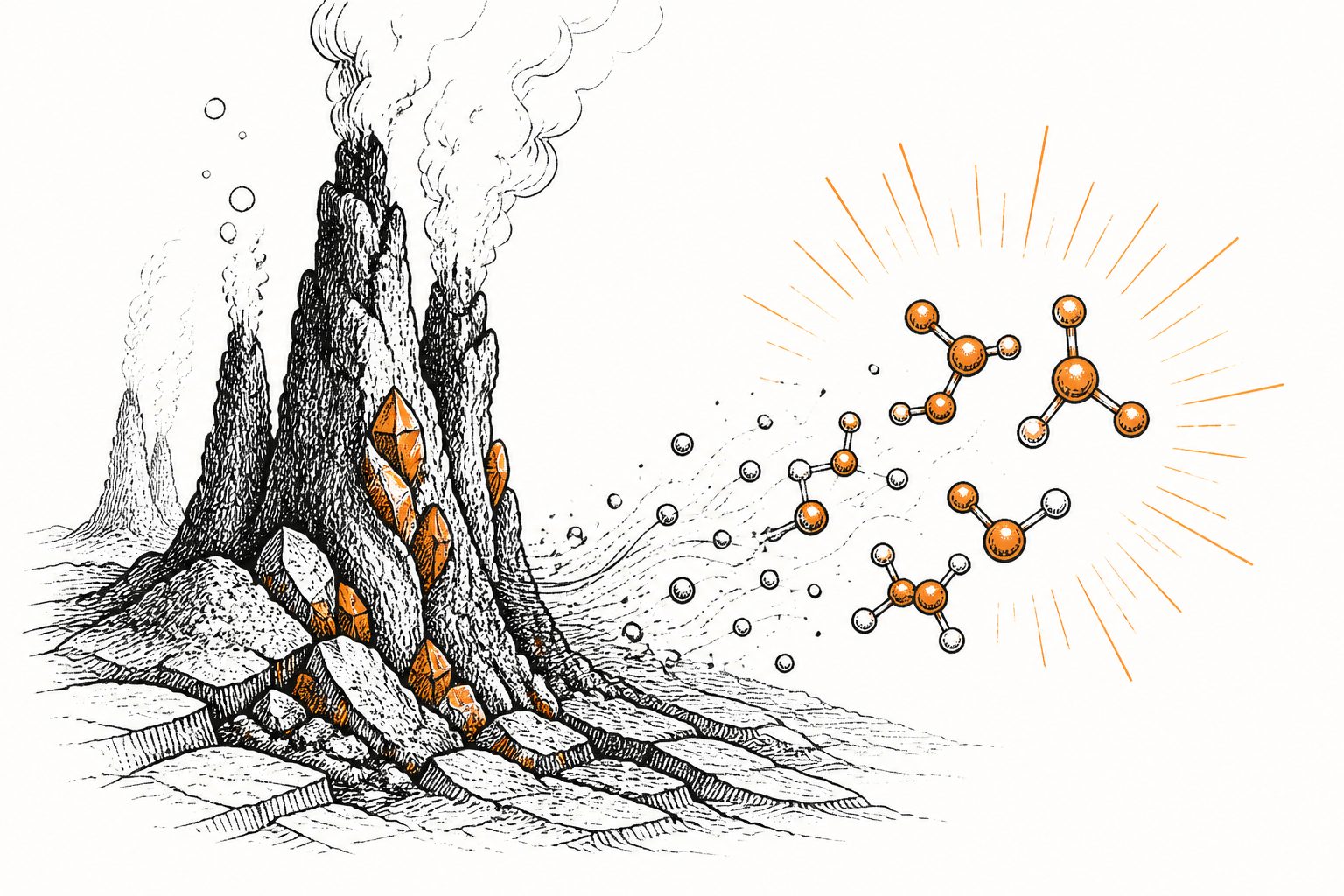
Researchers found that native palladium catalyzed the oxidation of phosphite to phosphate and hydrogen in water at 25–100 °C. Palladium awaruite, a palladium-nickel-iron mineral found in serpentinizing hydrothermal systems, also drove phosphate-transfer reactions, known as phosphorylation.
Physics & Space2 weeks ago
Hydrothermal-vent minerals can make energy-carrying molecules without sulfur
Palladium minerals found in hydrogen-producing vents drove reactions that linked phosphate to several compounds used in biology.
What the minerals produced
The palladium reactions generated a reactive, not yet identified intermediate, possibly metaphosphate. It phosphorylated glycerol, ribose, glucose, serine and cytidine at 25–100 °C over 2–72 hours. Under the same conditions, the experiments produced pyrophosphate, polyphosphates, ADP, phosphocreatine and acetyl phosphate. Acetyl phosphate formed overnight at 25 °C with an 8% yield. The reactions proceeded without sulfur, and the phosphite oxidation was highly exergonic, meaning it released substantial chemical energy.
Why phosphate chemistry matters
Phosphate is central to modern energy use, metabolism and nucleic acids, but how it first entered biological chemistry is unknown. These results identify a possible natural source of phosphate-transfer reactions in serpentinizing hydrothermal systems and suggest one way early chemical systems could have obtained energy and built phosphate-containing molecules without relying on sulfur chemistry.
Evidence and open questions
The evidence comes from laboratory chemical reactions using palladium and palladium awaruite in water at temperatures associated with the stated hydrothermal conditions. It shows that these catalysts can drive phosphorylation reactions, but it does not demonstrate a complete metabolic network, the emergence of life, or that these reactions occurred in a natural vent. The reactive intermediate was not identified, and the experiments do not establish how common or sustained the reactions would be in geological settings.
// Source
FEBS Journal · 2026 · DOI: 10.1111/febs.70737
Authors: Manon Laura Schlikker, Nadja K. Hoffmann, Sabine Metzger, Jorge Moral-Pombo, Harun Tüysüz, William F. Martin
Institutions: Heinrich Heine University Düsseldorf, IMDEA Materials