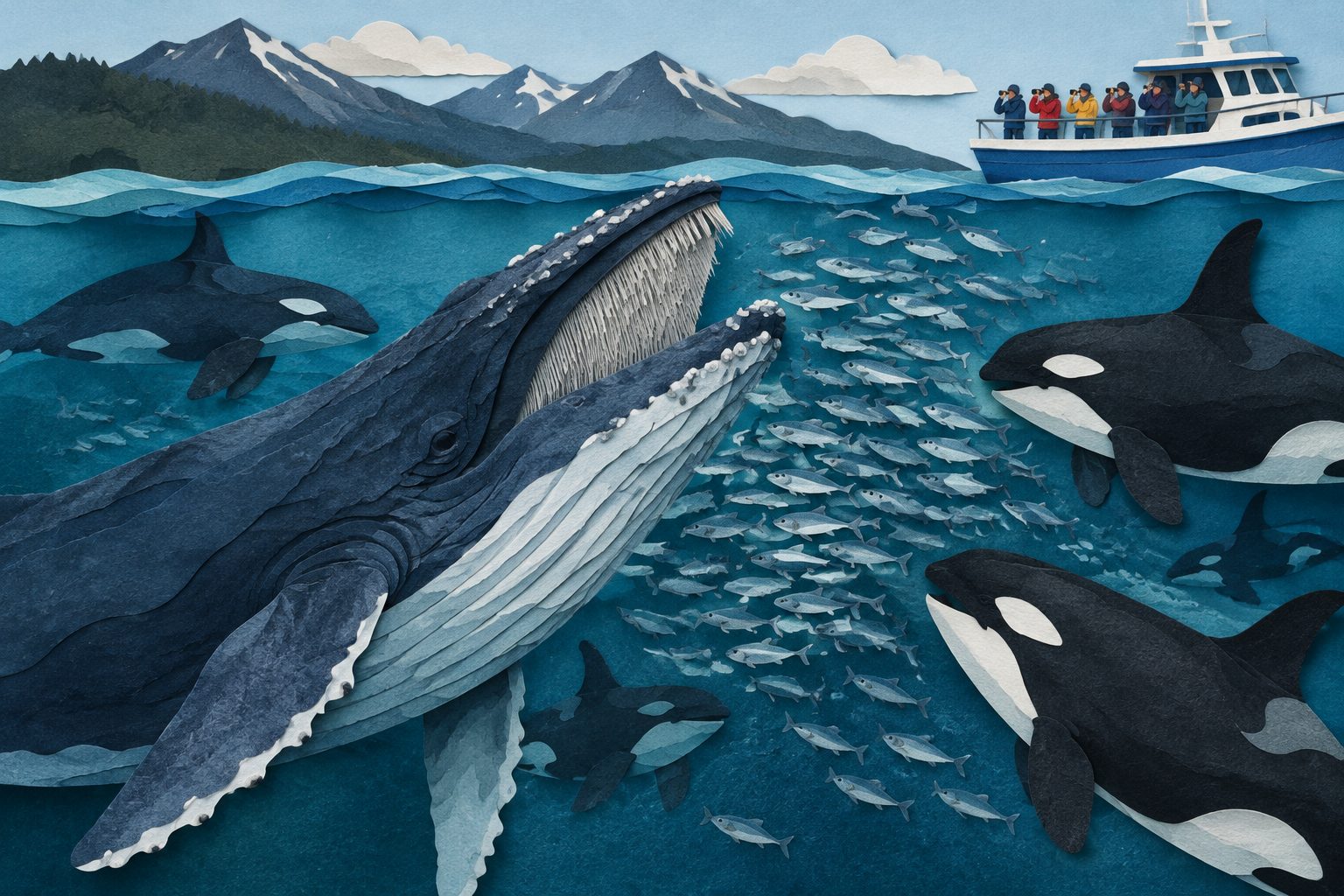
In northern Norway, shifting herring and whale-watching activity are bringing more competing users into the same feeding grounds.
More than a decade of monitoring in a subarctic fjord system shows that winter herring and killer whales have shifted northward under the combined influence of climate change and fishing pressure. The change has brought baleen whales into the same feeding grounds, creating direct competition.
Humpback and fin whales frequently enter the killer whales’ coordinated “carousel” hunts, taking advantage of shallow, tightly packed herring patches that suit their lunging feeding style. These intrusions often bring killer whale hunts to an early end, and growing whale-watching activity further interferes with foraging in the fjords.
Monitoring and its limits
The article draws on more than a decade of monitoring in a subarctic fjord system, together with unpublished data and findings from existing research. The abstract does not provide sample sizes, detailed measurements of energetic costs, or the study’s full methods, so the strength and wider reach of the reported patterns cannot be assessed from the abstract alone. The authors describe the interactions as likely widespread, but evidence from this Norwegian system does not by itself show how common they are in other marine ecosystems.