Computer simulations suggest about 6,300 stars escaped Milky Way globular clusters in the past 500 million years, yet only about one faster than 500 kilometres per second should be visible in current data.
The researchers combined star-cluster simulations, observations of Milky Way globular clusters and a model for tracking escaping stars through the Galaxy. They estimated how many stars were ejected after encounters with binaries containing at least one white dwarf, neutron star or black hole, and then modeled whether those stars would be visible to current and future surveys.
The simulations suggest that about 6,300 stars escaped globular clusters through these encounters during the past 500 million years. About 840 of them would now be moving faster than 500 kilometres per second, but only about one is expected to be detectable in Gaia’s third data release. The upcoming Legacy Survey of Space and Time could detect about 13 stars above that speed.
How many stars escape
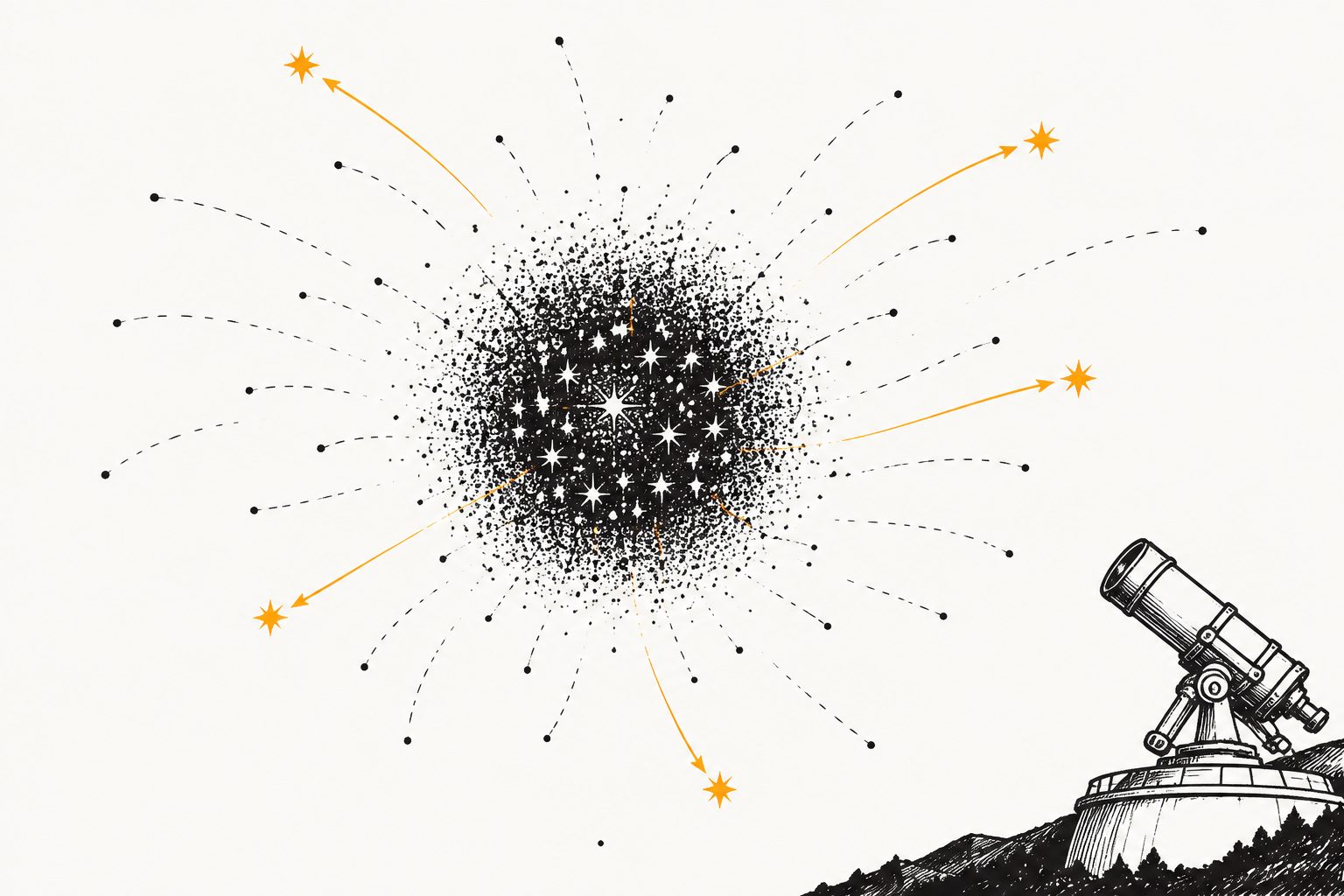
The modeled encounters can accelerate stars to several hundred kilometres per second, allowing them to escape their globular clusters and, in some cases, the Milky Way’s gravitational reach. Across 100 modeled clusters, the researchers estimate that about 6,300 stars escaped this way over the past 500 million years.
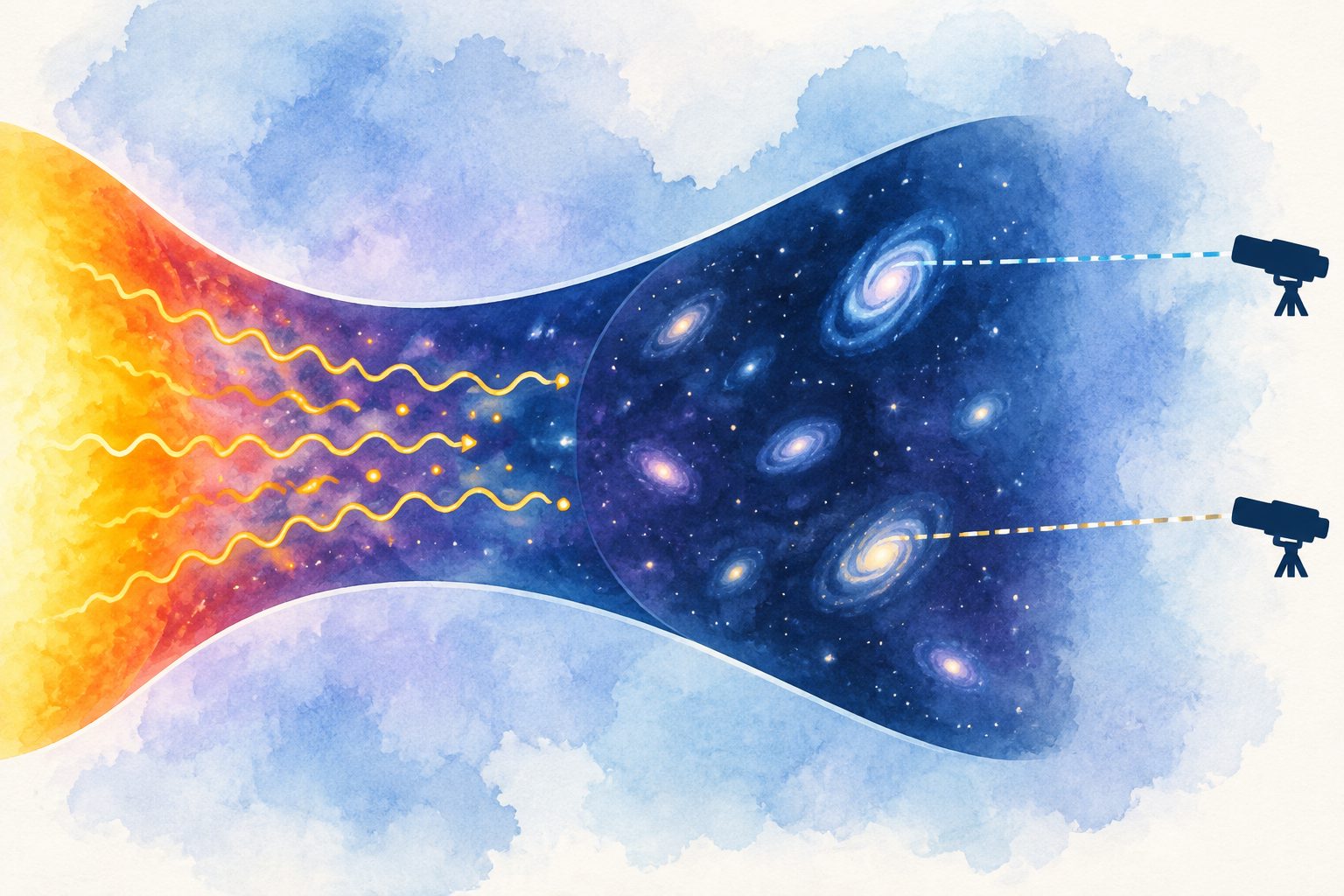
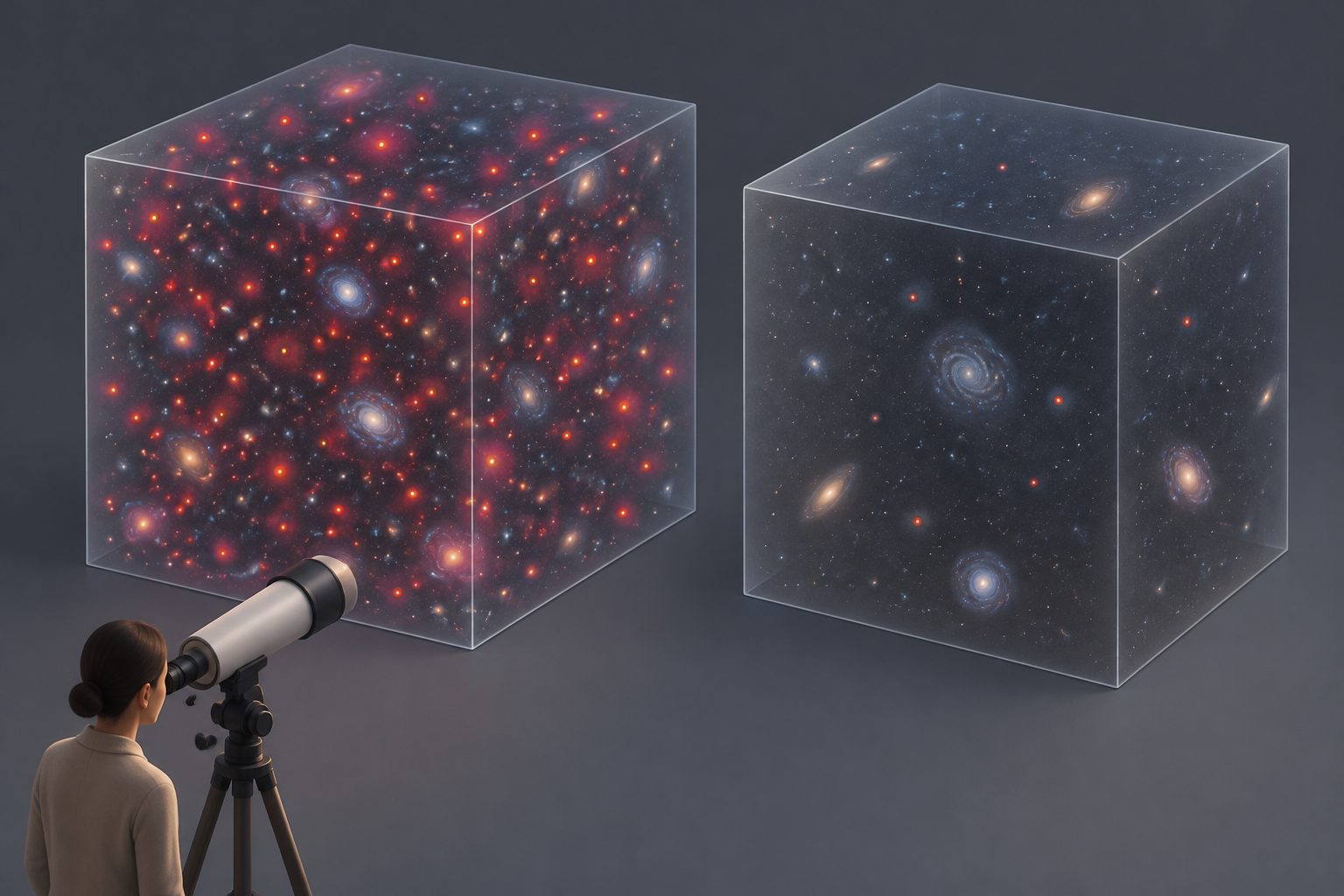
About 840 of the simulated stars have present-day speeds above 500 kilometres per second. Mock observations indicate that about 290 of all the ejected stars could be detected in Gaia’s third data release, although no more than two are expected to appear in Gaia’s radial-velocity catalog. The future Legacy Survey of Space and Time could detect about 1,400 of the ejected stars, including about 13 moving faster than 500 kilometres per second.
Why these stars matter
The results suggest that compact-object binaries in globular clusters are a small but potentially meaningful source of very fast, or hypervelocity, stars in the Milky Way. Finding these escaped stars could provide information about the dense cores of globular clusters, where the ejections occur.
The study also indicates that stars from globular clusters can sometimes resemble stars expelled from the Galactic center, especially when their motion is inferred without complete velocity information. Future detections and measurements of these stars could therefore help distinguish between different ejection routes.
Evidence and caveats
This is a population prediction based on Monte Carlo star-cluster simulations, observations of Galactic globular clusters and a particle-spray model that tracks escaped stars through the Galaxy. The researchers used mock observations to estimate which simulated stars current and future surveys could detect; the study does not report a new confirmed detection of one of these stars.
The numbers depend on the assumed cluster models, compact-object binary populations, stellar encounters and survey detectability. The predicted counts also carry substantial uncertainties: for example, the estimate for stars above 500 kilometres per second is about 840, with an uncertainty of roughly 70 in either direction, while the Gaia estimate for all detectable ejected stars is about 290, with uncertainty extending from roughly 267 to 318.
// Source
The Astrophysical Journal · 2026 · DOI: 10.3847/1538-4357/aea21f
Institutions: University of Toronto, York University