
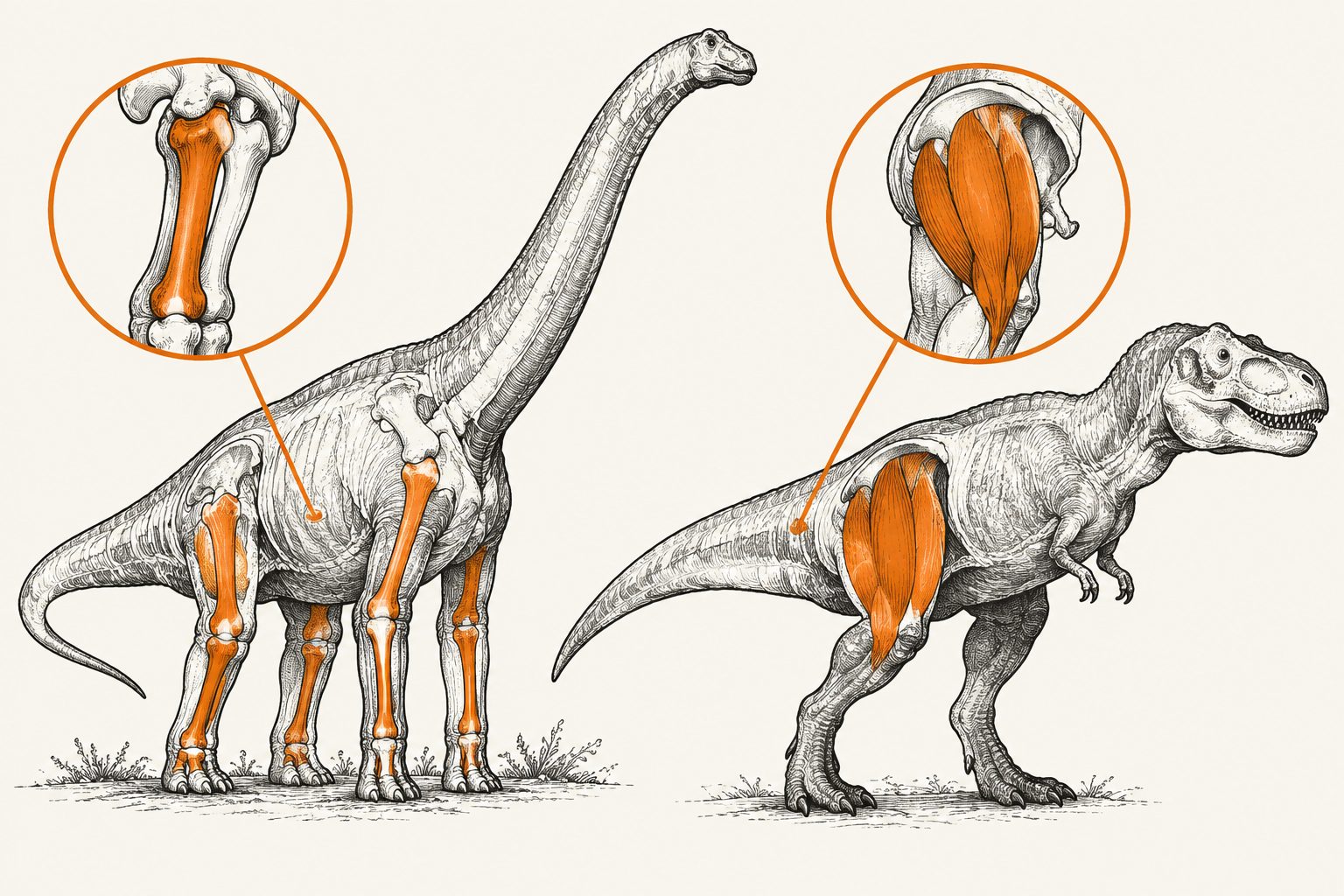
Researchers built three-dimensional models of thigh bones from early sauropodomorphs, several sauropod groups and a modern African elephant. They compared idealized solid bones with models that included each animal’s internal hollow spaces and cartilage-covered joint surfaces, using engineering calculations to assess stress, strain and stiffness.
The results did not show one consistent relationship between body mass and femur performance. The sampled narrow-gauge sauropods Diplodocus and Amargasaurus showed steeper increases in stress and strain-related measures, while wide-gauge titanosaurs generally had lower values and, in several large-bodied forms, greater stiffness. The effects of internal cavities and cartilage also depended on the shape of each animal’s femur.


