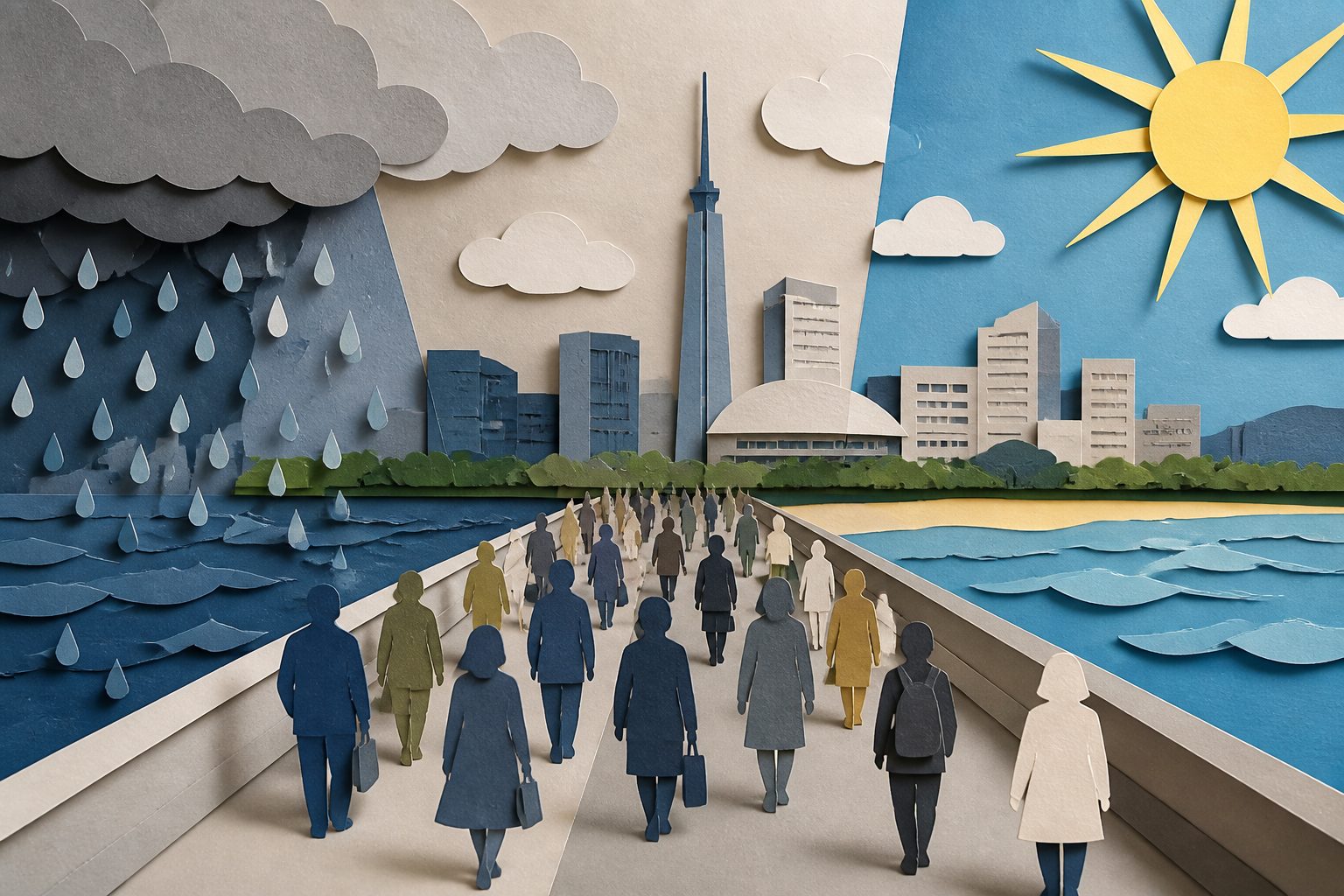
Researchers built a computer-vision framework to extract individual walking paths from a year-long video dataset recorded by a fixed camera system in a high-traffic shopping district in Fukuoka, Japan. They used the system to measure walking speeds across four daily time slots—morning, afternoon, evening, and night—while also recording temperature and three coronavirus disease 2019 (COVID-19) State of Emergency periods.
They report that pedestrian responses were “strongly moderated” by walking purpose. Morning commuters walked faster and were more sensitive to temperature, while night-time pedestrians showed greater behavioral variability and responded more to emergency-period restrictions than to thermal conditions, alongside a demographic shift toward younger night-time walkers during emergency periods.