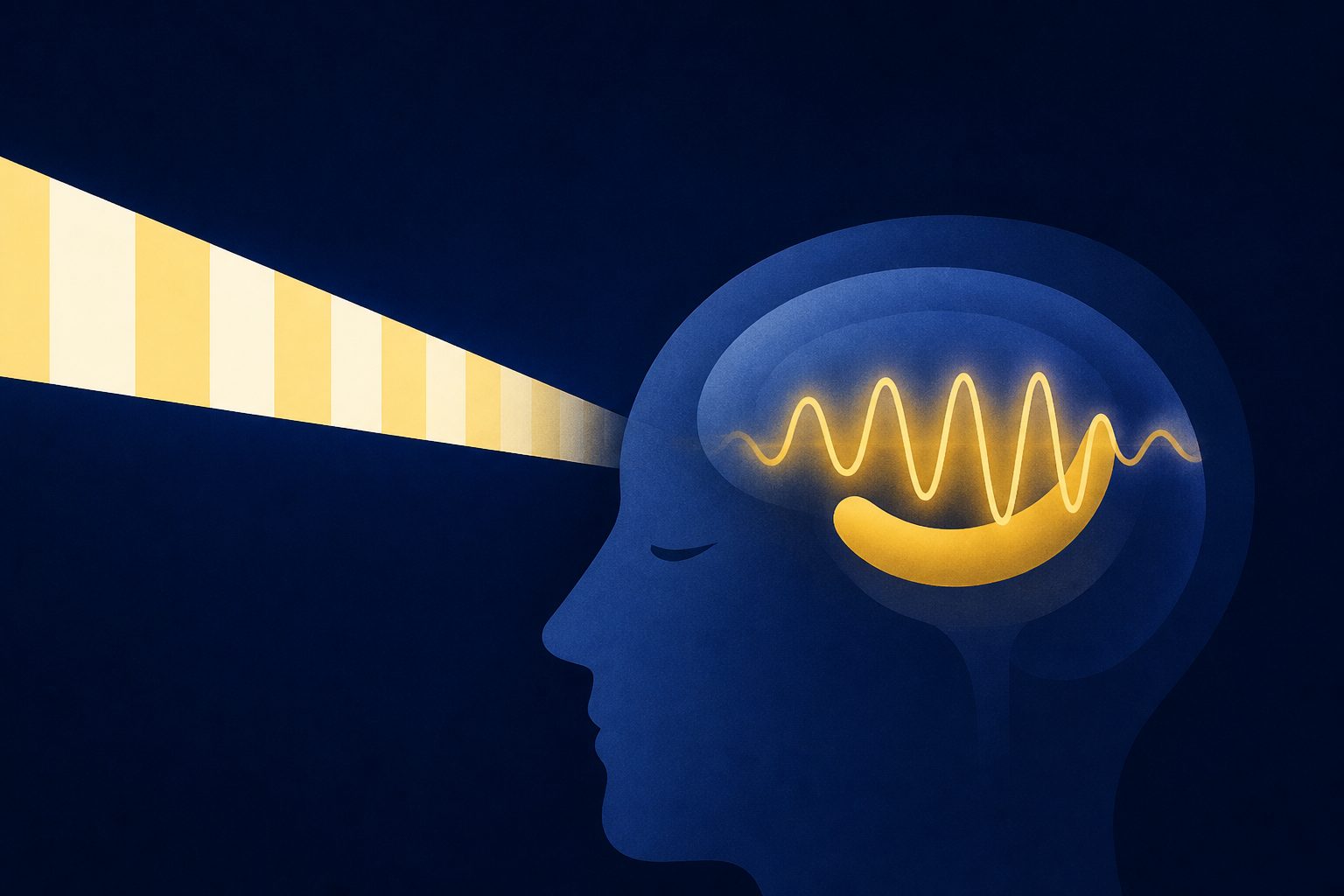
Researchers used ultra-high-frequency visual stimulation while recording brain activity from electrodes implanted in or near the hippocampus of eight people. They found more sharp-wave ripples—a brief, high-frequency brain rhythm linked to hippocampal activity—during stimulation than during eyes-open rest before and after it.
The exploratory study suggests that noninvasive visual stimulation can influence this memory-related rhythm while people are awake. Whether that change affects memory was not tested, so the findings point to a possible research route rather than a demonstrated memory treatment.