A study suggests that less groundwater near the surface can reduce evaporative cooling and raise ground temperatures.
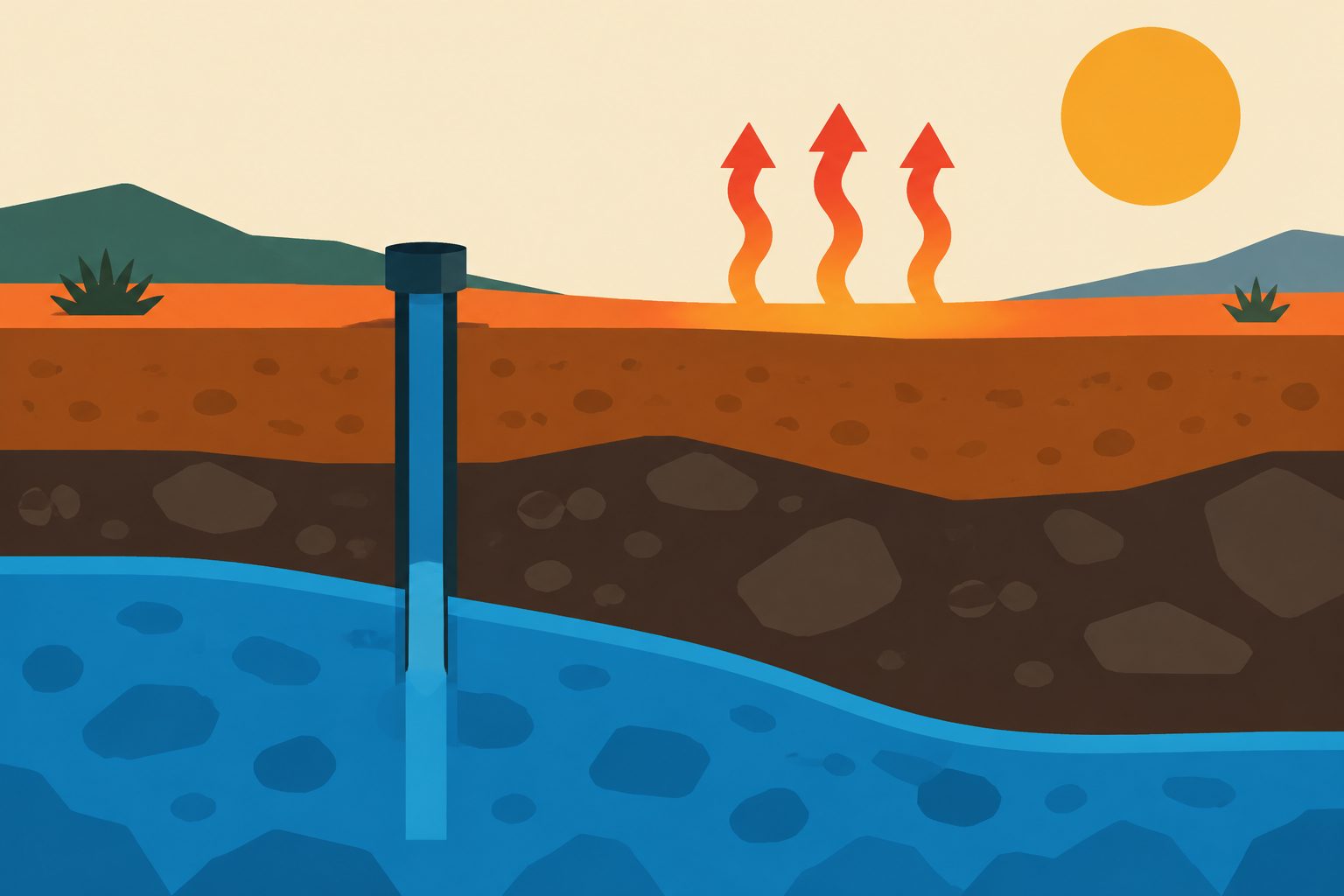
Researchers developed a physics-based framework to examine how falling shallow groundwater levels might affect ground-surface temperature. Their proposed mechanism is that a lower water table reduces evaporative heat loss, allowing more heat to remain near the surface.
They also mapped shallow groundwater declines across the contiguous United States. Areas with declines occurring over decades showed a spatial correlation with temperature increases, and California and Florida were identified as regions with particular vulnerability to this possible effect.
Evidence and caveats
This work combines a theoretical, physics-based framework with geospatial analysis of shallow groundwater declines in the contiguous United States. The predicted warming is based on the proposed relationship between groundwater depth, evaporation and heat loss; the reported geographic relationship is a spatial correlation, not proof that groundwater declines caused the temperature increases. The size of the predicted effect depends on porosity, and the analysis focuses on shallow declines and the contiguous United States, so its broader applicability remains uncertain.
// Source
Scientific Reports · 2026 · DOI: 10.1038/s41598-026-75635-5
Authors: Anner Paldor, N. Paldor
Institutions: Hebrew University of Jerusalem, University of Tennessee at Knoxville