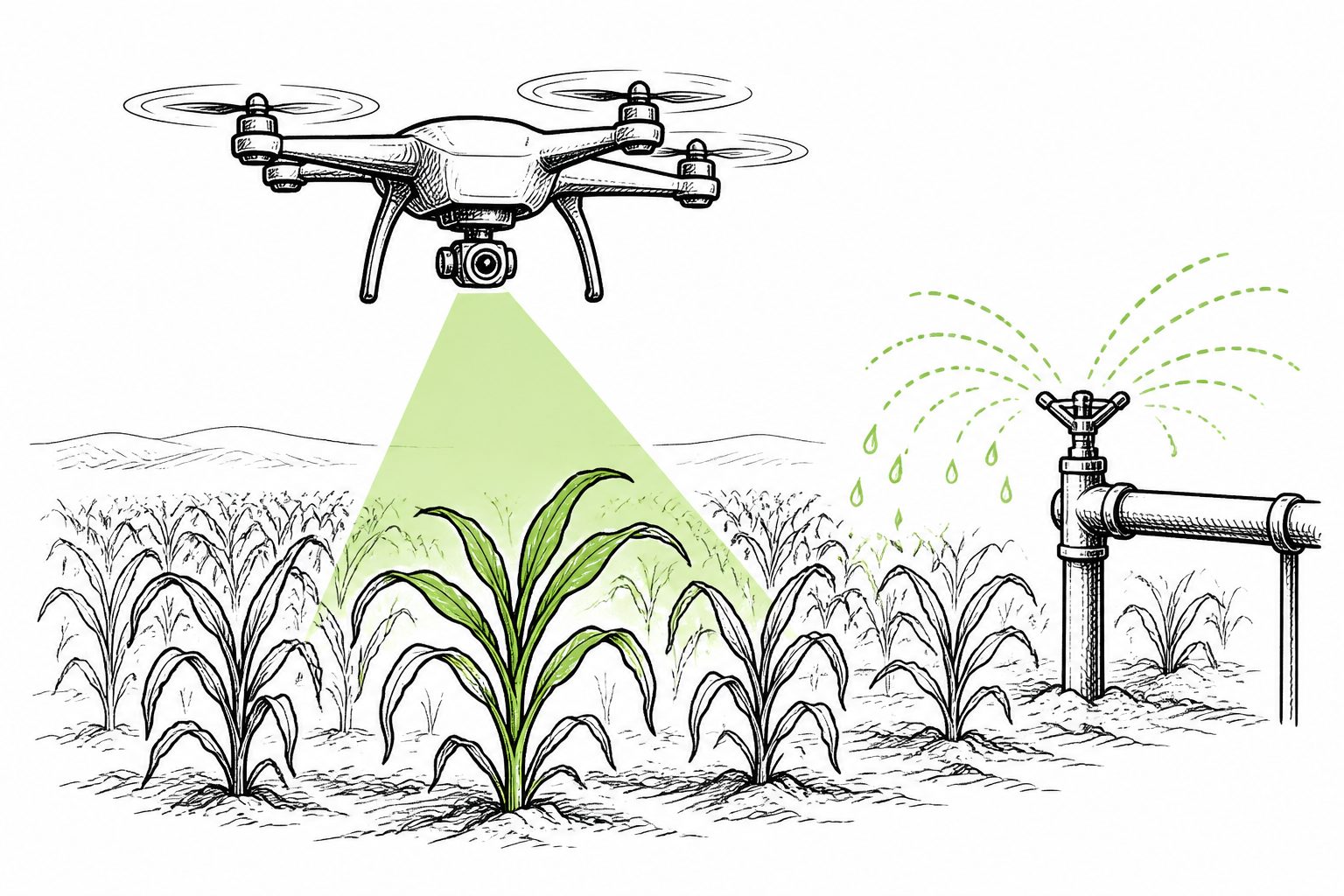
Researchers developed a system that uses drone images, soil sensors and meteorological data to track crop conditions over space and time. Rather than directly predicting yield, it forecasts how stress-related yield vulnerability may change, allowing an artificial intelligence agent to choose irrigation for different areas of a field.
In the reported experiments, the system forecast stress with 96.3% accuracy. Its adaptive irrigation strategy performed better than conventional machine-learning, image-analysis and transformer-based comparison systems, while also reducing modeled yield vulnerability and improving water-use efficiency relative to rule-based irrigation.