Denver-Julesburg gas production rose 73.9% as ethane emissions fell 63.6%
Oil and gas facilities in Colorado’s basin emitted less ethane and methane from 2015 to 2021 despite higher natural gas production.
Editorial illustration — not from the study.
The study examined how engines at oil and gas production facilities burn ethane and methane. Tests found that both rich-burn and lean-burn engines destroyed ethane more efficiently than methane, leaving exhaust with a lower ethane-to-methane ratio than the fuel gas.
The researchers also describe facility design changes that reduced emissions of both gases, with a larger reduction in ethane. In the Denver-Julesburg Basin, production rose substantially from 2015 to 2021 even as emissions from oil and gas facilities declined, suggesting that midstream operations may have made up a larger share of basin-wide emissions by 2021.
What the engines burned
Four-stroke rich-burn and lean-burn engine tests using Fourier transform infrared spectroscopy showed consistently higher destruction efficiencies for ethane than for methane. In other words, the engines removed a greater fraction of ethane during combustion, so the ethane-to-methane ratio in exhaust was consistently lower than in the fuel gas.
The study reports that recent design modifications at oil and gas production facilities reduced emissions of both ethane and methane, with a more pronounced reduction in ethane. In the Denver-Julesburg Basin, natural gas production increased 73.9% from 2015 to 2021, while top-down estimates reported in a companion paper found that emissions from oil and gas facilities decreased 63.6% for ethane and 25.3% for methane.
Why the drop matters
Ethane is produced alongside methane by thermogenic sources such as oil and gas operations, but not by biogenic sources such as wetlands, livestock and landfills. Because engines remove ethane more efficiently than methane, emissions measured after combustion may have a lower ethane-to-methane ratio than the gas originally supplied to the engine. That difference matters when researchers use ethane-to-methane ratios to identify and estimate oil and gas emissions.
The basin’s simultaneous rise in production and fall in production-sector emissions indicates that greater output did not correspond to greater emissions from those facilities during the study period. The authors say the pattern suggests midstream operations may have accounted for a larger relative share of basin-wide emissions by 2021.
Evidence and caveats
The evidence combines Fourier transform infrared spectroscopy measurements from exhaust-stack tests of two four-stroke engine types with top-down basin-level emission estimates reported in a companion paper. The abstract does not provide the number of engines or tests, the uncertainty ranges for the emission changes, or details of how representative the tested facilities were of the entire basin.
The findings also show why ethane-to-methane ratios can vary among fuels, engines, emitting sources and facility configurations. The reported changes describe the 2015–2021 period and do not by themselves establish how emissions changed at every facility or operation in the basin. The possible increase in the relative contribution of midstream operations is presented as an inference from rising production alongside declining production-sector emissions.
// Source
Journal of Geophysical Research Atmospheres · 2026 · DOI: 10.1029/2025jd044690
Researchers have produced probability maps showing where rocks thrown out by major explosions and paroxysms at Stromboli could fall. The maps identify exposed areas and estimate the chance of fallout over the next 10 and 50 years.
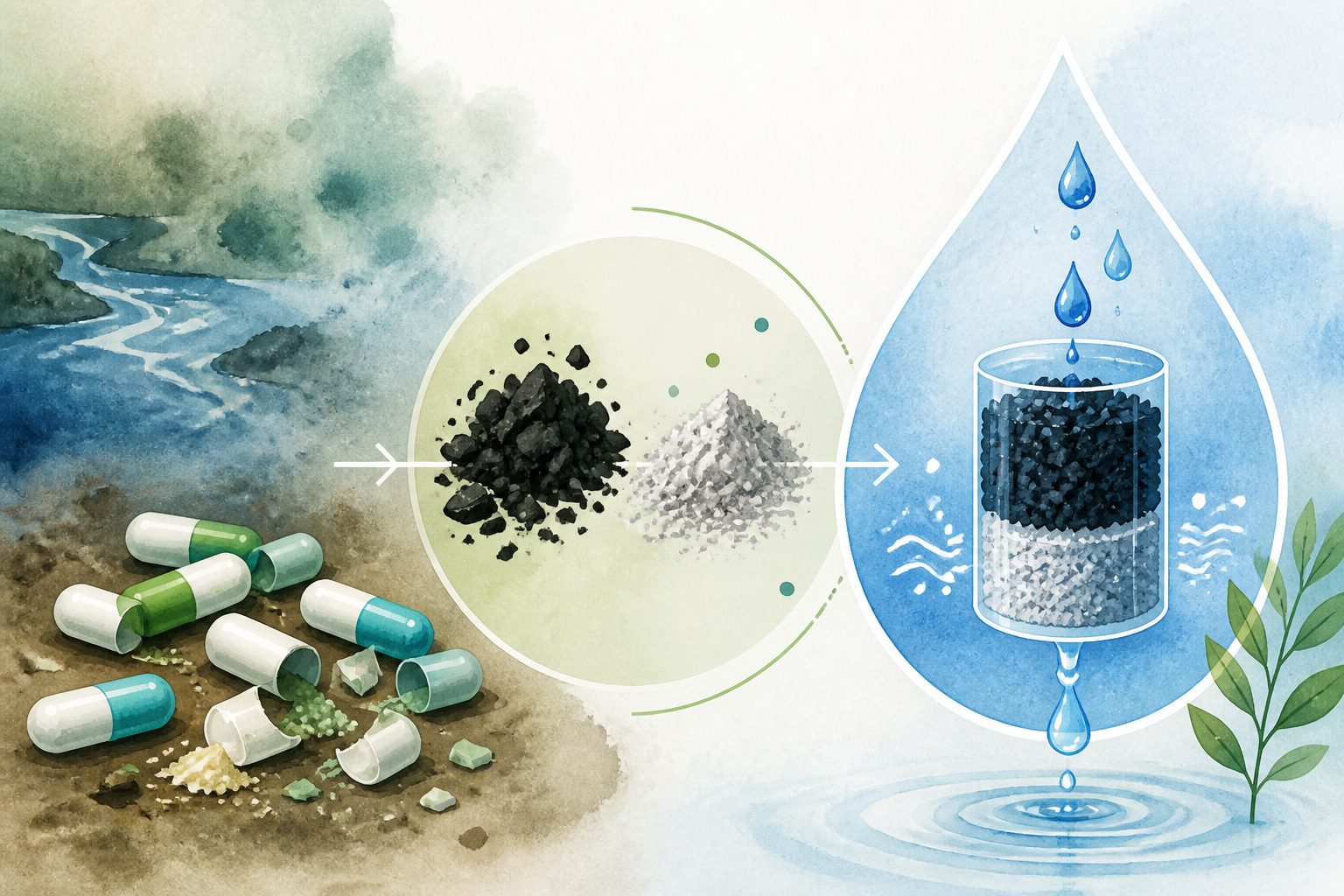
Researchers converted discarded gelatin capsules into porous activated carbon and mineral-rich ash. The carbon adsorbed methylene blue, acetaminophen and bisphenol A, while one ash material removed about 70% of methylene blue under ultraviolet light after 350 minutes.
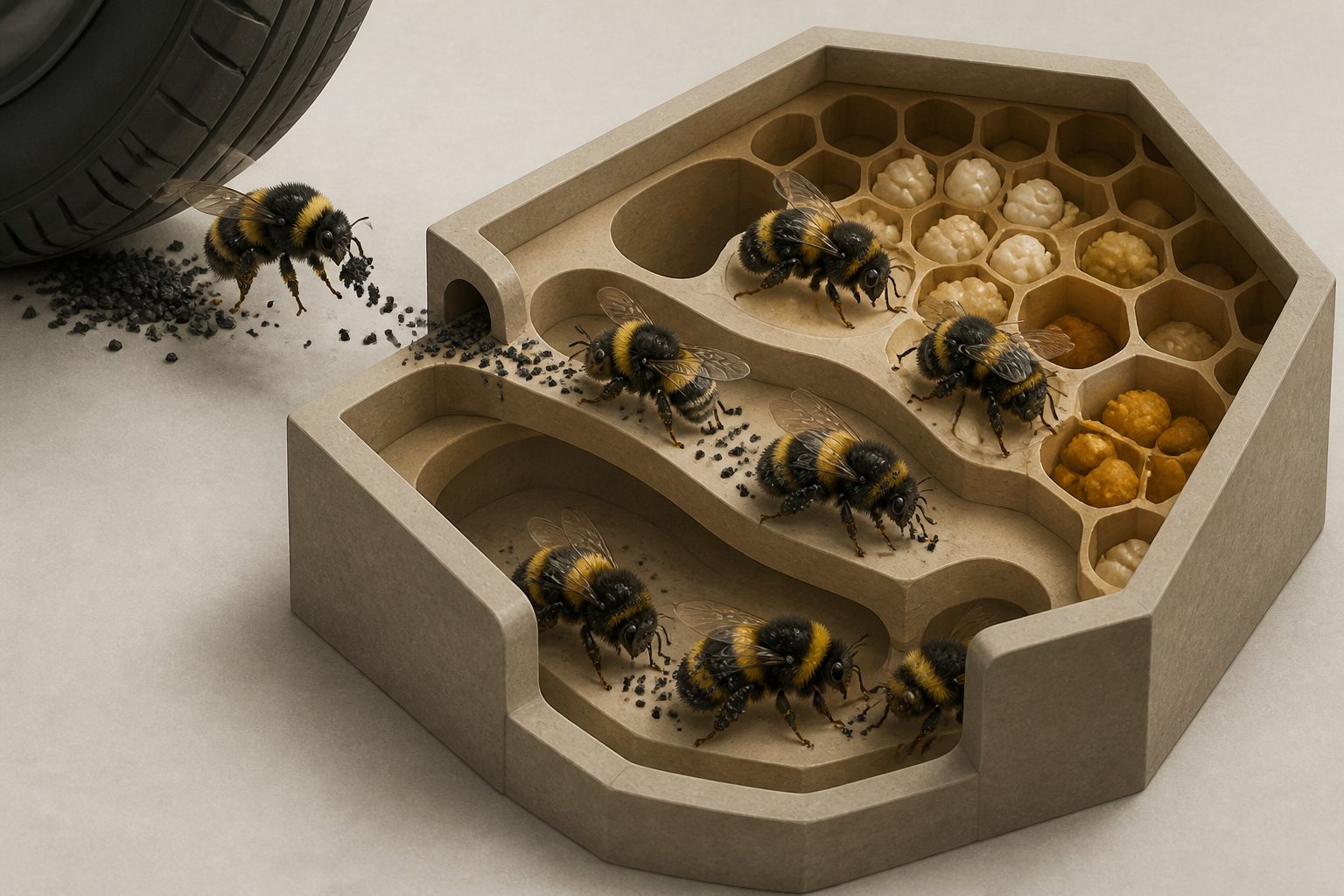
A study of buff-tailed bumblebees found that tire-wear particles were ingested by workers, transferred to larvae and added to nest materials more often than polystyrene particles. The findings suggest that studies of microplastic risks to pollinators should include particles from vehicle tires, not only standard laboratory plastics.