Copperbelt communities face air pollution from plants serving clean-energy demand
Monitoring around two copper and cobalt processing plants found pollution spikes that sometimes exceeded health-based guidelines, especially during the dry season.
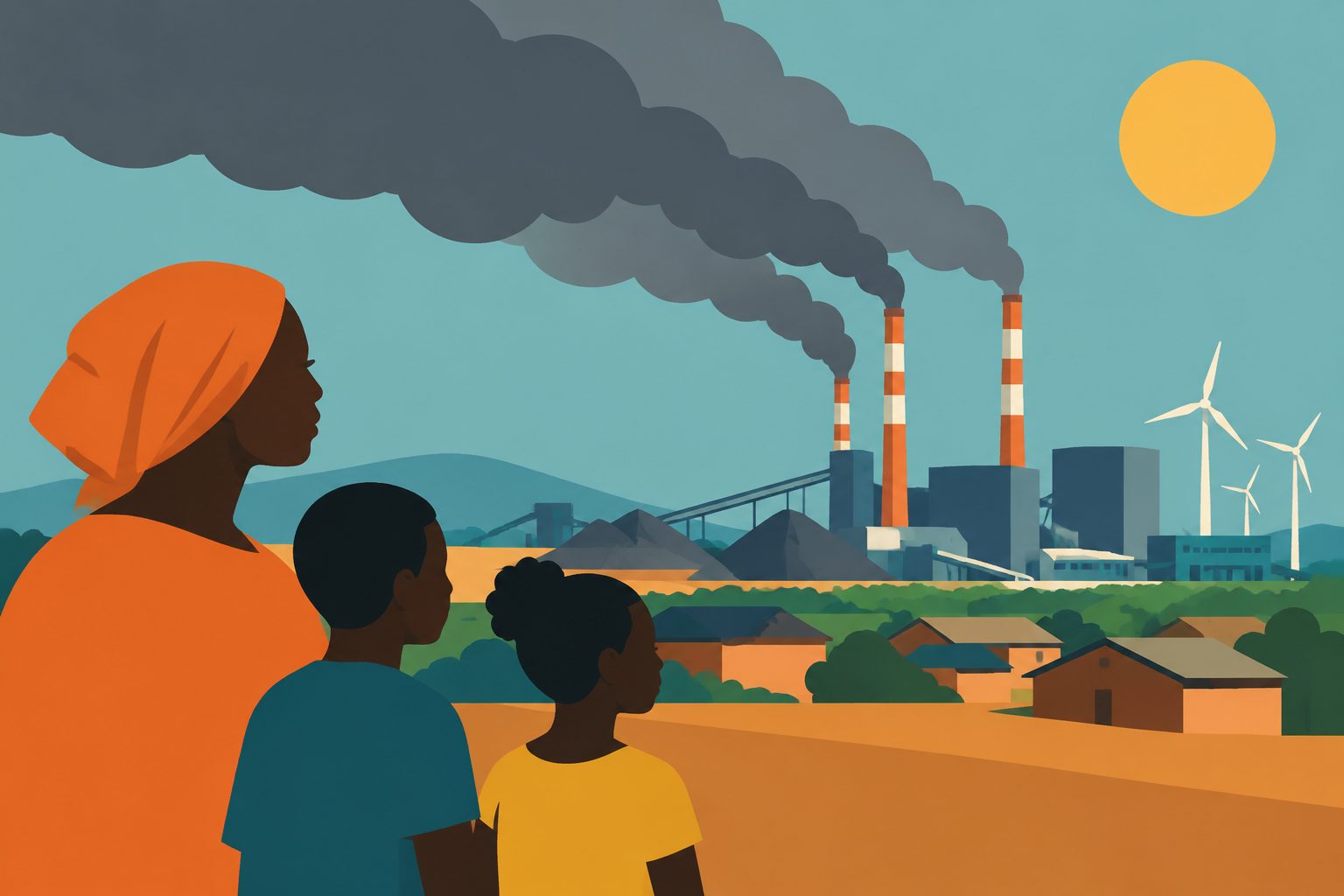
Editorial illustration — not from the study.
Researchers measured sulfur dioxide, nitrogen dioxide, airborne particles, copper and lead around a hydrometallurgical plant in Kakanda and a pyrometallurgical plant in Lubumbashi. Samples were collected in four directions around each facility during January, March, July and October 2022, alongside weather observations.
Pollution varied by season and direction. The most severe conditions occurred in July, at the height of the dry season, when eastern sectors recorded air-quality index values classified as hazardous at the Kakanda site and very unhealthy at the Lubumbashi site. The researchers say the results show that compliance with current Congolese limits does not necessarily ensure health protection.
Pollution varied by plant
Sulfur dioxide, nitrogen dioxide, PM10 and PM2.5 frequently exceeded the 2021 World Health Organization health-based guidelines. Sulfur dioxide, copper and lead also had episodic exceedances of Congolese regulatory limits, although most mean concentrations were below those limits.
The highest reported sulfur dioxide concentration was 6.0 milligrams per cubic metre in the northern sector of the Kakanda hydrometallurgical site. The highest nitrogen dioxide concentration was 5.0 milligrams per cubic metre in the northern sector of the Lubumbashi pyrometallurgical site. Sulfur dioxide was the main pollutant at Kakanda, while nitrogen dioxide was the main pollutant at Lubumbashi.
In July, the eastern sectors recorded air-quality index values of 373.20 at Kakanda, classified as hazardous and driven by sulfur dioxide, and 239.93 at Lubumbashi, classified as very unhealthy and driven by nitrogen dioxide. Lower humidity was associated with higher concentrations of gaseous pollutants, while stronger winds carried pollution toward northern and eastern areas.
The local cost of processing
Copper and cobalt from the Congolese Copperbelt support technologies linked to the global energy transition. The findings show that the local air-pollution burden of processing these minerals can fall on communities near the plants, even when average concentrations comply with national limits.
The researchers call for tighter standards, continuous and publicly reported monitoring, and controls suited to each plant’s emissions. They identify the eastern sectors around both facilities as priorities for follow-up monitoring and investigation.
What the monitoring can show
This was an ambient-air monitoring study at one hydrometallurgical facility in Kakanda and one pyrometallurgical facility in Lubumbashi. Researchers collected 192 observations for each pollutant at each site across four seasonal campaigns in 2022, with sampling points north, south, east and west of each facility. They compared the measurements with Congolese limits and 2021 World Health Organization health-based guidelines.
The quarterly campaigns cannot show daily patterns, brief pollution events or the full range of exposure. Four stations at a single distance provide limited spatial detail, and the study had no upwind background locations or source-apportionment data. As a result, it cannot determine how much of the measured pollution came from the plants rather than traffic, household combustion or other industries. The sites were partly selected for accessibility, so the findings should not be generalized to the entire Copperbelt.
// Source
Environment Development and Sustainability · 2026 · DOI: 10.1007/s10668-026-08147-x
Images from the European Space Agency’s JUICE mission show that small volcanic or subvolcanic features on a lunar highland are distributed in ways consistent with control by impact-generated and regional fractures. The same observations also reveal mafic, or iron- and magnesium-rich, material inside Langrenus crater, although its exact minerals remain uncertain.
A study of the PARADeS flood-risk project in Ghana argues that effective flood planning needs more than technical analysis. It finds that working with communities and other stakeholders through shared research, trust-building and long-term institutional support can produce knowledge that is more socially grounded and actionable.
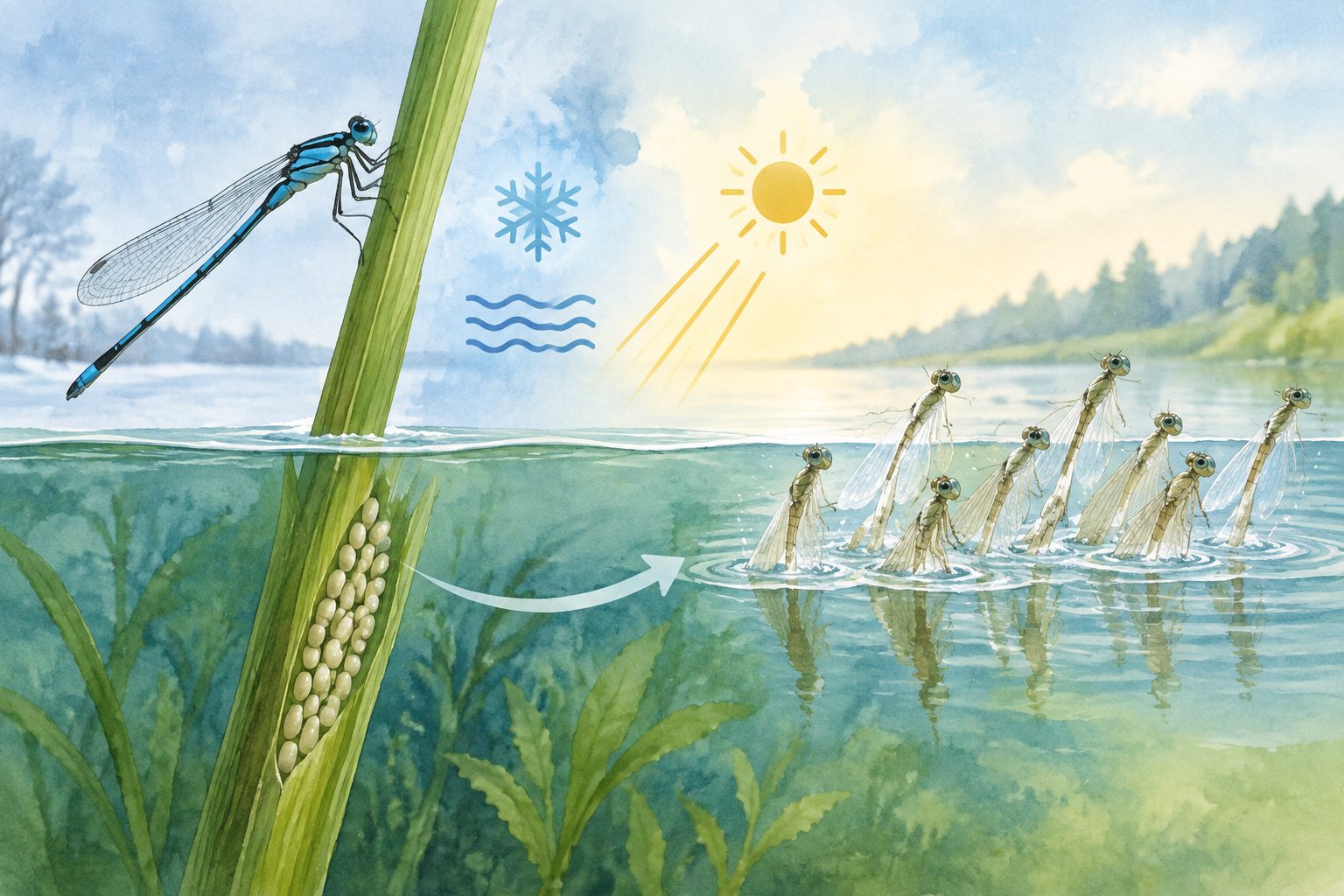
Damselfly eggs from different latitudes responded to winter cold and day length in ways that helped time hatching for spring. The eggs could hatch at 5 °C, and newly hatched larvae survived two weeks near 0 °C, suggesting that warmer winters could allow some hatching during winter.