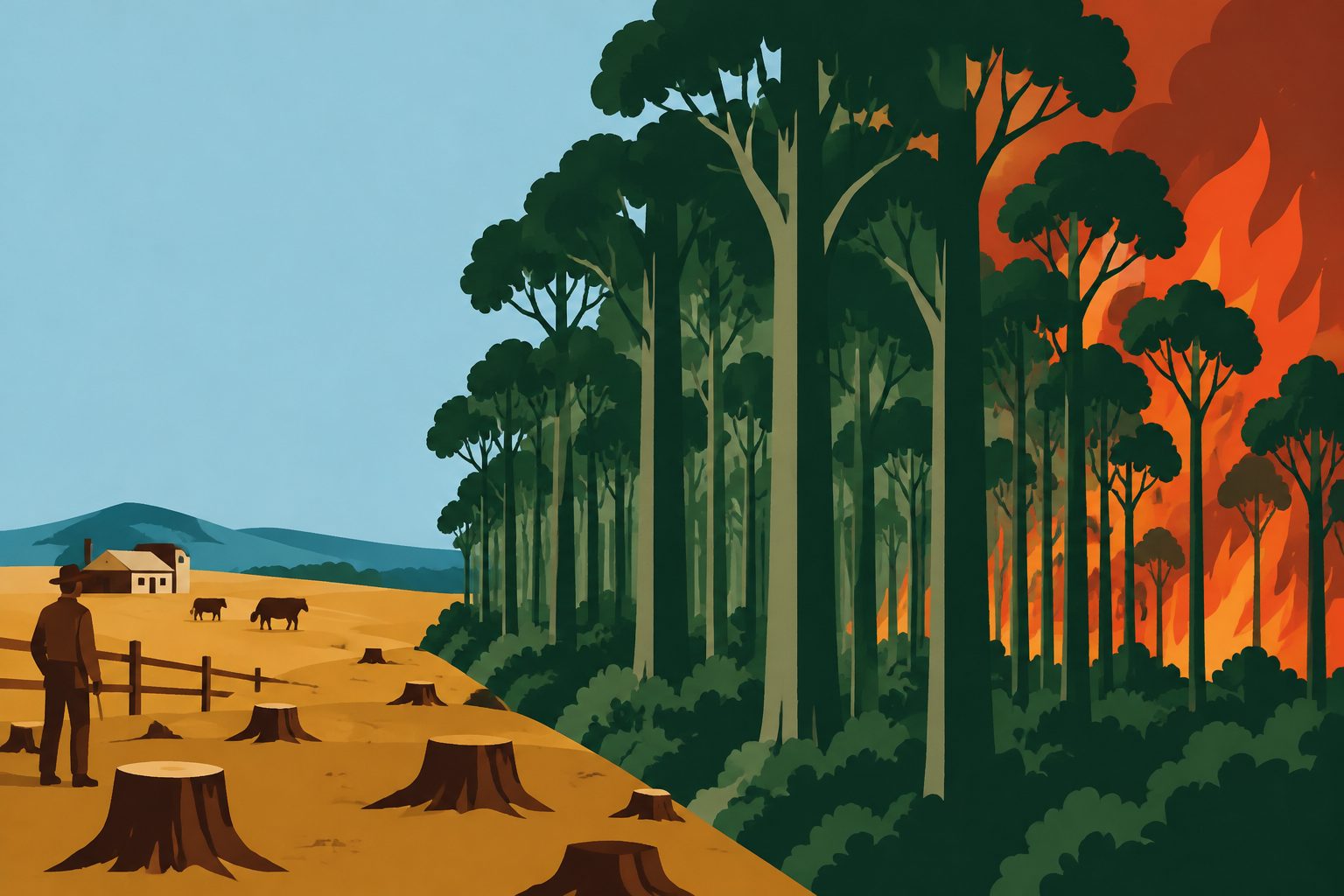
A 1,000-year record suggests the disruption of Gunaikurnai burning practices changed forests before human-caused warming.
Researchers reconstructed 1,000 years of vegetation and fire history in a temperate eucalypt forest in southeastern Australia using lake sediments. Before British colonization from 1788, frequent, small-scale, low-temperature burning by the Indigenous Gunaikurnai people was associated with stable, open woodlands.
After colonial disruption of these practices, the record shows hotter fires, a fourfold increase in eucalypt cover, a shift from open woodland to forest and increased soil erosion. The researchers say these changes created a more flammable landscape, amplifying the influence of climate change and contributing to a reinforcing cycle in which intense fires increase fuel loads and the risk of later fires.
How the forest changed
Before 1788, frequent, fine-grained, low-temperature cultural burning by the Gunaikurnai people maintained relatively stable open woodlands. Following colonial disruption, fire temperatures increased, eucalypt cover rose fourfold, and the landscape shifted from open woodland to denser forest. Soil erosion also increased. These changes came before anthropogenic warming, according to the 1,000-year record.
// Source
Nature · 2026 · DOI: 10.1038/s41586-026-11097-z
Authors: Michael Fletcher, Anthony Romano, Caitlin O'Shea, S. Yoshi Maezumi, Harriet Magee, Simon Connor, Patricia Menéndez, Patricia S. Gadd, Michela Mariani, Manuel Chevalier, Russell Mullett
Institutions: The University of Melbourne, University of Nottingham, Australian Nuclear Science and Technology Organisation, Tharawal Aboriginal, Max Planck Institute of Geoanthropology, Phillip Island Nature Parks