Climate change may reduce high-elevation mushroom diversity and shift lowland fungi
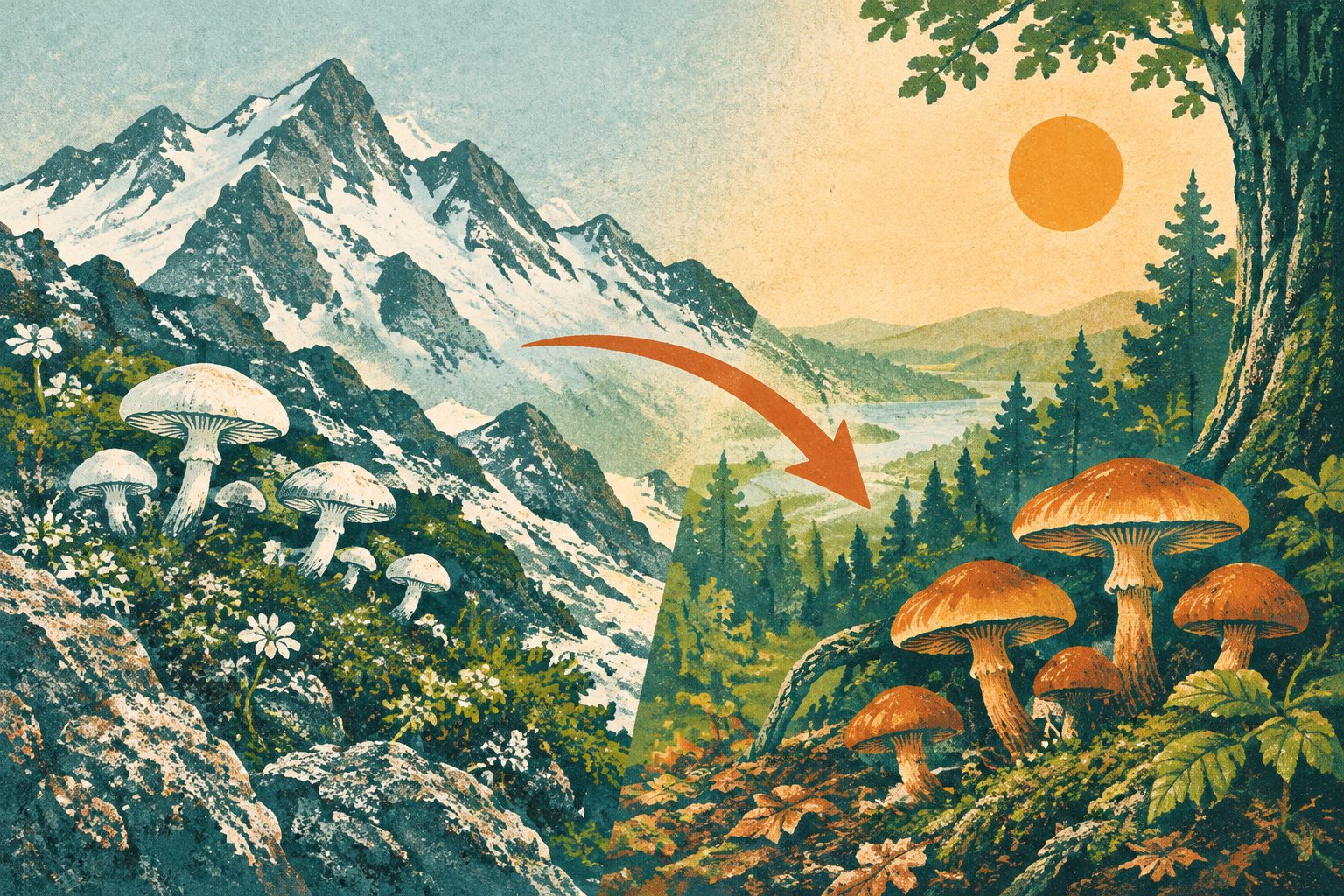
Projections for Catalonia’s pine forests show different changes in fungal diversity across elevations and lifestyles, depending on emissions.
Editorial illustration — not from the study.
Researchers combined 15 years of fungal sampling from 103 plots in Catalonia with machine-learning models and detailed climate data. The plots covered pine forests from about 300 to 2,000 metres in elevation and several climate regions.
The projections differed by elevation and by fungal lifestyle. Species richness and abundance-weighted diversity were expected to decline most at higher elevations, while the largest changes in community composition were projected at lower elevations. Effects were stronger under the high-emission RCP 8.5 scenario than under the moderate-emission RCP 4.5 scenario.
How fungi may change
The study examined two aspects of diversity: the number and abundance of species in a place, and the makeup of the community. Climate change was projected to reduce both measures particularly at higher elevations, while the strongest changes in community makeup were projected at lower elevations, suggesting that species turnover could be important there.
Responses also differed between fungal lifestyles. Mycorrhizal fungi, which live in association with plant roots, and saprotrophic fungi, which break down dead organic matter, were both projected to lose diversity in cooler environments. At lower, warmer elevations, however, saprotrophic diversity was projected to increase.
The projected effects depended strongly on emissions. Under RCP 4.5, changes were generally limited and often not statistically significant, although the authors caution that this does not mean there would be no effect. Under RCP 8.5, widespread changes in diversity and community composition were projected.
Why the pattern matters
Macrofungi contribute to nutrient cycling, plant performance and food webs in forests. The study indicates that climate change could alter these communities in different ways across a Mediterranean mountain landscape, rather than producing one uniform regional response.
The contrasting projections for elevations and fungal lifestyles also identify parts of fungal diversity that may be missed by a single overall measure. The findings support including macrofungi in biodiversity planning and developing management approaches that account for climate-related changes in Mediterranean forests.
Evidence and caveats
This was a regional modeling study, not a field experiment. The researchers used fruiting-body abundance data collected weekly during the main fruiting period from 103 10-by-10-metre plots in Catalonia’s pine forests between 2007 and 2021, then combined those observations with climate data to make future projections.
The results are therefore forecasts rather than direct observations of future change. They apply to the studied pine forests and the climate scenarios examined, including RCP 4.5 and RCP 8.5, and may not represent other ecosystems. The study also measures visible fruiting bodies, so the projections concern fruitbody-based macrofungal diversity.
A study of illicit alcohol in two Ugandan cities found that alcohol strength was inconsistent and sometimes under-declared, reaching 44.2%. Some spirits contained methanol above safe limits, while opaque beers showed bacterial contamination and many production and retail sites had poor sanitation.
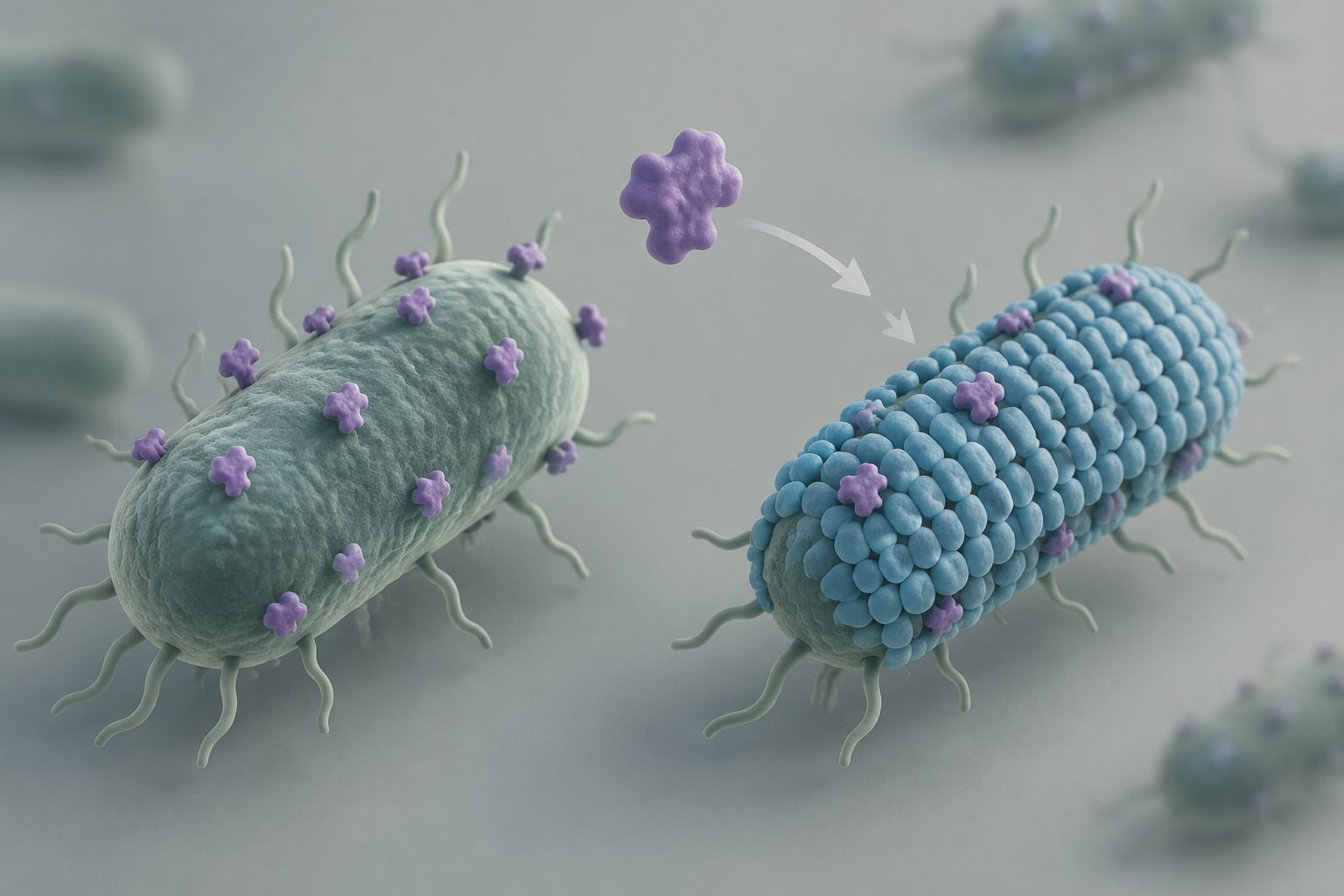
Researchers found that bacterial surface-layer proteins can evolve through modular changes and gene transfer, producing different outer structures. In closely related bacteria with the same type of surface layer, only pathogens showed resistance to the antimicrobial molecules LL-37 and lysozyme.
Researchers traced how AlphaFold 3 turns evolutionary differences among related protein sequences into three-dimensional structure predictions. They found that evolutionary diversity matters more than simply adding more sequences, helping explain both the system’s strengths and some of its failures.