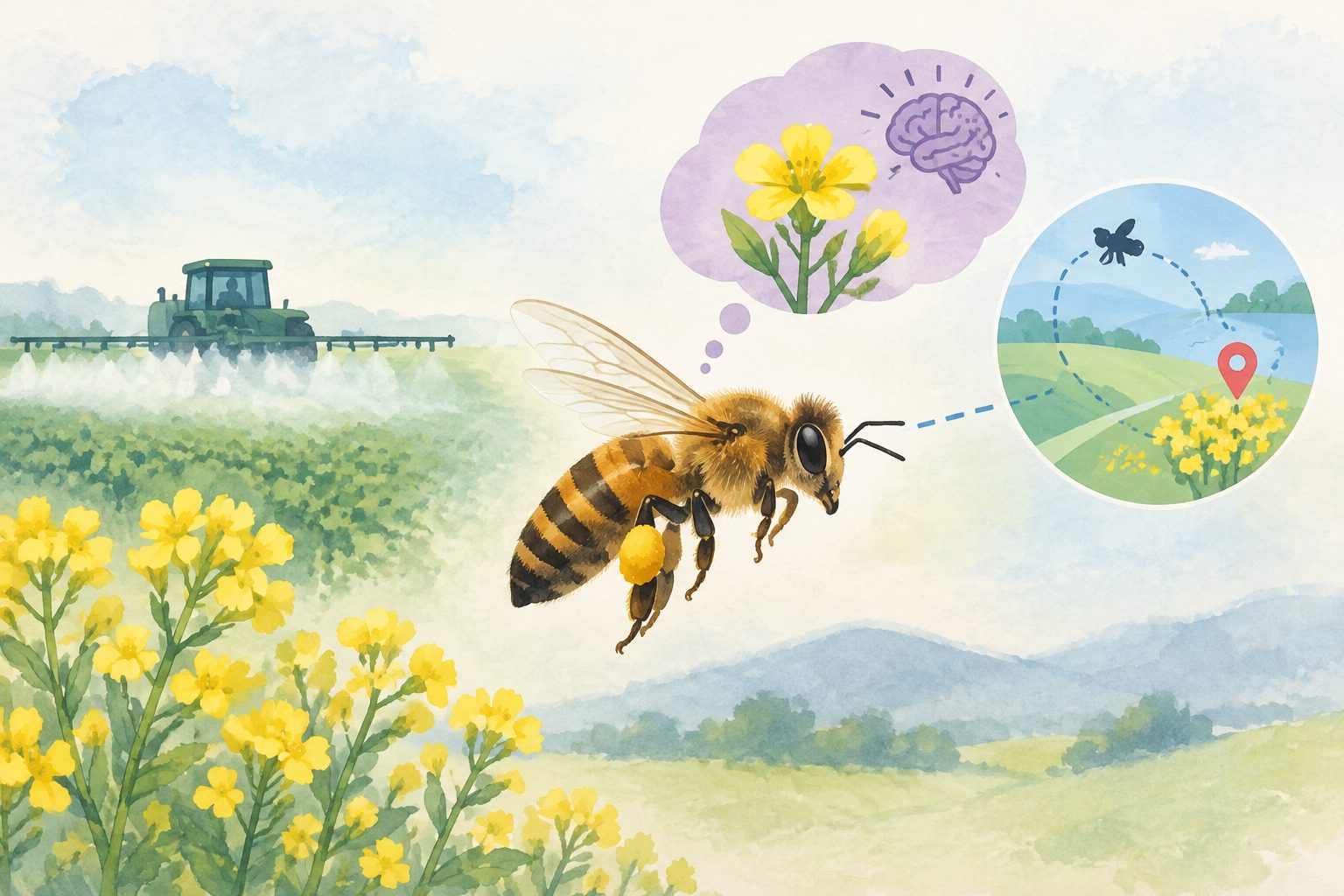
A review of 1,418 studies finds growing attention to how pesticides affect bees’ behavior, learning and movement.
Researchers analyzed studies indexed in the Web of Science from 2000 through 2025, using publication and citation-mapping tools to track trends, collaborations and changing research themes. Research output rose sharply after 2015 and was highest in 2023, with major collaboration networks centered in the United States, China and Western Europe.
The analysis found a shift from mortality-focused studies toward behavioral and cognitive measures, including learning, memory and navigation. It also identified more research on compounds such as flupyradifurone, sulfoxaflor and thiacloprid, as well as studies examining pesticide exposure alongside climate change, nutritional stress and changes to gut microbiota.
How bee pesticide research changed
The study covered 1,418 publications on pesticide effects on bee behavior and cognition published from 2000 to 2025. Research output increased markedly after 2015 and reached a peak in 2023. The field’s major collaboration centers were in the United States, China and Western Europe, while Apidologie was a key publication outlet.
Thematic analysis identified three main changes in the field. Researchers increasingly studied sublethal effects—changes that do not immediately kill bees—such as impaired learning, memory and navigation, rather than focusing only on mortality. They also examined newer pesticide compounds, including flupyradifurone, sulfoxaflor and thiacloprid, and increasingly considered pesticide exposure together with climate change, nutritional stress and gut microbiota disruption.
Why behavior matters
The analysis shows that bee pesticide research is expanding the definition of harm beyond immediate death to include behavior and cognition that may affect how bees learn, move and interact with their environment. It also points to growing recognition that pesticide exposure can occur alongside other stresses.
The authors say these trends support regulatory frameworks that include standardized behavioral, cognitive and multi-stressor assessments when evaluating risks to pollinators, biodiversity and ecosystem services.
What this analysis can show
This is a bibliometric analysis, meaning it maps patterns in published research rather than directly testing how pesticides affect bees. The researchers analyzed 1,418 publications indexed in the Web of Science using the Bibliometrix R package and VOSviewer.
The study can show which topics, chemicals and collaborations are becoming more prominent, but it cannot by itself establish the size or cause of any pesticide effect, determine which compounds pose the greatest risk, or show whether particular regulatory changes would protect bee populations. Its findings also reflect the publications included in the selected database and time period.
// Source
Uludağ Arıcılık Dergisi · 2026 · DOI: 10.31467/uluaricilik.1997375
Authors: İsmail Yaşhan Buluş
Institutions: Muş Alparslan University