An ancient hybrid weevil species formed without changing chromosome number
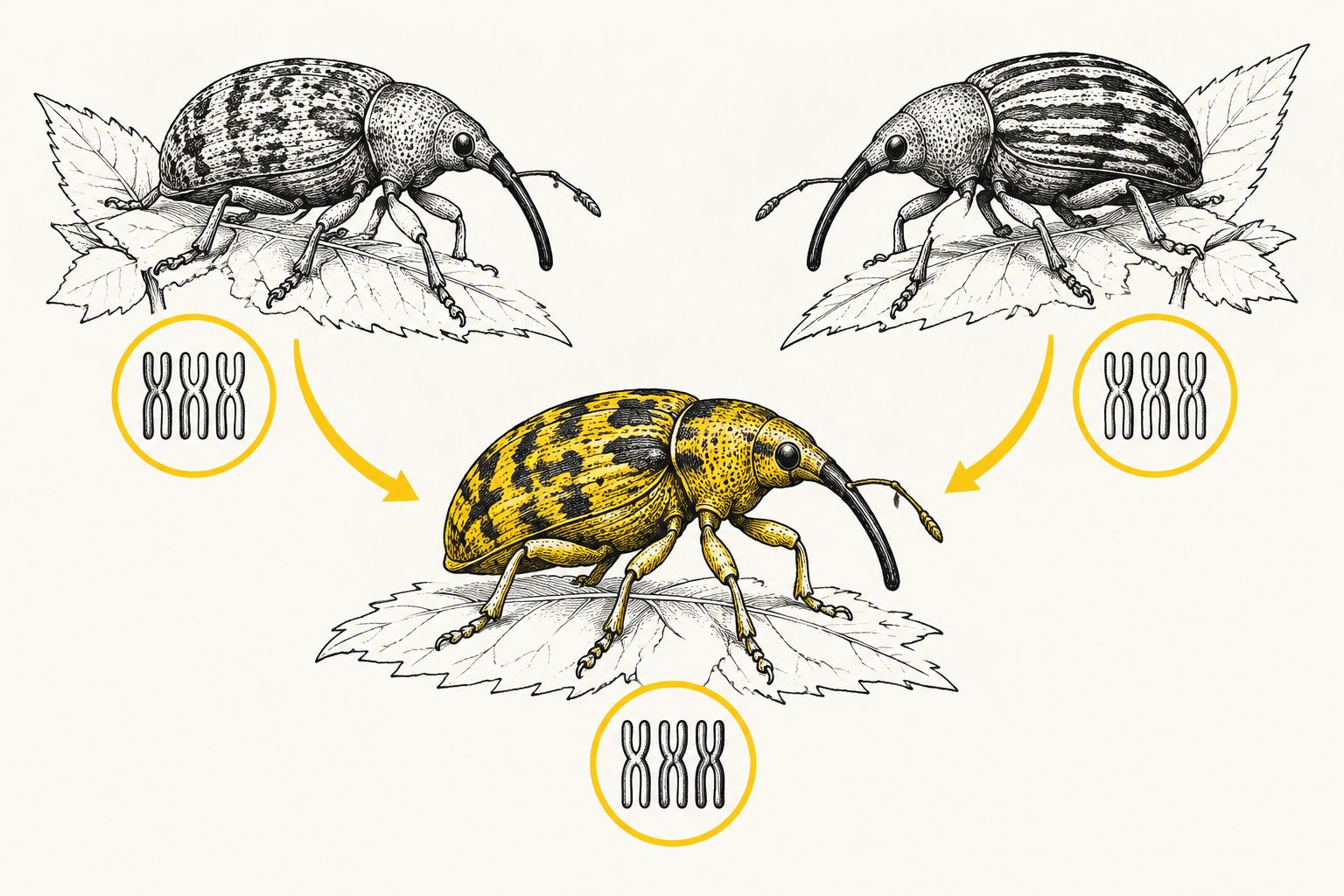
Genomic evidence suggests a distinct weevil lineage arose from two parental species and persisted alongside them in Tenerife.
Editorial illustration — not from the study.
Researchers analysed mitochondrial DNA and genome-wide nuclear variation in a weevil species complex on Tenerife’s Anaga peninsula. Their genetic analyses identified three distinct groups within Silvacalles instabilis, with one group showing a history of admixture between the other two.
Demographic modelling, genome-wide heterozygosity and individual-based simulations support an ancient origin for the hybrid group, estimated at about 200,000 years ago. Geographic patterns suggest it arose in a hybrid population that was separated from both parental species long enough for reproductive isolation to develop before the groups later occurred together.
How the hybrid weevil formed
The researchers found that nuclear and mitochondrial variation in Silvacalles instabilis was distinct from the related species S. nubilosus. Within S. instabilis, genome-wide data separated individuals into three broadly sympatric genetic groups, described as species A, B and C.
Modelling indicated that species A and B diverged about 800,000 years ago. Species C did not arise through a separate split; instead, it formed through admixture between A and B. Several lines of evidence, including demographic modelling, genome-wide heterozygosity and individual-based simulations, supported an ancient rather than recent origin for C.
Geographic patterns of genomic relatedness point to a hybrid swarm that was once isolated from both parental species as the likely setting in which species C developed reproductive isolation. The authors report no obvious phenotypical or ecological differences among the three species, and all occur sympatrically, or in the same geographic region.
Why hybrid origins matter
The findings support a form of speciation in which hybridization produces a new species without a change in chromosome number. They also suggest that hybridization may sometimes facilitate speciation over a longer period, rather than acting only through immediate selection on distinctive hybrid traits.
The study offers a possible framework for understanding how an isolated hybrid population can become reproductively separate from both parental species, even when the species remain difficult to distinguish by appearance or ecology. The authors propose predictions that could be tested with a suitable reference genome.
Evidence and open questions
The study analysed 106 specimens from 21 sampling sites on the Anaga peninsula, using mitochondrial DNA and genome-wide nuclear data generated with double-digestion restriction-site associated DNA sequencing. The researchers combined genetic clustering, phylogenetic analyses, demographic modelling, estimates of heterozygosity, geographic comparisons and individual-based simulations.
The evidence supports a hybrid origin and ancient age for species C, but the study does not identify a specific physical trait, ecological difference or genetic mechanism responsible for reproductive isolation. The authors also note that an appropriate reference genome is not yet available, limiting tests of some predictions about how the hybrid species arose and became distinct.
// Source
Proceedings of the Royal Society B Biological Sciences · 2026 · DOI: 10.1098/rspb.2026.1745
A study of illicit alcohol in two Ugandan cities found that alcohol strength was inconsistent and sometimes under-declared, reaching 44.2%. Some spirits contained methanol above safe limits, while opaque beers showed bacterial contamination and many production and retail sites had poor sanitation.
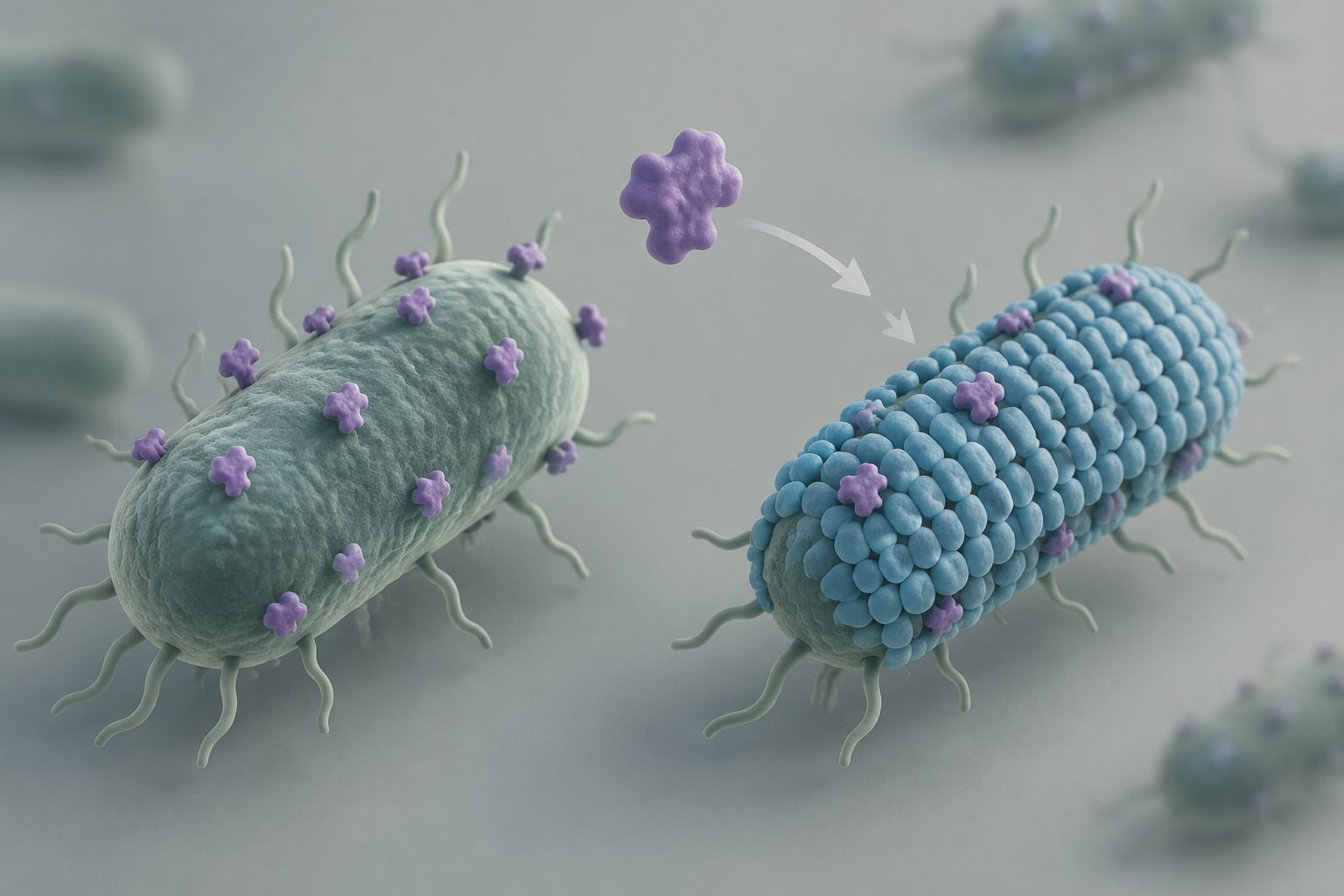
Researchers found that bacterial surface-layer proteins can evolve through modular changes and gene transfer, producing different outer structures. In closely related bacteria with the same type of surface layer, only pathogens showed resistance to the antimicrobial molecules LL-37 and lysozyme.
Researchers traced how AlphaFold 3 turns evolutionary differences among related protein sequences into three-dimensional structure predictions. They found that evolutionary diversity matters more than simply adding more sequences, helping explain both the system’s strengths and some of its failures.