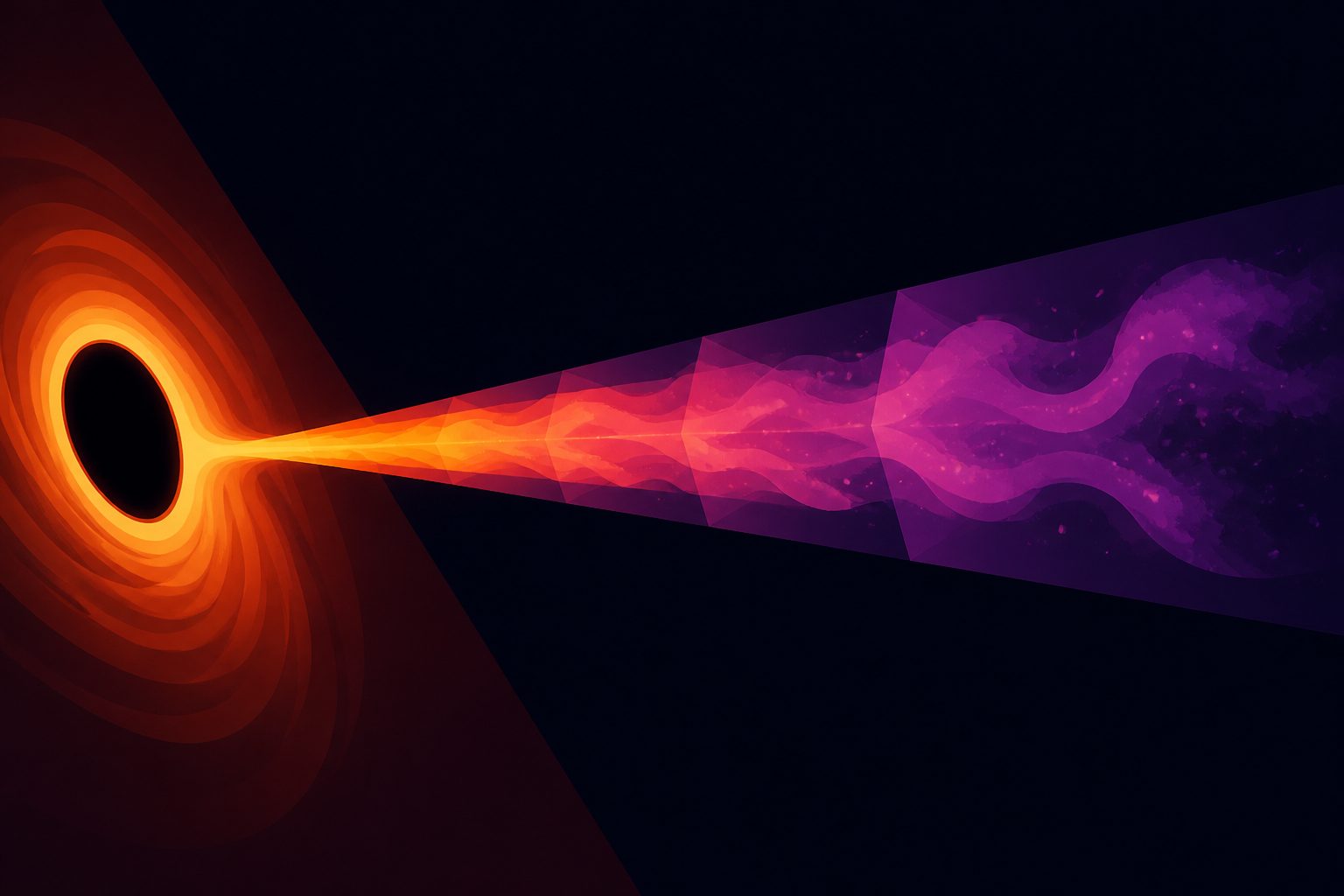
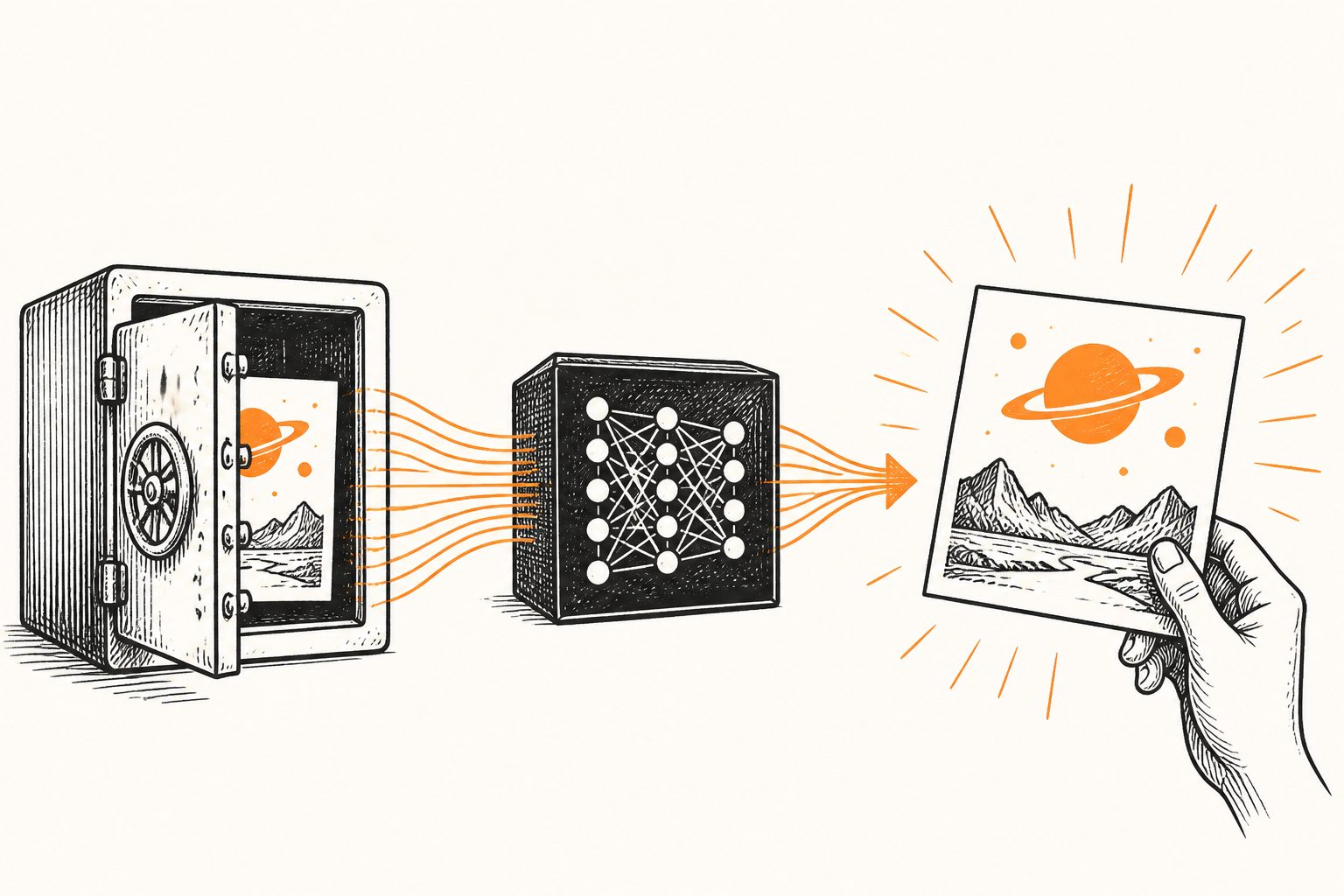
A new imaging method creates time-continuous videos of radio observations and estimates plasma motion between visible features.
Jets from supermassive black holes change over time, but existing imaging methods have had difficulty resolving that variability at high resolution. The new method represents the observations as a video and learns how the source changes across time while processing observations from different dates together.
The researchers demonstrated the approach using multi-epoch observations of the blazar 3C 345 made with the Very Long Baseline Array, a network of radio telescopes. They report improved resolution and dynamic range compared with traditional methods, allowing them to estimate the plasma's local, instantaneous velocity in the jet.
What the video reveals
The method reconstructs polarisation-sensitive, time-continuous videos from observations of sources that change quickly or slowly. In the demonstrated case, it was applied to repeated Very Long Baseline Array observations of blazar 3C 345. The resulting time-continuous reconstruction, together with improvements in resolution and dynamic range over traditional methods, enabled measurement of the local, instantaneous velocity of plasma in the jet instead of relying only on the motion of discrete components.