AI and docking agreed in some drug screens, but not all
A large test of molecules binding to a coronavirus protein suggests that combining the two approaches could help researchers choose which drug candidates to test first.
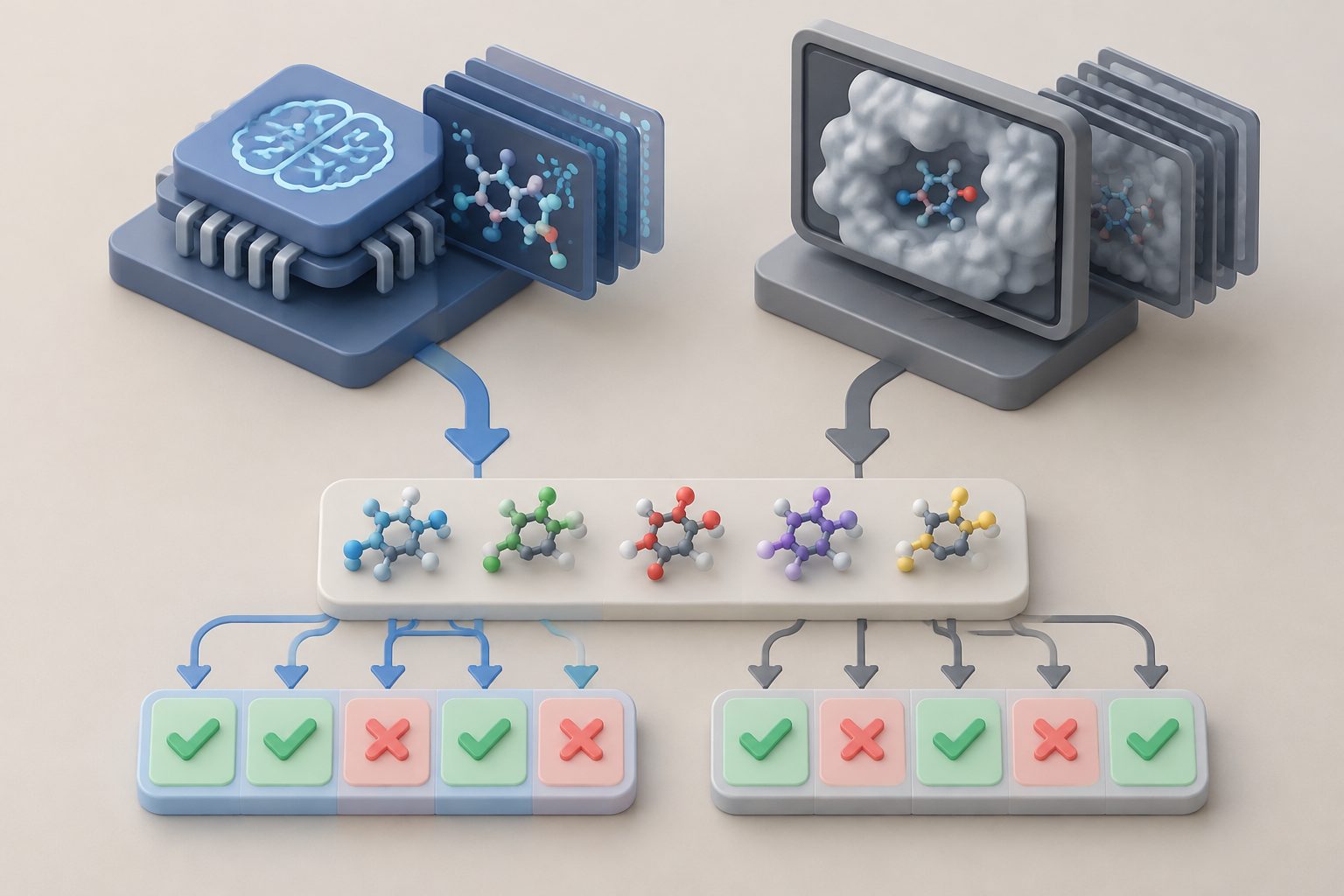
Editorial illustration — not from the study.
The study tested AlphaFold3, Boltz-2 and Chai-1 on 551 molecules bound to the SARS-CoV-2 NSP3 macrodomain, known as Mac1. Of these, 489 complexes were considered suitable for evaluation. Each system reproduced more than half of the experimentally measured binding poses to within 2 angstroms, a measure of structural distance.
The researchers also examined whether the predictions could indicate how strongly molecules bind and help filter likely drug candidates from false positives. Boltz-2 showed the strongest relationship with measured binding strength, while traditional docking and some AI confidence scores provided partly independent information. In three additional screens, combining these signals appeared more useful for ranking candidates than relying on one score alone, but the AI pose-confidence measure did not outperform docking or Boltz-2 affinity predictions at separating binders from non-binders.
What the models predicted
The researchers evaluated 551 ligand–Mac1 complexes, with 489 meeting the study’s quality standard. AlphaFold3, Boltz-2 and Chai-1 each reproduced more than 50% of the experimentally observed ligand poses to better than 2 angstroms in root-mean-square deviation, a measure of structural difference.
The systems did not reproduce common protein changes that can accompany binding, including a peptide flip and a large loop opening. For AlphaFold3 and Chai-1, confidence in the predicted ligand pose was weakly but significantly related to experimental potency, meaning the molecule’s measured ability to bind or act. Docking energies also showed only a weak relationship with potency. Boltz-2’s affinity predictions had the strongest correlation with measured potency and, after calibration, a lower average absolute error than a baseline predictor.
In prospective screens involving AmpC beta-lactamase, the dopamine D4 receptor and the sigma-2 receptor, AlphaFold3 pose-confidence values were less effective than docking scores or Boltz-2 affinity predictions at distinguishing true ligands from high-scoring non-binders.
Why combined scores matter
Drug researchers often use docking to estimate which molecules are most likely to bind a protein, but these rankings can include false positives. The study suggests that AI-based affinity or confidence measures can provide information that is partly independent of docking, so combining the signals may help prioritize molecules for testing and later optimization.
The results do not show that co-folding consistently replaces docking or improves every screen. Instead, they support using the approaches together, with the choice of score depending on the task and the target.
Evidence and caveats
This was a prospective computational evaluation supported by experimentally determined structures and potency measurements. The main structure test focused on ligand complexes with the SARS-CoV-2 Mac1 protein, while the hit-ranking assessment covered three other molecular targets. The ligand structures used for the main evaluation were determined after the systems’ training cut-off dates, helping test performance on examples not included in training.
The abstract reports correlations and comparative prediction errors but does not give their numerical sizes or the numbers of molecules in each of the three virtual screens. The AI systems also failed to reproduce the tested protein conformational changes, and their performance varied by measure and target. The study therefore provides evidence for modest, complementary predictive information, not proof that combined scoring will improve results for all drug-discovery campaigns.
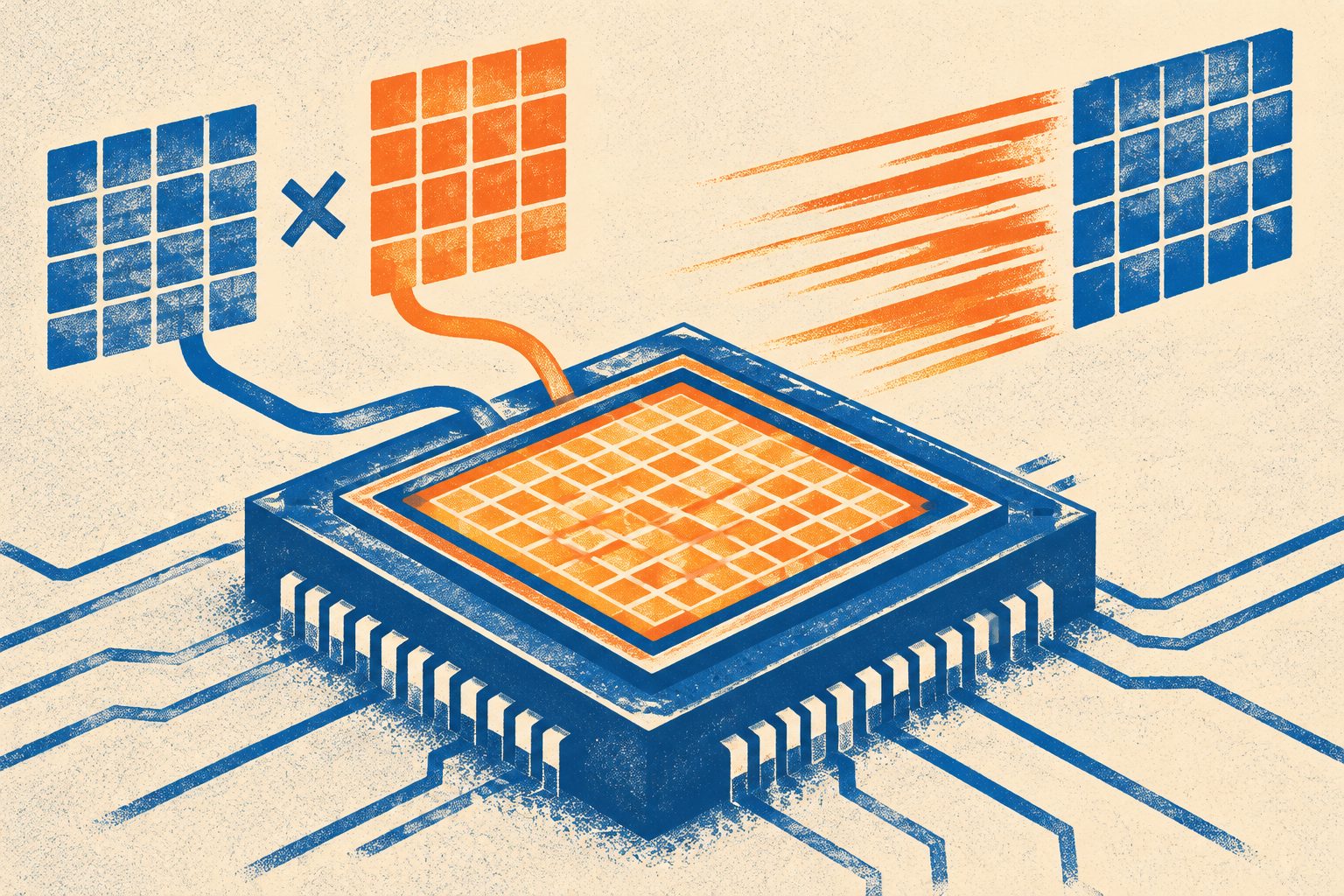
Researchers tested a programmable hardware design that imitates selected quantum-computing ideas to run matrix calculations in parallel. In representative benchmarks, the design reached up to 6.3 times the speed and 4.1 times the energy efficiency of conventional matrix co-processors and embedded graphics processors.
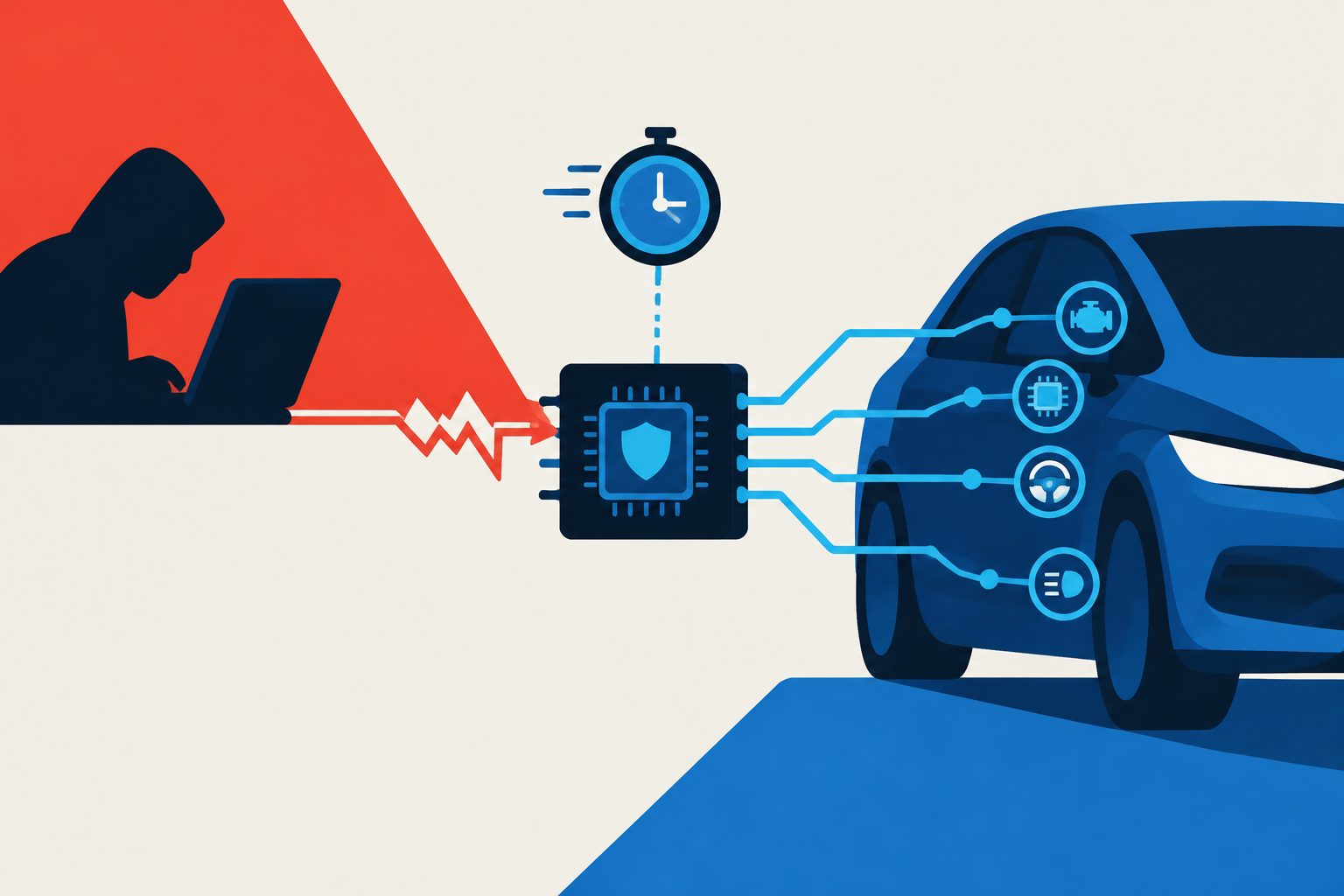
Researchers developed a hardware-assisted system intended to detect message injection, spoofing, flooding and impersonation attacks on automotive networks. In tests using simulated traffic and a prototype automotive processor system, it reported an average detection time of 14 microseconds and less than 2 percent CPU overhead.
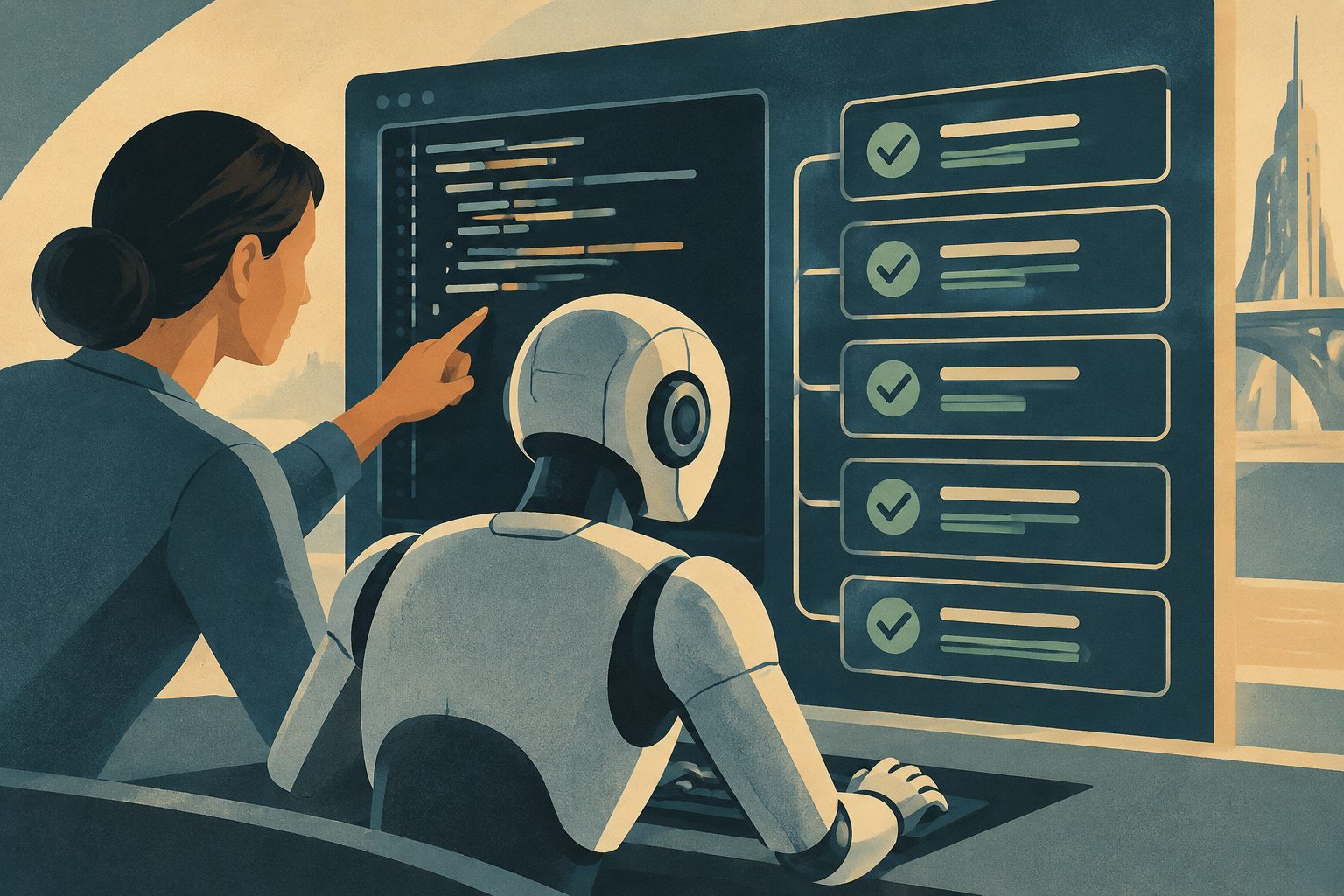
An exploratory study compared four ways to develop software with and without conversational AI systems. Human–AI collaboration produced higher-quality, better-organized test suites, while autonomous AI agents generated functionally correct code more quickly but added complexity and untested decisions.